Best Outdoor Security Camera: Reviews, Buying Guide, and FAQs 2026
by Robert Fox
You come home after work, reach for the package you tracked all day — and the porch is empty. The neighbor's doorbell camera caught the whole thing, but yours never recorded a second of it. That's the moment most people stop procrastinating and start researching. Whether you're reacting to something that already happened or getting ahead of it, finding the best outdoor security camera in 2026 is one of the most practical steps you can take for your home's safety.
Today's outdoor cameras are dramatically better than what was available even three years ago. Smart AI detection now filters out cars passing in the background and focuses on the person walking up your driveway. Solar-powered options have made battery recharging optional. Resolution has jumped from standard 1080p to 2K and 3K as a baseline. The hard part isn't finding a good camera anymore — it's knowing which features actually matter for your specific installation, budget, and existing smart home ecosystem. This guide reviews seven of the strongest performers across every major category, from premium floodlight combos to no-frills budget picks that outperform their price. If you're building out a complete system, our guide to the best indoor home security cameras for 2026 is the natural companion to this one.
Before you decide on any camera, there's a security layer most buyers overlook: your home network. A camera you can't trust to stay private defeats the purpose of buying one. We've written a detailed breakdown of how to prevent your smart home from being hacked — worth reading before you connect anything new to your Wi-Fi. You can also browse our full archive of home security reviews covering everything from smart locks to alarms. Now, here are the seven best outdoor security cameras you can buy right now.

Contents
Best Choices for 2026
- #PreviewProductRating
- Bestseller No. 1
 Rating:

- Bestseller No. 2
 Rating:
 - Bestseller No. 3
 Rating:
 - Bestseller No. 4
 Rating:
 - Bestseller No. 5
 Rating:
 - Bestseller No. 6
 Rating:
 - Bestseller No. 7
 Rating:

Our Hands-On Reviews
1. Arlo Pro 3 Floodlight — Best All-in-One Floodlight Camera
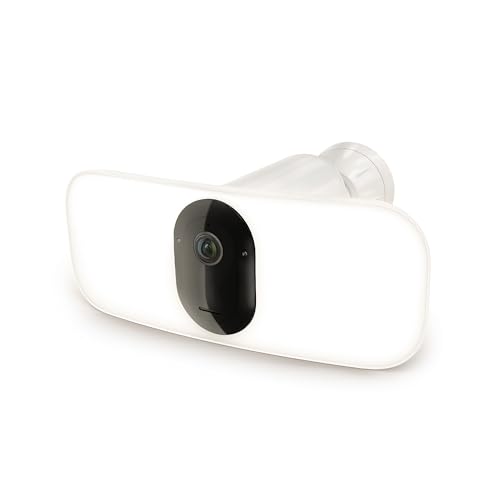
The Arlo Pro 3 Floodlight is the camera you buy when you want to cover a driveway, alleyway, or backyard with both serious lighting and serious surveillance — and you don't want to run new wiring to do it. The floodlight delivers up to 3,000 lumens of LED output, which is enough to light up a full driveway and act as a meaningful deterrent all by itself. Pair that with 2K HDR video recording and you have footage that's actually useful for identifying faces and license plates, not just confirming that someone was there. The color night vision performs well in low ambient light, capturing usable color detail long before competitors' cameras switch entirely to infrared grayscale.
Installation is genuinely wireless — magnetic mount, rechargeable battery, and Wi-Fi connectivity mean you're up and running without an electrician. Person, vehicle, and package detection all work through Arlo's AI processing, and in testing these filters hold up well against common false positives like blowing tree branches and passing headlights. The IP65 weatherproofing covers rain and humidity without issue, and the two-way audio is clear enough to have a real conversation with whoever's at your door. Arlo's app is polished and responsive, and the camera integrates with Alexa, Google Assistant, and SmartThings.
The honest trade-off is battery life. In high-traffic zones, you can expect to recharge every four to six weeks — the floodlight is power-hungry by design. Arlo's magnetic mount makes removal quick, and the optional solar panel accessory removes the recharging cycle entirely if you have a sunny mounting location. Cloud recording beyond 30 days of clips requires an Arlo Secure subscription, but for most homeowners the free tier covers daily use. If you want the most capable wireless floodlight camera on the market in 2026, this is it.

Pros:
- 2K HDR video with up to 3,000 lumens LED floodlight
- True wireless battery-powered installation — no electrician needed
- Accurate person, vehicle, and package AI detection
- IP65 weather resistance for exposed outdoor locations
- Color night vision in low ambient light
Cons:
- Battery life shortens significantly in high-traffic areas
- Full cloud history and advanced AI features require Arlo Secure subscription

2. Ring Outdoor Cam (Stick Up Cam) — Best for Flexible Placement
The Ring Outdoor Cam — sold under the Stick Up Cam name — earns its spot on this list through sheer flexibility. Most outdoor cameras force you to commit to a mounting location before you fully understand where the coverage gaps are. The Stick Up Cam doesn't. You can stand it on a flat surface to test positioning, wall-mount it permanently once you've confirmed the angle, or add the optional ceiling mount bracket for overhead coverage of a porch or carport. That "place it almost anywhere" design philosophy is Ring's defining strength for homeowners who are still figuring out their camera layout.
Video quality comes in at 1080p HD with color night vision — solid and consistent, if not cutting-edge at this resolution. Live View through the Ring app is responsive, and Two-Way Talk delivers clear two-directional audio for speaking with delivery drivers or anyone approaching your door. Motion zones let you define specific areas to monitor so you're not getting pinged every time a car drives past your house. Alexa integration is seamless: you can pull up live camera feeds on any Echo Show device or create automations triggered by detected motion without any additional setup.
One limitation you need to plan for: cloud recording requires a Ring Protect subscription. Without it, you can access Live View but you won't be able to review recorded footage. The Ring Basic plan is affordable and the most important feature — video history — is unlocked at that tier. Battery life under typical use runs to about six months, which is respectable. If you're already in the Amazon and Ring ecosystem, this camera integrates without friction. If you're starting fresh, the Ring app's interface is clean enough that first-time users get up to speed quickly.
Pros:
- Extremely flexible placement — surface, wall, or ceiling mount
- Reliable 1080p HD with color night vision
- Deep Alexa and Amazon ecosystem integration
- Customizable motion detection zones
Cons:
- Cloud video history requires Ring Protect subscription
- 1080p resolution is behind 2K competitors at similar prices
3. Google Nest Cam Outdoor (Battery) — Best for Google Home Integration
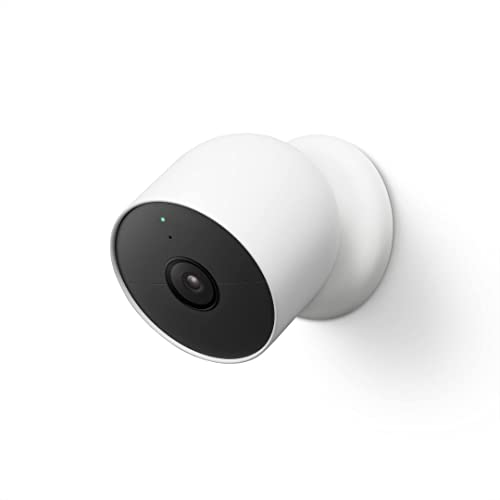
Google's Nest Cam Outdoor runs on battery power and handles both outdoor and indoor installations with the same hardware — a versatile approach that simplifies buying decisions if you want cameras across different environments. The 1080p HDR video is crisp and well-exposed in varied lighting conditions, and Google's built-in intelligence distinguishes between people, animals, and vehicles without requiring a subscription for basic event notifications. That AI detection at the free tier is a meaningful differentiator — several competitors put those alerts behind a paywall from day one.
The free event video history is limited to three hours, which is useful for checking recent activity but not adequate for reviewing an overnight period. Upgrading to Nest Aware extends history up to 60 days and adds continuous recording capability, which substantially increases the camera's value. Where Nest Cam genuinely stands apart from battery competitors is its offline recording feature: if your Wi-Fi goes down or power cuts out, the camera stores up to one hour of events locally. That's a practical failsafe most wireless cameras simply don't offer, and it matters in exactly the moments when you'd most want footage. The operating range spans −4°F to 104°F, covering virtually every residential climate.
Integration with the Google Home app is seamless, and if you own Nest speakers, Nest Hub displays, or any Google Assistant device, the camera slides into that ecosystem without any configuration friction. Mounting hardware includes a wall plate suitable for brick and standard exterior surfaces. If you're building a Google-centric smart home, this is your outdoor camera. If your home runs on Amazon Alexa, the Ring or Blink options will integrate more naturally with what you have. Read our full breakdown of Google Nest's product ecosystem to understand how the Nest Cam fits into a broader smart home setup.

Pros:
- AI person/animal/vehicle detection included free — no subscription required
- Local offline recording during Wi-Fi or power outages
- 1080p HDR video with reliable night vision
- Native Google Home and Google Assistant integration
- Wide operating temperature range
Cons:
- Only 3 hours of free event history — longer history requires Nest Aware
- Limited value outside the Google ecosystem
4. Blink Outdoor 4 — Best Two-Year Battery Life
The Blink Outdoor 4 is the simplest camera on this list, and that simplicity is its strongest argument. Fourth-generation hardware, standard AA lithium batteries, and a setup process that takes under ten minutes — Blink designed this camera for the homeowner who wants reliable outdoor coverage without complexity, ongoing subscription costs, or a charging schedule. The 1080p HD video delivers clean, detailed daylight footage. Infrared night vision produces sharp black-and-white images after dark that are more than adequate for identifying people and verifying motion events.
What actually separates the Outdoor 4 from competing battery cameras is the battery claim: up to two years of use from a single set of AA lithium batteries. That's exceptional in a market where most wireless cameras need recharging every four to twelve weeks. High-activity installations won't hit the full two years, but even in busy setups, Blink's power efficiency routinely outlasts competitors by a meaningful margin. The three-camera bundle provides whole-home coverage at a price point that's hard to argue with, and no cameras in the bundle require individual charging since you just swap standard batteries when they eventually run low.
Two-way audio works reliably through the Blink app, and motion detection zones let you tune sensitivity to your specific environment. The standout free feature: local storage via Blink's Sync Module 2 with a standard USB drive gives you free video recording without any subscription — something rare at this price tier. Cloud storage is available through a Blink subscription plan if you prefer off-site backup. The trade-offs at this price are real: no advanced AI detection for person or vehicle classification, and resolution doesn't match the 2K options above. But for buyers who prioritize battery endurance, budget value, and zero-friction setup, the Outdoor 4 delivers on every count.
Pros:
- Industry-leading two-year battery life from standard AA batteries
- Free local storage via Sync Module 2 with USB drive
- Simple 10-minute DIY setup
- Three-camera bundle delivers strong whole-home value
Cons:
- No AI-based person or vehicle detection
- 1080p resolution only — no 2K option
- Cloud video history requires Blink subscription plan
5. WYZE Cam v4 — Best Budget Pick
The WYZE Cam v4 is the most affordable camera on this list by a significant margin, and it consistently punches above its weight class. The 2.5K QHD resolution is sharper than most 1080p cameras costing twice as much — you get noticeably more detail in faces and license plates, which is the whole point of having an outdoor camera in the first place. The IP65 weather rating makes it a legitimate outdoor installation, not just a stretch of an indoor model. WYZE's color night vision uses built-in spotlights to illuminate scenes in vivid color rather than defaulting to washed-out infrared, and the results are genuinely impressive at this price.
The value proposition is anchored by WYZE's subscription philosophy: essential features work without a monthly fee. Motion detection, live view, basic event clips, and two-way audio are all free. Advanced AI detection for person, package, and pet events is available through WYZE Cam Protect, but the free tier provides enough functionality to protect your home without paying anything beyond the camera's purchase price. That's a real contrast to cameras that require subscriptions to unlock any cloud recording at all.
A few specifics to know before buying: the Outdoor Adapter is sold separately and required for weatherproof outdoor installation. Factor that into your total cost. Voltage range spans 100–240V, so international compatibility isn't an issue. Build quality is honest but not premium — the housing feels lighter than Arlo or Ring, and the aesthetic is more utilitarian than refined. Cloud history on the free tier is limited to 12-second event clips with a five-minute cooldown between events. For a second or third camera where budget matters and 2.5K resolution is the priority, the WYZE Cam v4 is the clear answer in 2026.
Pros:
- 2.5K QHD resolution at a fraction of premium camera prices
- No subscription required for core features including live view and motion alerts
- IP65 outdoor weatherproofing
- Vivid color night vision via built-in spotlights
Cons:
- Outdoor Adapter required for exterior use — sold separately
- Free cloud clips limited to 12 seconds with cooldown period
- Build quality is utilitarian compared to premium alternatives
6. eufy SoloCam S340 — Best Solar-Powered Camera
The eufy SoloCam S340 solves the one complaint that keeps coming up in battery camera discussions: having to recharge it. The built-in solar panel harvests daylight continuously so the camera stays charged indefinitely without any intervention from you. Mount it once, connect to Wi-Fi, and you're done — no scheduled recharges, no dead battery surprises, and no climbing up to reach it every few weeks. For cameras installed at height or in hard-to-access locations, that self-sufficient power source isn't a convenience feature — it's a requirement.
Video quality backs up the hardware. The dual-camera system captures 3K resolution across its coverage area, and the 8× zoom maintains usable clarity when you're pulling in on a specific detail — a license plate at the far end of a driveway, a face at the gate. More impactful than the resolution is the 360° pan and tilt capability. Installed vertically, the SoloCam S340 eliminates blind spots entirely — a single camera can cover your front porch, sweep to the driveway, and check the side yard without you relocating it or adding a second unit. That's a meaningful cost and installation advantage over fixed-angle cameras. eufy's no-monthly-fee promise holds here: all recording and storage is local, handled without cloud subscriptions.
Technical requirements are straightforward: 2.4 GHz Wi-Fi, standard outdoor mounting surface, and enough sunlight at the mounting location to keep the solar panel productive. In partially shaded locations, you may need to supplement with occasional manual charging during extended cloudy periods, which the removable panel makes easy. The eufy Security app is well-organized and reliable. If you plan to expand, HomeBase S380 compatibility adds centralized storage and multi-camera management. For anyone who has avoided wireless cameras because of recharging fatigue, the SoloCam S340 removes that objection cleanly.

Pros:
- Solar-powered — truly maintenance-free once installed
- 3K dual-camera with 8× zoom for long-distance detail
- 360° pan and tilt eliminates blind spots from a single mounting point
- No monthly fees — local storage included
Cons:
- 2.4 GHz Wi-Fi only — no 5 GHz band support
- Solar efficiency drops in shaded or low-sun winter locations
- Vertical mounting for full pan/tilt coverage may not suit all installations
7. Tapo C320WS — Best Wired Outdoor Camera
The Tapo C320WS is a wired outdoor camera, and that single fact changes everything about what it can do. Connected directly to power, this camera records 24 hours a day, 7 days a week — no battery management, no gaps in coverage, no motion-triggered clips that might miss the first two seconds of an event. The 2K QHD / 4MP resolution captures fine detail across its full field of view, and the IP66 weatherproofing rating exceeds IP65 by offering stronger protection against water jets and particulate intrusion. If you're mounting in a particularly exposed location, that extra weatherproofing margin matters.
Night vision is the category where the C320WS genuinely distinguishes itself. It layers three capabilities: dual integrated color spotlights for close-range illuminated night vision, a Starlight image sensor that captures clean detail in near-darkness without requiring the spotlights to activate, and an 850nm IR sensor that reaches up to 98 feet in pure darkness. That combination means you're never in a lighting condition this camera can't handle. The Starlight sensor in particular produces noticeably less grain and noise than standard IR-only cameras at comparable price points — it's the feature that separates this from being a budget wired camera to a genuinely strong performer.
Local storage is handled via microSD card with no ongoing cost, and continuous recording fills storage on a loop without requiring a subscription. Optional cloud storage is available if you want off-site backup. Both Google Assistant and Alexa are supported for voice control and automation integration. The trade-off with any wired camera is installation: you need a power outlet near the mounting location, and cable routing through exterior walls requires more effort than a wireless install. If you're comfortable with basic installation work, the Tapo C320WS delivers 24/7 reliability and image quality that wireless alternatives at this price simply can't match. For buyers considering a multi-camera wired setup, our LaView PoE Security Camera System review covers what a full NVR-based installation looks like at scale.
Pros:
- 24/7 continuous wired recording — no gaps, no battery management
- Starlight sensor delivers exceptional low-light image quality
- IP66 weatherproofing — stronger than most competitors' IP65
- Free local storage via microSD with no monthly fees
- 98-foot IR range in total darkness
Cons:
- Wired installation requires power outlet proximity and cable routing
- No battery backup if the power source is interrupted
How to Pick the Best Outdoor Security Camera
Seven cameras across different price points, power types, and ecosystems — narrowing the field to the right one for your home requires thinking through a few key variables. Here's what actually drives the decision for most buyers in 2026.

Resolution and Video Quality: What You Actually Need
Resolution is the spec that gets quoted most in marketing, but it's worth understanding what it means in practice. 1080p footage is enough to identify a person in most scenarios, but it falls short when you need to read a license plate at 30 feet or identify facial features at distance. 2K (which is roughly 4MP) provides a meaningful step up — enough detail to zoom in digitally on a recorded clip and still make out specific details. The 2.5K and 3K options on this list (WYZE and eufy) represent the current sweet spot for price-to-detail ratio in 2026.
Beyond raw resolution, HDR processing matters as much as megapixels in real-world use. A 1080p HDR camera will consistently outperform a 2K non-HDR camera in high-contrast scenes — like a sunny driveway where part of the frame is in deep shade and part is in direct sunlight. Compression also affects perceived quality. Cameras that compress heavily to reduce storage or bandwidth use will look worse than their resolution numbers suggest. When evaluating footage quality, look for sample clips in challenging lighting before committing. According to widely published research on video surveillance systems, resolution combined with proper lens focal length and scene lighting is far more determinative of identification success than resolution alone.

Power Source: Wired, Battery, or Solar
This is frequently the most consequential decision you'll make, and it's driven more by your home's layout than by personal preference. Wired cameras — like the Tapo C320WS — are the reliable choice for fixed locations near power outlets where 24/7 continuous recording is a priority. You don't deal with battery management, and coverage never lapses. The cost is installation complexity: you need cable routing, a nearby outlet, and some comfort with basic mounting work. If that's a non-starter, wired cameras aren't for you regardless of their performance advantages.
Battery-powered cameras work best in locations where running cable is impractical — detached garages, fence lines, the back of a shed. The trade-off is recording mode: most battery cameras default to motion-triggered clips rather than continuous recording to conserve power. You'll capture events, but not the minutes before them. Rechargeable battery cameras (Arlo, Ring, Google Nest) typically need recharging every four to twelve weeks depending on traffic volume. AA-battery models like Blink extend that to months or years. Solar-powered cameras like the eufy SoloCam S340 eliminate the recharging cycle entirely — the right answer if you have a sun-exposed mounting location and don't want to manage batteries at all.

Night Vision: IR, Color, and Starlight Sensors
Standard infrared (IR) night vision produces grayscale images using invisible IR illuminators. It works reliably at distance — up to 30–100 feet depending on the camera — but the footage is monochromatic and loses color detail entirely after dark. That's adequate for confirming that someone was present, but less useful for identifying clothing color or vehicle make. Color night vision uses visible-light LED spotlights (usually white or warm-toned) to illuminate the scene and capture color. The footage is significantly more useful for identification, but the spotlights announce the camera's presence and can be intrusive in residential settings if they're too bright.
Starlight sensors represent the best of both approaches: a highly sensitive image sensor that captures color in near-darkness without requiring spotlights to activate. The Tapo C320WS uses this technology, and the difference compared to standard IR cameras in the same lighting condition is immediately visible — cleaner images with genuine color retention rather than grainy gray shapes. For most homeowners, a camera with both a Starlight or color sensor and an IR fallback provides complete coverage: color-capable in low ambient light, IR-capable in true darkness. Don't dismiss a camera based on IR-only night vision if the IR range is long — a strong 98-foot IR camera often outperforms a short-range color spotlight camera in large outdoor spaces.

Smart Home Ecosystems, Apps, and Subscriptions
Every camera on this list works with a smartphone app, but app quality varies substantially. Look for reliable push notifications, a clean live view interface, and motion zone customization — those are the features you'll use every single day. Remote access stability matters too: a camera whose app frequently loses connection or takes 10 seconds to load live view is frustrating enough to stop being used. Most major brands have strong apps in 2026, but Ring, Google Nest, and Arlo are consistently rated highest for daily usability.
Ecosystem alignment matters if you own smart home devices. Ring and Blink work natively with Amazon Alexa and Echo Show. Google Nest integrates directly with Google Home, Google Assistant, and Nest Hub displays. Arlo, WYZE, and Tapo work with both Alexa and Google Assistant via standard integrations. If you're building a security system from scratch, buying into a single ecosystem avoids the integration friction that comes from mixing platforms. Subscription costs are an ongoing consideration that can double or triple the effective cost of a camera over three years — factor them in before you compare purchase prices.

Common Questions
Do outdoor security cameras work without Wi-Fi?
Most modern outdoor cameras require Wi-Fi to transmit footage to the cloud, send motion alerts to your phone, and provide remote live view access. However, some cameras offer limited offline functionality. The Google Nest Cam stores up to one hour of event recordings locally during a Wi-Fi outage. Wired cameras connected to a local NVR (network video recorder) can record continuously without internet access, since footage is stored on-site rather than in the cloud. If reliable offline recording is a priority — particularly in locations with unstable internet connections — a wired NVR system is the most robust solution.
How long do wireless outdoor camera batteries actually last?
Battery life varies widely depending on the camera model, traffic volume at the installation location, and how aggressively features like spotlights and two-way audio are used. Arlo and Ring rechargeable cameras typically last four to twelve weeks in average residential use. Google Nest Cam runs similarly. Blink Outdoor 4 claims up to two years from AA lithium batteries — a genuine outlier driven by power-efficient hardware and motion-only recording. Solar-powered cameras like the eufy SoloCam S340 eliminate battery cycles entirely with sufficient sunlight. If you want to minimize maintenance, prioritize either solar power or the Blink's AA battery design.
What's the difference between IP65 and IP66 weatherproofing?
The IP (Ingress Protection) rating system defines how well an enclosure resists dust and water. The second digit is the water resistance number. IP65 means the camera is protected against low-pressure water jets from any direction — sufficient for rain, sprinklers, and most outdoor conditions. IP66 means it withstands more powerful water jets, offering a stronger margin in locations exposed to direct spray, pressure washing nearby, or driving rain at angle. Both ratings are legitimate outdoor certifications. For most residential installations, IP65 is sufficient. If you're mounting in a particularly exposed location — near a sprinkler system, a car wash, or coastal weather — IP66 provides meaningful extra protection.
Do outdoor security cameras require a subscription to work?
Not all of them. WYZE Cam v4, Tapo C320WS, and eufy SoloCam S340 all provide essential functionality — live view, local recording, and motion alerts — without mandatory subscriptions. Ring, Blink, and Google Nest offer free tiers but limit cloud video history, which reduces their value without a plan. Arlo's free tier provides 30-day cloud clips for the first camera. The general pattern in 2026: cameras with local microSD or HomeBase storage tend to be more subscription-independent than pure cloud cameras. If you want to avoid recurring costs entirely, prioritize cameras with built-in local storage options and check what the free tier actually includes before buying.
Can outdoor security cameras be hacked?
Any camera connected to the internet carries some exposure to unauthorized access, but the risk is manageable with proper setup. The most common vulnerabilities are weak or reused passwords, outdated firmware, and unsecured home networks. Strong, unique passwords for your camera account and router are the first line of defense. Enable two-factor authentication wherever it's offered — Arlo, Ring, and Google Nest all support it. Keep firmware updated automatically, since manufacturers regularly patch discovered vulnerabilities. Placing cameras on a separate IoT network segment isolated from your primary devices adds another layer of protection. We've covered this in detail in our guide on preventing your smart home from being hacked.
How many outdoor cameras does a typical home need?
Most residential properties achieve solid coverage with three to four cameras: one at the front door or porch, one covering the driveway, one at the back door or yard access point, and optionally one covering a side gate or detached garage. The exact number depends on your property's layout and how many blind spots exist from those primary positions. Pan-and-tilt cameras like the eufy SoloCam S340 can reduce the count by covering wider areas from a single mount point. Start with the highest-risk entry points — the front and back doors — then add cameras to address specific gaps rather than blanketing every corner of the property at once.
Buy on Walmart
- Floodlight Security Camera Wireless Outdoor 2K No Wiring - A — Walmart Link
- Ring Outdoor Cam (Stick Up Cam), Weather-resistant home or b — Walmart Link
- Google Nest Cam Outdoor or Indoor, Battery - 2nd Generation — Walmart Link
- Blink Outdoor 4 – Wireless smart security camera, two-year b — Walmart Link
- WYZE Cam v4 (Latest Model), 2.5K AI Security Camera, Indoor/ — Walmart Link
- eufy Security SoloCam S340, Solar Security Cameras Wireless — Walmart Link
- Tapo 2K+ Outdoor Wired Security Camera - Person/Vehicle/Moti — Walmart Link
Buy on eBay
- Floodlight Security Camera Wireless Outdoor 2K No Wiring - A — eBay Link
- Ring Outdoor Cam (Stick Up Cam), Weather-resistant home or b — eBay Link
- Google Nest Cam Outdoor or Indoor, Battery - 2nd Generation — eBay Link
- Blink Outdoor 4 – Wireless smart security camera, two-year b — eBay Link
- WYZE Cam v4 (Latest Model), 2.5K AI Security Camera, Indoor/ — eBay Link
- eufy Security SoloCam S340, Solar Security Cameras Wireless — eBay Link
- Tapo 2K+ Outdoor Wired Security Camera - Person/Vehicle/Moti — eBay Link
The best outdoor security camera is the one you actually install in the right spot — specs only matter after placement does.


About Robert Fox
Robert Fox spent ten years teaching self-defence in Miami before transitioning into home security consulting and writing — a background that gives him an unusually practical, threat-aware perspective on residential security. His experience spans physical security assessment, lock and alarm system evaluation, and the behavioral habits that make homes harder targets. At YourHomeSecurityWatch, he covers home security product reviews, background check and criminal records resources, and practical guides on protecting your property and family.
You can Get FREE Gifts. Furthermore, Free Items here. Disable Ad Blocker to receive them all.
Once done, hit anything below