Tell Mfg EX100066 Commercial Exit Device Panic Bar: Features & Benefits
by Robert Fox
Studies from the National Fire Protection Association show that delayed or obstructed exit hardware contributes to preventable deaths in commercial building fires every single year — and the hardware mounted on your doors is often the critical variable. If you're researching a commercial exit device panic bar for a business, school, warehouse, or storage facility, the Tell Mfg EX100066 deserves a close look. This rim-style push bar includes a built-in audible alarm, mounts to the door surface without mortising, and is built for single-door commercial applications where you need controlled egress without sacrificing emergency exit access. This guide covers features, installation, costs, and how to build it into a lasting security strategy. For a broader look at commercial door security decisions, visit our commercial safety resource hub.
Tell Manufacturing has been producing commercial door hardware for decades, and the EX100066 sits at the mid-range of their product lineup. What separates it from bare-bones panic bars in the same price tier is the integrated alarm. Most entry-level exit devices are passive — they open the door and nothing more. The EX100066 sounds an alarm whenever the push bar is depressed, which adds a meaningful deterrent layer against unauthorized use of back doors, fire exits, or stockroom entries. That one feature changes how staff and building occupants interact with the door.
Understanding whether this device fits your specific situation requires more than a glance at the spec sheet. Door compatibility, alarm sensitivity, material grade, and compliance with local fire codes all shape whether a device actually performs when it matters. Here's what you need to know before you buy.
Contents
- The History Behind the Commercial Exit Device Panic Bar
- Where Panic Bars Make a Critical Difference
- Installing the Tell EX100066: A Step-by-Step Walkthrough
- Fast Adjustments to Improve Exit Device Performance
- What the Tell EX100066 Costs and What You Get
- Building a Long-Term Exit Security Strategy
- Frequently Asked Questions
- Key Takeaways
The History Behind the Commercial Exit Device Panic Bar
Why Building Codes Require Exit Devices
Panic bars — formally called exit devices or crash bars — became a building code requirement following a series of catastrophic fires in the early 20th century. The 1903 Iroquois Theatre fire in Chicago is the most cited example: more than 600 people died, in part because exit doors opened inward and couldn't withstand the crush of a panicked crowd. That disaster drove legislation requiring outward-swinging doors with push-style hardware in high-occupancy commercial spaces. Today, both the International Building Code and NFPA 101 Life Safety Code require exit devices on doors serving assembly occupancies — a category covering schools, retail spaces, offices, theaters, and similar environments above certain occupancy thresholds.
This has direct implications for your purchasing decision. If your building falls under these codes — and most commercial properties do — installing a compliant commercial exit device panic bar isn't a recommendation, it's a legal obligation. Non-compliant hardware can expose you to liability, failed inspections, and insurance complications. Before finalizing any hardware purchase, confirm your local jurisdiction's specific requirements, as some municipalities have adopted amendments to the base codes. If you're evaluating your full door and frame setup at the same time, our complete exterior door buying guide covers the foundational decisions you'll encounter.
How the Tell EX100066 Meets the Standard
The EX100066 is designed to comply with ADA accessibility requirements and meets ANSI/BHMA Grade 3 standards for exit device performance — appropriate for light to medium commercial use. As a rim device, it mounts to the door face rather than the door edge, which simplifies installation and keeps it compatible with a wide range of door materials and thicknesses. The push bar requires no more than 15 pounds of force to activate, keeping it accessible to most users including older adults and people with mobility limitations. Tell Manufacturing's commercial line has a consistent track record in mid-market applications, and this model reflects that positioning: code-capable, functional, and priced for budget-conscious buyers.
Where Panic Bars Make a Critical Difference
Schools and Public Institutions
Schools are among the most common environments for commercial exit device installations. You're managing large numbers of people moving through exits during drills and genuine emergencies, and you need hardware that stays permanently accessible for evacuation while discouraging unauthorized or casual use during the school day. The EX100066's alarm is well-suited to this context — it alerts staff immediately whenever a door is used outside normal circumstances, whether that's a student slipping out through a fire exit between classes or a rear door being propped open during an unsupervised period.
Libraries, community centers, and government offices face similar challenges. The built-in alarm provides a low-cost monitoring function without requiring a full electronic access control integration. For facilities wanting additional visibility at their exit points, pairing the EX100066 with smart outdoor security cameras at each door creates a documented record of exit activity that an audible alarm alone can't provide.
Retail, Warehouses, and Office Buildings
In retail environments, rear exits and stockroom doors are the most vulnerable points for both employee theft and unauthorized external access. A panic bar with an audible alarm changes the risk calculation for anyone who might consider slipping out through a back door unnoticed. In warehouses and distribution centers — especially those handling high-value inventory — the alarm function adds deterrence that passive hardware simply doesn't offer.
Office buildings commonly use exit devices on stairwell doors, rooftop access points, and parking structure entries. The EX100066 handles these applications reliably at its price point. For very high-traffic doors — main stairwell entries in large multi-tenant office towers, for instance — a Grade 1 device with a heavier chassis would be the better long-term investment, but for medium-traffic secondary doors, this device performs well.
Installing the Tell EX100066: A Step-by-Step Walkthrough
Preparing Your Door and Gathering Tools
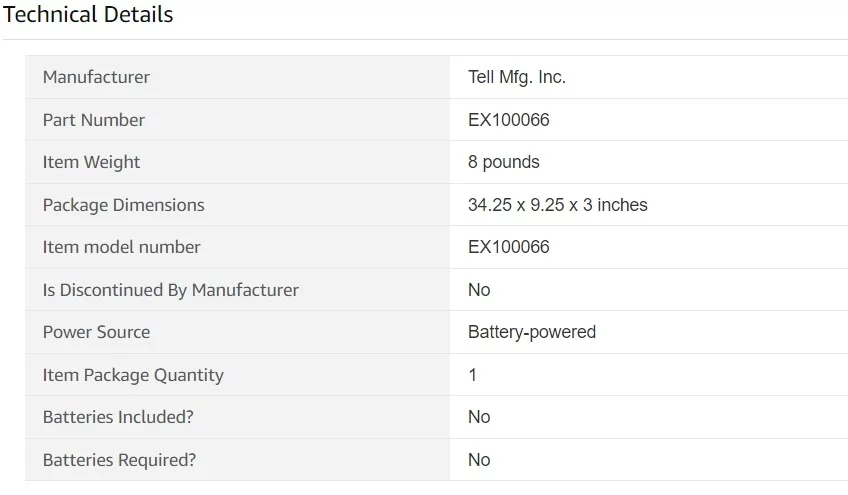
Before ordering, verify that your door dimensions fall within the EX100066's compatibility range. The device works with standard commercial door widths and requires a door thickness of approximately 1-3/4" to 2-1/4". Most hollow metal and solid wood commercial doors fall within this range, but it's worth measuring before you commit. Gather these tools before you start: a power drill with bits appropriate for your door material, a full screwdriver set, a level, a tape measure, and wire strippers if you're hardwiring the alarm rather than running it on battery.
Tell Mfg includes a paper drill template with the device for marking hole locations. Use it — and take your time with it. Skipping the template and eyeballing your drill points is one of the most common DIY installation mistakes, and it leads to misaligned hardware, binding latches, and doors that don't close securely. Tape the template to the door, confirm it's level with your level tool, and mark every hole location before you drill anything.
Mounting, Wiring, and Testing
Installation follows a straightforward sequence: attach the mounting channel to the door face, install the push bar assembly onto the channel, mount the strike plate to the door frame, and verify that the latch retracts and extends cleanly. If you're connecting the alarm to a hardwired power source rather than a 9V battery, follow the wiring diagram included in the documentation — minor variations exist between unit configurations, so don't assume the generic instructions apply.
Test the alarm and latch function immediately after installation, before considering the job finished. Confirm that the latch engages cleanly, that the alarm triggers at the correct delay, and that the door closes flush without binding against the strike. For context on how this surface-mount installation process compares to installing keypad-based door hardware, our review of top mechanical keyless deadbolts covers the comparison in practical detail. A licensed locksmith installation typically adds $100–$200 per door but ensures the hardware is properly aligned and documented for compliance purposes.
Fast Adjustments to Improve Exit Device Performance
Setting the Alarm Delay for Your Space
The EX100066's alarm delay — typically adjustable from 0 to 30 seconds — determines how long the bar can be held depressed before the alarm triggers. Getting this setting right matters more than most buyers realize. Set it too short and you'll generate constant nuisance alarms during legitimate slow exits, which causes staff to start propping doors or taping over the alarm — both of which completely defeat the purpose. Set it too long and the deterrent value weakens substantially.
A 15-second delay is a reasonable default for most commercial environments. Adjust based on your real traffic patterns: if employees regularly use the door during busy shift transitions, consider 20–25 seconds. If the door is strictly for emergencies or very infrequent authorized access, 5–10 seconds makes more sense. Whatever you choose, document the setting in your maintenance log so that anyone servicing the door in the future understands the reasoning behind it.
Maintenance Checks That Prevent Failures
Check the push bar's horizontal alignment every six months. Frequent use causes gradual drift, which creates latch binding over time. Lubricate the latch mechanism annually using a dry lubricant — avoid WD-40 and other petroleum-based sprays, which attract dust and degrade rubber components. If your unit runs on a 9V battery, replace it on a fixed schedule rather than waiting for it to fail during an actual security incident. That's a liability exposure you don't need.
For facilities managing multiple exit points across a building or campus, pairing your devices with outdoor security cameras at each door creates an auditable record of exit events. The EX100066 generates an audible alert, but it doesn't log anything — video coverage fills that documentation gap and strengthens your position during inspections or incidents.
What the Tell EX100066 Costs and What You Get
Purchase Price and Total Cost of Ownership
The Tell EX100066 typically retails between $80 and $140, depending on the supplier and order quantity. That positions it in the budget-to-mid tier of commercial exit hardware — well below the $300–$600 range of premium brands. Professional installation for a surface-mount rim device generally runs $100–$200 per door, bringing your total per-door cost to roughly $180–$340 installed. For small businesses managing multiple exit doors on a tight capital budget, that difference adds up quickly. For additional context on how mid-range door hardware brands compare on quality and value, our Schlage locks and door hardware overview is a useful reference point.
How It Stacks Up Against Alternatives
| Feature | Tell EX100066 | Von Duprin 99 Series | Dorma 8700 Series |
|---|---|---|---|
| Price range (device only) | $80–$140 | $300–$600 | $250–$500 |
| Built-in alarm | Yes | No (add-on) | No (add-on) |
| Mount type | Rim (surface) | Rim or mortise | Rim or mortise |
| ANSI/BHMA grade | Grade 3 | Grade 1 | Grade 1–2 |
| Best application | Light–medium commercial | High-traffic commercial | Medium–heavy commercial |
| ADA compliant | Yes | Yes | Yes |
The table makes the trade-off clear. You're exchanging hardware grade and long-term durability for a lower upfront cost when you choose the EX100066. For a single rear exit in a small retail store, or a secondary door in a light-traffic office, that trade-off is usually reasonable. For high-cycle doors in busy commercial spaces, the investment in a Grade 1 device typically pays off over time through lower maintenance frequency and fewer replacements.
Building a Long-Term Exit Security Strategy
Routine Inspections and Compliance Records
Most jurisdictions require annual fire exit inspections, and your panic bar hardware will be on the checklist every time. Keep a maintenance log for each door: record the installation date, battery replacements, alignment checks, lubrication dates, and any repairs. This documentation protects you during inspections and helps surface patterns — if one door consistently needs realignment, that likely points to a structural issue with the door frame rather than the device itself.
NFPA 80 and NFPA 101 both provide detailed inspection criteria for exit devices. Understanding these standards at a basic level puts you in a much stronger position when fire marshals or building inspectors come through. You'll know what documentation they expect, what questions to ask service contractors, and what findings to push back on if they seem incorrect.
Integrating Into a Broader Security Plan
The EX100066's standalone alarm is a starting point, not a complete security solution. A practical long-term approach treats your exit device as one layer in a stack that might also include exterior cameras, interior motion sensors, access control on the approach side of the door, and central alarm panel integration. Some configurations of the EX100066 include an alarm output that can connect to a panel — check your unit's documentation to see whether that option is available, since it significantly increases the device's usefulness in monitored facilities.
If your building also needs to protect physical assets — documents, equipment, cash reserves — consider pairing your exit hardware with a fire-rated safe. Our review of the SentrySafe SFW123DSB covers a solid mid-range option that fits well in a broader commercial security setup. And if you're doing a full door hardware evaluation that includes your entry locks and deadbolts, our comparison of Schlage vs. Weiser locks is a useful read before you finalize your choices across the building.
Frequently Asked Questions
Is the Tell EX100066 compliant with commercial building codes?
The EX100066 meets ANSI/BHMA Grade 3 standards and is designed to comply with ADA requirements, making it appropriate for many light to medium commercial applications under the IBC and NFPA 101. That said, local jurisdictions sometimes adopt amendments to the base codes, so always verify your specific requirements with your local authority having jurisdiction (AHJ) before installation.
Can the alarm on the EX100066 be disabled?
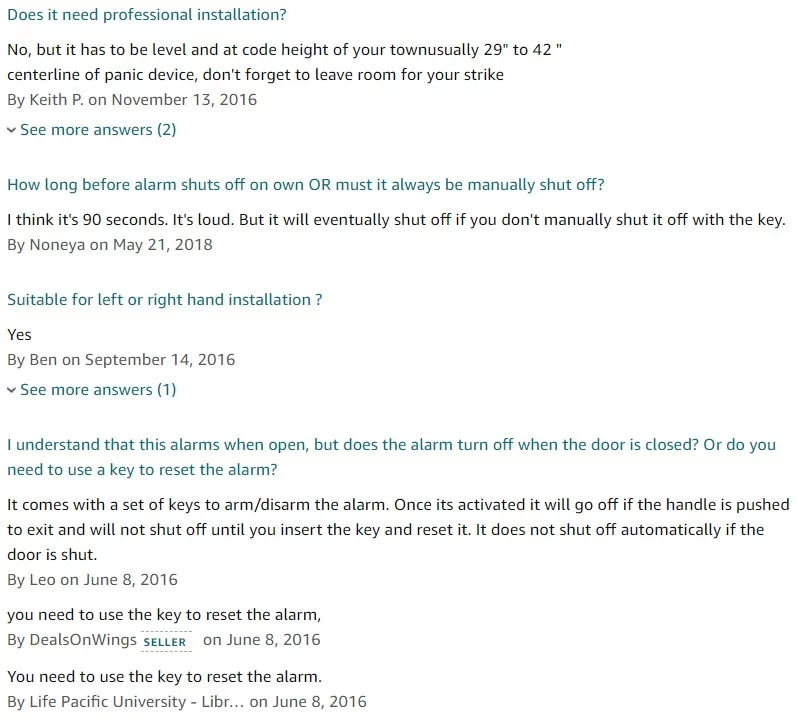
The alarm delay can be adjusted and the alarm can be temporarily silenced, but permanently disabling it is generally not advisable for a code-required exit application. In some facilities and specific door configurations, alarm-free exit devices are permissible — consult your local fire marshal or building inspector before modifying or bypassing the alarm function.
What door types is the EX100066 compatible with?
The EX100066 is compatible with standard commercial hollow metal and solid wood doors with a thickness of approximately 1-3/4" to 2-1/4". It is a single-door rim device and is not designed for double-door or glass storefront applications without additional hardware adapters. Always verify your door dimensions before ordering.
Can the EX100066 connect to a central alarm panel?
Some configurations of the EX100066 include an alarm output terminal that can connect to a monitored alarm panel — check your specific unit's documentation before assuming this capability is present. The base model operates as a standalone alarm using a 9V battery. Panel integration, where available, significantly increases the device's value in monitored commercial settings.
How loud is the built-in alarm?
The alarm on the EX100066 is rated at approximately 100 dB, which is clearly audible in most standard commercial environments. In large open-floor warehouses or loud industrial settings, you may want to supplement with additional alert devices or connect the output to a centralized system so that distant staff members are notified.
How does the alarm delay timer work, and is it adjustable?
Yes, the delay is adjustable — typically from 0 to 30 seconds. This means the alarm triggers after the push bar has been held depressed for the programmed duration. A longer delay reduces nuisance alarms from slow-moving traffic, while a shorter delay improves deterrence on low-traffic emergency-only exits. Most commercial settings find a 10–15 second delay to be a reasonable starting point.
Is professional installation required for the EX100066?
Professional installation is not strictly required for a facilities manager comfortable with basic door hardware work, but it is recommended in most commercial settings. A licensed locksmith ensures the device is properly aligned, the latch functions correctly under load, and the installation is documentable for code compliance purposes. That documentation can also matter when dealing with insurance claims or building inspections.
How does the Tell EX100066 compare to higher-end brands like Von Duprin?
The EX100066 is a Grade 3 device suited for light to medium commercial traffic, while Von Duprin's core product line is Grade 1, engineered for high-cycle, high-traffic environments. The Tell device costs considerably less and includes a built-in alarm that Von Duprin adds as a separate accessory. For low-to-medium traffic secondary doors, the EX100066 offers solid value; for very high-traffic primary exits, the long-term durability advantage of a Grade 1 device typically justifies the higher upfront cost.
Key Takeaways
- The Tell Mfg EX100066 is a budget-friendly commercial exit device panic bar with a built-in audible alarm, making it a practical, code-capable choice for light to medium commercial applications.
- Proper installation — using the included drill template, verifying door compatibility, and testing the alarm delay for your specific traffic patterns — is essential to reliable long-term performance.
- The EX100066 meets ANSI/BHMA Grade 3 and ADA standards, but always verify compliance with your local building code before installation, as jurisdictional requirements vary.
- For complete building security, pair your exit device with exterior camera coverage and maintain a documented inspection log to create an inspection-ready, layered security system.


About Robert Fox
Robert Fox spent ten years teaching self-defence in Miami before transitioning into home security consulting and writing — a background that gives him an unusually practical, threat-aware perspective on residential security. His experience spans physical security assessment, lock and alarm system evaluation, and the behavioral habits that make homes harder targets. At YourHomeSecurityWatch, he covers home security product reviews, background check and criminal records resources, and practical guides on protecting your property and family.
You can Get FREE Gifts. Furthermore, Free Items here. Disable Ad Blocker to receive them all.
Once done, hit anything below