Best Plug and Play Home Security Cameras: Reviews, Buying Guide, and FAQs 2026
by Robert Fox
If you want our top recommendation right now, the Tapo MagCam 2K+ earns it — Wirecutter's Best Outdoor Security Camera for 2026 and PCMag Editors' Choice, with a 10,000mAh battery that can last up to 300 days without a recharge. Whether you're building out a full home security setup or replacing a single aging camera, plug-and-play home security cameras have never been more capable — or more affordable.

The plug-and-play category covers cameras that require no professional installation, no drilling through walls, and no electrician. You unbox the camera, mount it, connect it to your Wi-Fi, and you're monitoring your property within minutes. In 2026, that simplicity now comes paired with features that were exclusive to professional systems just a few years ago: 2K and 3K resolution, AI-powered person and vehicle detection, solar-powered operation, color night vision, and two-way audio. The gap between DIY and professional-grade security has effectively closed.
Choosing the right camera still takes some thought, though. Battery-powered cameras offer ultimate placement flexibility but need periodic recharging. Wired models deliver uninterrupted recording but limit where you can mount them. Indoor cameras serve different needs than outdoor models. And subscription costs — or the welcome absence of them — can add up significantly over time. This guide reviews the seven strongest plug-and-play options on the market right now, walks you through the key buying criteria, and answers the questions we hear most often. For a broader look at the category, check out our full security camera reviews.

Best Choices for 2026
- #PreviewProductRating
- Bestseller No. 1
 Rating:

- Bestseller No. 2
 Rating:
 - Bestseller No. 3
 Rating:
 - Bestseller No. 4
 Rating:
 - Bestseller No. 5
 Rating:
 - Bestseller No. 6
 Rating:
 - Bestseller No. 7
 Rating:

Our Hands-On Reviews
1. Tapo MagCam 2K+ — Best Overall Outdoor
The Tapo MagCam 2K+ (model C425) is the camera that made Wirecutter's top outdoor pick for 2026, and after putting it through its paces, it's easy to see why. The 2K+ resolution delivers noticeably sharper footage than 1080p — license plates and faces are readable at distances where lesser cameras produce a blurry smear. Installation takes about five minutes: the magnetic base snaps onto any metal surface, and a screw-mount adapter is included for non-metal walls. No hub, no bridge, no subscription required — local storage to a microSD card works right out of the box.
The 10,000mAh battery is the headline spec, and it lives up to it. In a standard use pattern with motion events every few hours, you realistically get four to six months between charges. Add the optional Tapo A200 Solar Panel (sold separately) and the camera becomes effectively permanent. Person and vehicle detection is handled on-device, so you're not paying a monthly fee for AI alerts. The IP66 weatherproofing handles rain, dust, and temperature extremes without complaint. If you want optional cloud backup, Tapo offers a subscription, but it's never forced on you.
The app experience is clean and responsive, and you can share camera access with family members without giving them your account credentials. Color night vision performs well up to about 20 feet; beyond that it switches to black-and-white infrared. Two-way audio works reliably. The main trade-off is that 2.4GHz-only Wi-Fi connectivity can struggle in homes with congested networks — if your 2.4GHz band is crowded, you may see the occasional dropped connection.
Pros:
- 2K+ resolution with sharp, readable detail
- Up to 300-day battery life on a single charge
- Magnetic base for tool-free, flexible mounting
- No subscription required — free local SD card storage
- IP66 weatherproofing for year-round outdoor use
- Person and vehicle AI detection included at no cost
Cons:
- 2.4GHz Wi-Fi only — no 5GHz support
- Solar panel sold separately despite the battery-life focus
- Color night vision range limited to ~20 feet

2. WYZE Cam v4 — Best Budget Pick
The WYZE Cam v4 is the camera you recommend to friends who are hesitant to spend big on security. At its price point, 2.5K QHD resolution is genuinely remarkable value — most cameras at this tier top out at 1080p. The v4 improves on the popular v3 with higher resolution, a redesigned sensor, and enhanced color night vision that produces usable color images in conditions where competitors go grainy and grey. You get indoor and outdoor flexibility in a single unit, though note that outdoor use requires Wyze's separately sold outdoor power adapter for a wired installation.
The IP65 weather resistance rating means rain and dust won't be a problem, making this one of the few cameras in its price range you can actually trust outside. Motion detection and AI-powered person, pet, and package detection are available via the free Wyze app, though some advanced AI features require the optional Cam Plus subscription. Without the subscription, you still get 12-second cloud event clips — enough for most users. Local storage via microSD is supported and works well.
The app has matured significantly with the v4 generation. Live viewing is smooth, two-way audio is clear, and the interface is intuitive even for first-time security camera users. If you're building out a multi-camera setup on a budget, the v4's price-to-performance ratio is hard to beat. The main limitations are the need for a separate outdoor adapter and the fact that the free tier clips out at 12 seconds per event, which can miss longer incidents.
Pros:
- 2.5K QHD resolution at a budget-friendly price
- IP65 weather resistance for indoor and outdoor use
- Enhanced color night vision — one of the best in class at this price
- Free 12-second cloud clips with no subscription required
- microSD local storage supported
Cons:
- Outdoor use requires a separately sold weather adapter
- Full AI detection features locked behind Cam Plus subscription
- Free cloud clips capped at 12 seconds

3. Blink Outdoor 4 — Best Two-Year Battery Life
Blink's fourth-generation Outdoor camera keeps refining what the brand does best: wireless simplicity with a battery life that puts everything else in this category to shame. Two years of power from a pair of standard AA lithium batteries is not marketing hyperbole — it's achievable in typical residential use. That means no annual recharge ritual, no dead camera because you forgot to check the app. You install it, walk away, and it quietly does its job. The three-camera system configuration makes it an ideal starting kit for a complete exterior setup.
1080p HD live view is crisp and responsive over the Blink app. Infrared night vision handles low-light and no-light conditions reliably, and two-way audio lets you communicate with anyone at your door or on your property. The camera connects directly to your home Wi-Fi — no hub required for basic use — though adding a Blink Sync Module 2 unlocks local storage to USB and improves responsiveness. Cloud storage is available through the Blink Subscription Plan, which is priced reasonably compared to competitors.
Where the Blink Outdoor 4 makes trade-offs is on the AI detection side. It lacks the on-device person/vehicle classification that the Tapo or eufy cameras offer without a subscription. Motion zones are available and useful, but expect more false alerts from wind-blown foliage without smart filtering. For users who primarily want reliable recording and long battery life over sophisticated detection, this remains one of the most practical choices on the market in 2026.
Pros:
- Industry-leading two-year battery life on AA lithiums
- No hub required for basic Wi-Fi operation
- 1080p HD with two-way audio and infrared night vision
- Three-camera system provides complete exterior coverage
- Simple, fast self-installation — minutes, not hours
Cons:
- No person/vehicle AI detection without a paid subscription
- Local USB storage requires separate Sync Module 2
- Night vision is infrared only — no color in low light
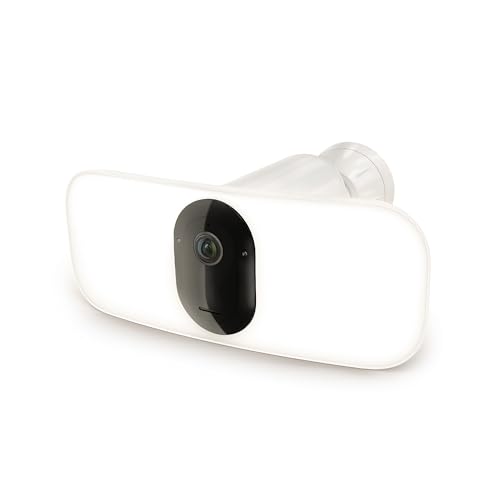
4. Arlo Pro 3 Floodlight — Best Floodlight Camera
The Arlo Pro 3 Floodlight Camera solves a problem that standard cameras can't: illuminating large outdoor areas while simultaneously recording them. With up to 3,000 lumens of LED output, it turns night into day across a wide field — your driveway, alleyway, or back yard becomes clearly visible in full color even in total darkness. The 2K HDR video captures fine detail, and the wire-free, rechargeable battery design means you can mount this anywhere without hiring an electrician. This is the camera for spaces where standard night vision just isn't enough.
The Arlo app is polished and feature-rich. Person, vehicle, and package detection are available through Arlo Secure, and the 2K HDR image quality means detected objects are easy to identify. IP65 weather resistance keeps it operational in rain and cold. The built-in siren can deter intruders before an incident escalates, and two-way audio lets you warn off unwanted visitors remotely. Integration with Alexa, Google Assistant, and Apple HomeKit makes it one of the most compatible cameras in this roundup.
The trade-off with the Arlo ecosystem is subscription cost. The camera works without Arlo Secure, but you lose smart detection and cloud storage — you're left with only 30 days of free cloud clips at reduced functionality. Battery life with the floodlight active is shorter than you'd expect, so plan on monthly recharges in high-activity areas. That said, no competing wireless floodlight camera matches the combination of light output, video quality, and placement flexibility you get here.
Pros:
- Up to 3,000 lumens — outstanding coverage for large outdoor areas
- 2K HDR video with full color night vision
- Wireless, rechargeable — no electrician required
- IP65 weatherproofing; built-in siren
- Works with Alexa, Google Home, and Apple HomeKit
Cons:
- Smart detection features require Arlo Secure subscription
- Floodlight use significantly reduces battery runtime
- Higher price point than most battery cameras

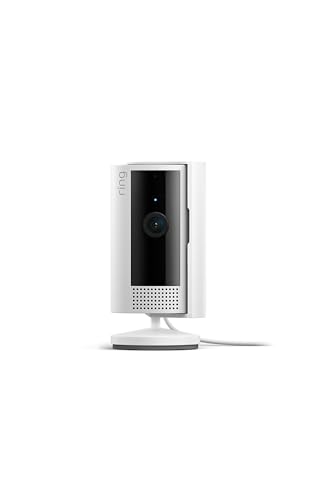
5. Ring Indoor Cam — Best Indoor Option
The Ring Indoor Cam is the straightforward choice if you need an indoor camera that works reliably within the Ring ecosystem or alongside a Ring doorbell and alarm system. Setup is genuinely plug-and-play — plug it into an outlet, connect to Wi-Fi via the Ring app, and you're live in under five minutes. The 1080p HD video with Color Night Vision handles everything from living room monitoring to baby and pet watching without complaint. The manual Privacy Cover is a standout feature: a physical swivel cap that cuts both video and audio when privacy matters, not just a software toggle.
Advanced Pre-Roll recording captures a few seconds before a motion trigger fires, so you see what led up to an event rather than just the aftermath. That's a practical advantage over competitors that record only after detection. The Ring app interface is clean and integrates seamlessly with other Ring devices — if you already have a Ring doorbell, adding this camera to your ecosystem is frictionless. Alexa integration is native and responsive.
The limitations are familiar Ring trade-offs. Cloud video storage requires Ring Protect subscription — without it, you get live view and real-time alerts but no recorded clips. Local storage is not supported. And this is strictly an indoor unit; there's no weather resistance for outdoor placement. If you need outdoor coverage, pair it with Ring's outdoor lineup or look at the other picks in this guide. For dedicated indoor monitoring in a Ring household, though, it's hard to argue with the simplicity here. Also consider checking out our roundup of best indoor home security cameras for 2026 for more options in this category.
Pros:
- 5-minute plug-and-play setup — no tools required
- 1080p HD with Color Night Vision
- Manual Privacy Cover cuts both video and audio physically
- Advanced Pre-Roll shows seconds before motion events
- Deep Alexa and Ring ecosystem integration
Cons:
- Cloud clip storage requires Ring Protect subscription
- Indoor only — no weather resistance
- No local storage option
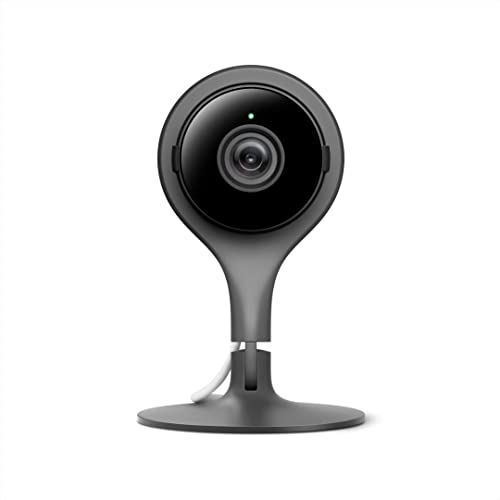
6. Google Nest Cam Indoor (1st Gen) — Best Smart Home Integration
The Google Nest Cam Indoor 1st Gen is the camera for households already invested in Google's ecosystem. If you have a Nest thermostat, Google Home speakers, or a Nest Hub display, this camera integrates with all of them with zero friction. 24/7 continuous live streaming in 1080p HD is the defining spec — most battery cameras in this roundup record only on motion triggers, making this a fundamentally different proposition for continuous monitoring of a living room, nursery, or home office. Eight high-power infrared LEDs provide clear night vision in conditions from dim to completely dark.
The Google Home app has matured considerably, and in 2026 it provides a well-organized interface for viewing multiple cameras, setting activity zones, and receiving mobile alerts. Sharing a camera view with family members is simple. The 3-hour snapshot history in the free tier is enough to cover common check-in scenarios, though active recording history requires a Nest Aware subscription. If you're relying on this camera for security evidence capture rather than casual monitoring, the subscription is worth considering.
As a wired camera — it needs a USB power adapter within reach — placement is constrained compared to battery models. This is a first-generation product, and Google's subsequent Nest Cam generations have superseded it on several specs, but the original remains a reliable, well-supported option and is often available at a notably lower price than newer models. For a deep dive into Nest's product history and ecosystem, our Google Nest overview covers everything you need to know. Also be aware of smart home security considerations — read our guide on how to prevent your smart home from being hacked before connecting any camera to your network.
Pros:
- 24/7 continuous live streaming — no gaps in coverage
- Native Google Home and Google Assistant integration
- Eight IR LEDs for strong night vision performance
- 3-hour free snapshot history included
- Stable, mature app with good multi-device management
Cons:
- Wired only — placement limited by outlet proximity
- Recorded clip history requires Nest Aware subscription
- Older generation — newer Nest Cam models have higher resolution

7. eufy SoloCam S340 — Best Solar-Powered Camera
The eufy SoloCam S340 is the most ambitious camera on this list. A built-in removable solar panel means it genuinely runs indefinitely once installed — no charging cables, no battery swaps, no solar panel sold separately. Pair that with 360° pan and tilt surveillance and you're getting full-yard visibility from a single camera mount. The dual-camera design captures 3K resolution in a primary lens and uses an 8× zoom secondary lens to punch in on distant objects while keeping full situational awareness in the wide-angle view simultaneously.
Installation is straightforward: mount the camera vertically on a wall or post for full 360° horizontal coverage, connect to your 2.4GHz Wi-Fi, and the eufy Security app walks you through the rest. No monthly fee is required for local storage — eufy's approach has always been subscription-optional, and the S340 continues that tradition. Person and pet AI detection work on-device, and alerts are specific enough to avoid the constant pinging from cars passing the street. The HomeBase S380 compatibility opens up additional storage and automation options for users expanding a eufy ecosystem.
At its price, the S340 is targeting users who want a single-camera solution that truly covers a large area without any ongoing cost. The pan-and-tilt motor mechanism introduces a point of mechanical complexity that fixed cameras avoid, and in very cloudy climates the solar input may not fully sustain high-activity recording — supplemental USB-C charging is available for those periods. For outdoor coverage of large open areas, though, this camera delivers a level of capability that would have cost significantly more just two years ago. For a complete look at outdoor security options beyond plug-and-play cameras, see our best outdoor security cameras guide.
Pros:
- Integrated solar panel — truly set-and-forget operation
- 360° pan and tilt with no blind spots
- 3K resolution with 8× zoom dual-camera design
- No subscription fee — free local storage
- On-device person and pet AI detection
Cons:
- Solar output may be insufficient in extended overcast climates
- Pan-and-tilt motor adds mechanical complexity vs. fixed cameras
- 2.4GHz Wi-Fi only


Buying Guide: How to Choose the Best Plug-and-Play Home Security Camera
Wired vs. Battery-Powered vs. Solar

The power source is the single most important variable in plug-and-play cameras, and it shapes every other trade-off you'll face. Here's how each option breaks down:
- Wired cameras (Google Nest Cam Indoor, Ring Indoor Cam) plug into a standard outlet and offer continuous, uninterrupted operation. You never think about batteries, but placement is constrained by outlet locations and cable runs. Best for indoor spaces where outlets are accessible.
- Battery-powered cameras (Tapo MagCam 2K+, WYZE Cam v4 outdoors, Blink Outdoor 4, Arlo Pro 3) can go anywhere you can mount them — eaves, fences, soffits, trees. The trade-off is recharging or battery replacement. Modern batteries last from two months (high-activity, floodlight-on models) to two years (Blink's AA lithiums in typical use).
- Solar-powered cameras (eufy SoloCam S340, Tapo with optional A200 panel) represent the true set-and-forget installation. A south-facing mount with a few hours of daily sun keeps most solar cameras topped off indefinitely. In cloudy climates or shaded locations, solar supplementation may not be sufficient — check whether the camera offers a backup USB-C charging port.
As a rule of thumb: if you have outlet access, wired is simpler for indoor use. For outdoor flexibility, battery-powered cameras are the mainstream choice. If you hate maintenance entirely, solar is worth the investment.
Resolution and Night Vision

In 2026, 1080p is the entry-level baseline, and 2K or higher is the new standard for any camera you expect to use as evidence. The practical difference: at 1080p, a face 15 feet away is recognizable. At 2K or 2.5K, it's identifiable. At 3K with digital zoom (eufy S340), you can read a license plate from 30–40 feet.
Night vision comes in two main forms. Infrared (IR) night vision produces black-and-white footage but works in complete darkness at ranges up to 30–40 feet in quality cameras (Blink Outdoor 4, Google Nest Cam). Color night vision uses a brighter sensor and sometimes a supplemental white LED to produce color footage in low light — you see clothing colors, car colors, and other identifying details that IR misses. The trade-off is that color night vision requires some ambient light and typically has a shorter effective range. Cameras with adjustable spotlights (Arlo Pro 3 Floodlight) bypass this limitation entirely by generating their own white light.
According to FBI crime statistics, most residential break-ins occur in daylight hours, but porch package theft and vandalism skew heavily toward evening. A camera with solid color night vision or an integrated light covers both threat windows.
Smart Detection and Subscriptions

AI-powered smart detection — the ability to distinguish a person from a swaying tree branch or a passing car — is one of the most useful camera features you can have. Without it, you'll receive motion alerts constantly and eventually start ignoring them. With it, your phone buzzes only when something that actually matters enters the frame.
The subscription question is critical. Here's the breakdown across the cameras reviewed above:
- Subscription-free options: Tapo MagCam 2K+, eufy SoloCam S340 — full AI detection and local storage with no monthly fee. These are the standout value propositions in this category.
- Free tier with paid upgrade: WYZE Cam v4 (12-second free clips; Cam Plus for full recording), Blink Outdoor 4 (free motion alerts; Blink Subscription Plan for cloud storage), Ring Indoor Cam (live view free; Ring Protect for recorded clips).
- Subscription recommended: Arlo Pro 3 Floodlight (smart detection and cloud history require Arlo Secure), Google Nest Cam (cloud recording history requires Nest Aware).
Add up subscription costs over two to three years before committing to a camera ecosystem. A camera that costs $30 more upfront but carries no subscription often costs less over its lifetime than a cheaper camera with a $10/month cloud plan.
Installing a home security camera is also worth mentioning to your homeowner's insurance provider — many insurers offer modest premium discounts for verified security systems. Over several years, those savings compound meaningfully.
Wi-Fi Connectivity and Range
Every camera on this list requires a Wi-Fi connection. The camera's placement relative to your router matters more than most buyers anticipate. Key considerations:
- 2.4GHz vs. 5GHz: All the battery cameras in this roundup use 2.4GHz only. The lower frequency penetrates walls better and reaches greater distances, making it genuinely the right choice for outdoor cameras. The trade-off is that 2.4GHz bands are often more congested in dense neighborhoods.
- Range: Most Wi-Fi cameras operate reliably within 30–50 feet of the router through standard construction. For cameras mounted at the far corner of a yard or garage, a Wi-Fi extender or mesh node may be necessary.
- Hub requirements: Blink cameras can work without a hub, but a Sync Module 2 improves responsiveness. eufy's HomeBase extends storage and automation. Ring and Nest are hub-free for their core functions. The Tapo MagCam connects directly to your router — no bridge needed.


If you're considering building a more comprehensive system beyond individual Wi-Fi cameras, PoE (Power over Ethernet) NVR systems from brands like Reolink and Amcrest offer wired reliability and continuous recording across multiple cameras. See our best hidden spy cameras guide if you're also looking for more discreet monitoring solutions for your property.
FAQs
Do plug-and-play security cameras require professional installation?
No. That's the defining characteristic of this category. Plug-and-play cameras are designed for self-installation — you mount the camera, power it up, and connect it to your Wi-Fi through the manufacturer's app. Most setups take between five and fifteen minutes. No electrician, no running cables through walls, no professional service call required. The cameras reviewed here represent the most accessible end of the home security market.
Do I need a subscription to use a plug-and-play security camera?
Not necessarily. Several cameras in this roundup — including the Tapo MagCam 2K+ and eufy SoloCam S340 — offer full functionality including AI detection and local storage with no monthly fee. Others like the Ring Indoor Cam and Google Nest Cam offer live view for free but require a subscription for recorded clip history. Wyze and Blink offer free tiers with limited clip length. Always check the subscription terms before purchasing, and calculate the total three-year cost including any subscription fees.
How long do batteries last in wireless security cameras?
Battery life varies widely depending on the camera, activity level, and features used. The Blink Outdoor 4 leads this roundup with up to two years on standard AA lithium batteries in typical use. The Tapo MagCam 2K+ lasts up to 300 days (about 10 months) on its 10,000mAh built-in battery. Cameras with active floodlights (Arlo Pro 3) consume power faster and may need monthly recharging in high-traffic areas. Cold weather also reduces battery performance. If battery maintenance is a concern, a solar-powered option like the eufy SoloCam S340 effectively eliminates the issue.
What resolution do I need in a home security camera in 2026?
For meaningful security footage — footage you can use to identify a person's face or read a license plate — aim for 2K (2304×1296) or higher. At 1080p, detail is sufficient for general monitoring but degrades when you zoom in digitally to identify a face at distance. Cameras in this roundup range from 1080p (Blink Outdoor 4, Ring Indoor Cam) to 3K (eufy SoloCam S340), with 2K and 2.5K representing the current sweet spot for price versus detail. The higher-resolution cameras in this guide are only marginally more expensive than 1080p models, making the step up worth it for most buyers.
Can I use outdoor security cameras indoors, and vice versa?
Outdoor cameras can generally be used indoors — they're overbuilt for the purpose, which is fine. Indoor cameras, however, should not be used outdoors unless they carry a weather resistance rating (IP65 or IP66). The Ring Indoor Cam, for example, is not weatherproofed and will fail if exposed to rain or temperature extremes. The WYZE Cam v4 has IP65 rating and can work outdoors with the separately sold outdoor adapter. Always check the IP rating and confirm outdoor compatibility before mounting an indoor-rated camera outside.
How do I know if my security camera footage is secure from hacking?
Camera security comes down to three factors: the manufacturer's security practices, your own network hygiene, and your password habits. Choose cameras from established brands with a track record of security updates (all brands reviewed here qualify). Use a strong, unique password for your camera app account and enable two-factor authentication where available. Keep your camera's firmware updated — manufacturers push security patches regularly. Consider isolating your cameras on a separate guest Wi-Fi network so a compromised camera can't access your other devices. For a full guide on this topic, see our article on how to prevent your smart home from being hacked.
Buy on Walmart
- Tapo MagCam 2K+ - 2026 Wirecutter Best Outdoor Security Came — Walmart Link
- WYZE Cam v4 (Latest Model), 2.5K AI Security Camera, Indoor/ — Walmart Link
- Blink Outdoor 4 – Wireless smart security camera, two-year b — Walmart Link
- Floodlight Security Camera Wireless Outdoor 2K No Wiring - A — Walmart Link
- Ring Indoor Cam, Home or business security in 1080p HD video — Walmart Link
- Google Nest Cam Indoor - 1st Generation - Wired Indoor Camer — Walmart Link
- eufy Security SoloCam S340, Solar Security Cameras Wireless — Walmart Link
Buy on eBay
- Tapo MagCam 2K+ - 2026 Wirecutter Best Outdoor Security Came — eBay Link
- WYZE Cam v4 (Latest Model), 2.5K AI Security Camera, Indoor/ — eBay Link
- Blink Outdoor 4 – Wireless smart security camera, two-year b — eBay Link
- Floodlight Security Camera Wireless Outdoor 2K No Wiring - A — eBay Link
- Ring Indoor Cam, Home or business security in 1080p HD video — eBay Link
- Google Nest Cam Indoor - 1st Generation - Wired Indoor Camer — eBay Link
- eufy Security SoloCam S340, Solar Security Cameras Wireless — eBay Link

Key Takeaways
- The Tapo MagCam 2K+ is the strongest all-around outdoor pick for 2026 — 2K+ resolution, up to 300-day battery life, magnetic mount, and zero subscription required make it difficult to beat at its price point.
- If you're on a budget, the WYZE Cam v4 delivers 2.5K resolution and IP65 weather resistance for a fraction of what competitors charge, making it the smartest value play in the category.
- For complete coverage of a large outdoor area without any maintenance overhead, the eufy SoloCam S340's integrated solar panel and 360° pan-and-tilt design deliver set-and-forget security at no monthly cost.
- Always calculate total three-year cost including subscriptions before purchasing — cameras with no monthly fee often cost less over their lifetime even when the upfront price is higher.


About Robert Fox
Robert Fox spent ten years teaching self-defence in Miami before transitioning into home security consulting and writing — a background that gives him an unusually practical, threat-aware perspective on residential security. His experience spans physical security assessment, lock and alarm system evaluation, and the behavioral habits that make homes harder targets. At YourHomeSecurityWatch, he covers home security product reviews, background check and criminal records resources, and practical guides on protecting your property and family.
You can Get FREE Gifts. Furthermore, Free Items here. Disable Ad Blocker to receive them all.
Once done, hit anything below