Best Emergency Locks and Panic Bars: Reviews, Buying Guide, and FAQs 2026
by Robert Fox
According to the National Fire Protection Association, improper or malfunctioning emergency egress hardware is a documented factor in commercial fire fatalities — and with more than 87,000 commercial structure fires occurring annually in the United States, selecting the right panic bar or emergency lock is a decision that carries real consequences. Emergency exit hardware is not a commodity purchase. It is a life-safety component, and in 2026 the market spans everything from budget-tier aluminum push bars to Grade 1 ADA-certified devices with integrated digital keypads and alarm systems. Understanding the difference between those categories matters before a single dollar is spent.
Panic bars — also called crash bars, push bars, or exit devices — operate on a straightforward mechanical principle: a horizontal bar mounted across a door allows occupants to exit rapidly without manipulating a knob or lever. The moment that bar is depressed, the latch retracts and the door swings free. Building codes, primarily governed by NFPA 101 (Life Safety Code) and the International Building Code, mandate these devices in most commercial occupancies with occupant loads above a certain threshold. That regulatory backdrop means buyers are not shopping for style — they are shopping for compliance, durability, and reliability under stress. A browse through the broader security hardware reviews on this site makes clear how much the quality gap between entry-level and professional-grade hardware has widened in recent years.
This guide evaluates seven of the most relevant panic bars and emergency exit devices available in 2026, from Von Duprin's industrial-pedigree rim device to the Nuk3y ED-5000's ADA-certified alarm configuration. Each product has been assessed against the criteria that matter most to facilities managers, building contractors, and security-conscious property owners: build quality, code compliance, ease of installation, and long-term reliability. Readers who are also evaluating broader access control ecosystems will find the best access control keypads guide a useful companion resource.

Contents
- Best Choices for 2026
- Full Product Breakdowns
- Von Duprin 99EO 3 US28 — Best for High-Security Commercial Use
- Dynasty Hardware Push Bar — Best Budget Commercial Panic Bar
- 8888F 32D Series Multi-Function — Best for Versatile Installations
- Nuk3y ED-5000 Series — Best ADA-Certified Alarm Exit Device
- Corbin Russwin ED4000 — Best Narrow Stile Design
- Kit Trilogy Digital Keypad with Panic Bar — Best Smart Integration
- Sargent 80 Series — Best Fire-Rated Rim Device
- How to Pick the Best Emergency Exit Device
- FAQs
- Final Thoughts
Best Choices for 2026
- #PreviewProductRating
- Bestseller No. 1
 Rating:

- Bestseller No. 2
 Rating:
- Bestseller No. 3
 Rating:
 - Bestseller No. 4
 Rating:
 - Bestseller No. 5
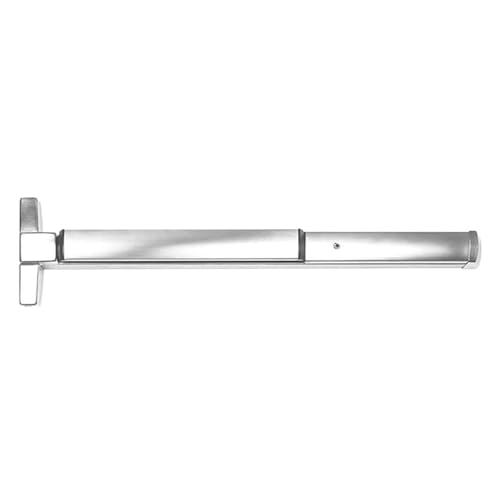 Rating:
- Bestseller No. 6
 Rating:
 - Bestseller No. 7
 Rating:


Full Product Breakdowns
1. Von Duprin 99EO 3 US28 99 Series Rim Exit Device — Best for High-Security Commercial Use
Von Duprin has been manufacturing exit hardware since 1908, and the 99 Series represents the brand's flagship rim exit device — a product line with deep roots in institutional and high-security commercial environments. The 99EO configuration designates an electric option device, meaning the latch can be controlled remotely via an electric strike or access control system, which dramatically expands this device's integration potential beyond a standard mechanical crash bar. The US28 finish is a satin aluminum that holds up exceptionally well in high-traffic corridors and stairwell doors where surface wear accumulates quickly.
What separates the Von Duprin 99 Series from mid-market alternatives is its construction philosophy. The chassis is heavy-gauge steel, the dogging mechanism is precise and consistent across thousands of cycles, and the tolerances throughout the mechanism reflect a product engineered for sustained abuse in demanding environments. Von Duprin explicitly notes that unusual operating conditions — extreme temperature ranges, high humidity, frequent mechanical impact — can affect application suitability, and recommends engineering review for edge cases. That kind of transparency is actually a mark of confidence: the company knows its product's operational envelope and communicates it clearly. For facilities requiring UL-listed exit hardware in high-occupancy or institutional settings, the Von Duprin 99EO is the benchmark against which other products in this category are measured.
The electric option adds meaningful access control capability without sacrificing the core panic egress function. When the power is cut or the system fails, the device defaults to free egress — a critical fail-safe requirement in life-safety hardware. This is not a product for a small retail space or a residential side door. It is engineered for hospitals, schools, government facilities, and commercial buildings where the hardware must perform flawlessly for decades.
Pros:
- Electric option enables seamless access control system integration
- Heavy-gauge steel construction built for institutional-grade endurance
- UL listed for fire-rated door assemblies
- Satin aluminum finish resists wear in high-traffic environments
Cons:
- Premium pricing places it well above budget and mid-tier options
- Unusual installation environments require engineering consultation per manufacturer guidance

2. Dynasty Hardware Push Bar Panic Exit Device — Best Budget Commercial Panic Bar
Dynasty Hardware occupies a specific and well-defined niche: commercial-grade panic hardware at a price point accessible to small business owners, property managers with tight budgets, and DIY-capable contractors. The aluminum finish push bar is designed for doors between 30 and 36 inches wide, covers both wood and metal door substrates, and ships with a strike plate, dogging key, and all necessary mounting hardware. The reversible design — accommodating both left- and right-hand door orientations — means a single SKU covers the majority of commercial door configurations without requiring buyers to specify hand orientation at purchase.
At 31 inches overall length, the push bar provides adequate activation surface for fast egress without protruding awkwardly from the door face. The Grade 2 rating is an important distinction to understand clearly: Grade 2 is commercial use appropriate for office buildings, retail spaces, and hotels as the manufacturer indicates, but it does not meet the ANSI Grade 1 threshold required in high-traffic institutional environments. For a back exit of a small retail shop or an interior stairwell door in a low-traffic office, the Dynasty Hardware push bar delivers reliable panic egress performance at a fraction of the cost of institutional-grade alternatives. The aluminum finish does show surface scratching in high-contact areas more readily than stainless steel finishes, but for the application profile this product targets, that is a cosmetic concern rather than a functional one.
Installation is straightforward for anyone comfortable with basic carpentry and door hardware. The included hardware kit is complete, and the reversible chassis means field adjustments are minimal. Exterior lever trim is sold separately, which is a common industry practice for crash bars — it allows buyers to match trim to existing hardware rather than being locked into a single aesthetic.
Pros:
- Reversible for left- or right-hand doors without additional parts
- Complete installation hardware included — no additional sourcing required
- Compatible with both wood and metal door construction
- Accessible price point for small commercial properties
Cons:
- Grade 2 rating limits suitability for high-occupancy or institutional applications
- Not for use on glass doors — a meaningful restriction for storefront applications
3. 8888F 32D Series Multi-Function Wide Stile Rim Exit Device — Best for Versatile Installations
The 8888F 32D is a wide stile rim exit device built around the concept of functional flexibility. Wide stile devices are specifically designed for commercial aluminum-framed doors — the type ubiquitous in modern office buildings, retail centers, and institutional facilities where aluminum storefront construction is the default. The 32D designation refers to a satin stainless steel finish, one of the most durable and corrosion-resistant surface treatments available on commercial door hardware. Wide stile compatibility is not a trivial design consideration: standard-width devices simply cannot be fitted to narrow aluminum stile frames without significant modification or custom fabrication.
The reversible configuration means this device adapts to either hand door without returning it for a different-handed model — a practical advantage for contractors specifying hardware across a mixed building with both left- and right-hand egress doors. Multi-function wide stile devices like the 8888F represent the professional installer's preferred choice when a facility operates aluminum-framed doors at multiple egress points. The satin stainless steel finish provides excellent resistance to the kind of fingerprint accumulation and surface oxidation that plagues lesser finishes in high-humidity environments such as commercial kitchens, pool facilities, or coastal properties.
As a newer product in this evaluation set, field longevity data is still developing — but the engineering specifications align with industry standards for commercial rim exit hardware. Buyers evaluating this device alongside the Corbin Russwin or Sargent options will find it competitive on finish quality and installation flexibility, particularly for wide stile aluminum door applications where those traditional brands offer fewer off-the-shelf solutions.
Pros:
- Wide stile design addresses the specific demands of aluminum-framed commercial doors
- Satin stainless steel finish offers superior corrosion resistance
- Reversible configuration eliminates hand-specific ordering complications
Cons:
- Newer product with limited long-term field performance history
- Specification sheets less detailed than established institutional brands
4. Nuk3y ED-5000 Series Panic Bar Exit Device — Best ADA-Certified Alarm Exit Device
The Nuk3y ED-5000 enters the market with credentials that matter in regulated commercial environments: Grade 1 certification, ADA compliance, UL listing, and a verified 500,000-cycle test record. That cycle count is significant — it represents years of daily use in a busy facility without mechanical degradation. Grade 1 is the highest ANSI performance classification for commercial door hardware, placing the ED-5000 in the same tier as institutional-grade products from brands like Von Duprin and Corbin Russwin. The fire-rated non-dogging configuration offered in this listing specifically meets building code requirements for doors in fire-rated assemblies, where dogging (holding the latch in the retracted position) is prohibited.
The integrated alarm option is a standout feature in this product's configuration. When the push bar is depressed, an audible alarm activates — a deterrent for unauthorized use of emergency exits in retail, healthcare, and school environments where exit-only doors are frequently propped or used as shortcuts. The alarm function operates independently of any external security system, making it a self-contained security addition that requires no wiring to a control panel. The combination of Grade 1 mechanical performance, ADA compliance, fire rating, and integrated alarm in a single device at this price tier makes the Nuk3y ED-5000 one of the most feature-complete options in the 2026 panic hardware market.
The reversible panic bar and lever trim accommodate both hand orientations, and the Schlage SC1 keyway on the lever trim is one of the most common commercial keyways in North America — a meaningful advantage for facilities managers maintaining a master key system across a large property. The dogging feature on the non-fire-rated version allows the latch to be held retracted so the door operates as a push-pull rather than requiring a full push-bar depression, which is a convenience feature for loading dock doors or service entrances that see constant two-way traffic.
Pros:
- Grade 1 ADA certified with 500,000-cycle test verification
- Integrated alarm activates on push bar depression — no wiring to external system required
- UL listed for fire-rated door assemblies
- Schlage SC1 keyway compatibility simplifies master key integration
Cons:
- Fire-rated version is non-dogging by code — a constraint for high-traffic service doors
- Alarm battery maintenance adds an ongoing operational requirement
5. Corbin Russwin ED4000 Series Satin Stainless Steel Narrow Stile Rim Exit Device — Best Narrow Stile Design
Corbin Russwin is one of the oldest and most respected names in American commercial hardware, and the ED4000 Series carries that institutional pedigree into a narrow stile exit device configuration designed for the 36-inch door width that dominates ADA-compliant commercial construction. Narrow stile devices are the architectural hardware specification of choice for frameless glass doors and narrow-profile aluminum frames — the aesthetic standard in contemporary commercial interior design. The satin stainless steel finish on this unit is not merely decorative; it provides Class B corrosion resistance and withstands the cleaning chemicals used in healthcare and food service environments without surface degradation.
ANSI Grade 1 compliance is the engineering baseline for the ED4000, paired with an easy-to-use push pad that satisfies ADA egress requirements for barrier-free code compliance. The low-projection design — meaning the device extends minimally from the door face — is a specific engineering response to the barrier-free code provisions that restrict protrusions along accessible routes. For facilities with ADA compliance obligations and a preference for clean architectural lines, the Corbin Russwin ED4000 represents the professional specification standard. This is hardware that architects specify on construction documents, and it performs to that standard.
Buyers comparing the ED4000 to the Nuk3y ED-5000 will find both products occupying Grade 1 territory, but the Corbin Russwin brings deeper institutional field history and a broader ecosystem of trim options, mortise lock adapters, and optional accessories available through commercial hardware distributors. For facilities that require matching hardware across multiple door functions — entry, storeroom, classroom — the Corbin Russwin ecosystem provides consistent aesthetic and mechanical integration. Those building a comprehensive security framework should also consider reviewing the best door lock installation kits to ensure proper tooling for professional-quality installation.
Pros:
- ANSI Grade 1 certified for high-traffic institutional use
- Low-projection design satisfies barrier-free code compliance requirements
- Satin stainless steel finish resistant to commercial cleaning chemicals
- Extensive trim and accessory ecosystem from Corbin Russwin
Cons:
- No integrated alarm option — requires external system for monitored egress
- Narrow stile specific — not suitable for wide stile aluminum frame applications
6. Kit Trilogy Digital Keypad Weather Resistant Digital Lock with Panic Exit Bar M9900 — Best Smart Integration
This kit pairs two distinct hardware platforms — the Alarm Lock Trilogy ETDLS1G digital keypad with audit trail and the Marks USA M9900 panic exit bar — into a single solution for doors requiring both controlled entry and emergency egress. It is the most technically sophisticated product in this evaluation. The Trilogy series keypad is a professional access control device with standalone programming capability, weather resistance for exterior door applications, and an audit trail function that logs up to 40,000 access events with timestamps. That audit trail capability is a compliance feature in environments governed by HIPAA, SOX, or other regulations requiring documented access records.
The 26D satin chrome finish is consistent across both components, presenting a unified aesthetic on the door face. Weather resistance in the keypad is a critical specification for exterior vestibule doors, loading dock entries, and exterior stairwell exits where electronic hardware is routinely exposed to rain, temperature swings, and condensation. Most standard digital keypads are not rated for these conditions — the Trilogy's weather resistance is a meaningful differentiator. The combination of audit-trail access logging, programmable PIN codes, and a code-compliant panic bar in a single kit addresses the security and egress requirements of regulated commercial facilities that need documented access control without the infrastructure overhead of a networked system.
Installation complexity is significantly higher than a standalone panic bar. The integration of electronic components — keypad programming, wiring to the locking mechanism, power supply selection — places this product firmly in professional installation territory. Buyers who have previously worked with the best biometric door lock options will recognize the installation complexity profile: manageable with the right tools and preparation, but not a quick afternoon project. The standalone programming capability means no network infrastructure is required, which is an advantage in facilities without IT support for access control systems.
Pros:
- Audit trail logs up to 40,000 access events — critical for compliance environments
- Weather-resistant keypad rated for exterior door applications
- Unified kit eliminates compatibility guesswork between keypad and exit hardware
- Standalone programming requires no network infrastructure
Cons:
- Significantly higher installation complexity than mechanical-only panic bars
- Premium price tier reflects the dual-component system
7. Sargent 80 Series Satin Stainless Steel Less Trim Rim Exit Device — Best Fire-Rated Rim Device
Sargent is a brand that professional hardware distributors and commercial contractors recognize immediately — it occupies the same institutional-grade tier as Von Duprin and Corbin Russwin, and the 80 Series is its core rim exit device offering. The "less trim" designation indicates this unit ships without exterior lever trim, making it suitable for applications where the exit device functions as egress-only — no re-entry from the exterior. That configuration is common in stairwell doors, service exits, and exterior emergency egress doors where controlled entry is not a requirement on the exit-only side.
The fire-rated, flush end cap construction is what elevates the Sargent 80 Series for fire-rated door assembly applications. A flush end cap ensures the device meets the dimensional requirements for fire-rated label installations — surface protrusions that exceed specific limits can void a door assembly's fire rating. Satin stainless steel across a 36-inch door width provides the coverage necessary for the broad commercial door sizes that dominate institutional construction. For fire-rated corridor doors, stairwell enclosures, and exit-only applications in buildings subject to code inspection, the Sargent 80 Series delivers the fire rating documentation and mechanical performance that building officials expect to see.
The less-trim configuration also simplifies installation on exterior doors where re-entry is managed by a separate access control system — a common design in large commercial facilities where the exit hardware and the entry hardware are specified and installed independently. Buyers who have previously navigated the specifications in their access control keypad selection will understand how the Sargent 80 Series fits into a layered security architecture: panic egress out, controlled entry in, with the two functions handled by independent hardware components optimized for each direction of travel.
Pros:
- Fire-rated with flush end cap — meets dimensional requirements for fire-rated assemblies
- Sargent institutional-grade construction and quality control
- Less-trim configuration ideal for exit-only door applications
- 36-inch door width coverage for standard commercial door sizes
Cons:
- No exterior trim included — re-entry requires separate hardware specification
- Institutional pricing above budget and mid-market alternatives
How to Pick the Best Emergency Exit Device
ANSI Grade Rating and Building Code Compliance
The single most important specification to verify before purchasing any panic bar or exit device is its ANSI performance grade. Grade 1 is the highest classification, rated for heavy commercial and institutional applications with the most rigorous cycle testing — Von Duprin, Corbin Russwin, Nuk3y ED-5000, and Sargent all operate in this tier. Grade 2 covers standard commercial applications including offices, retail, and hotels. The Dynasty Hardware push bar occupies this Grade 2 classification, which is entirely appropriate for its intended application profile. Matching the ANSI grade to the occupancy type is not optional — local building codes and AHJ (Authority Having Jurisdiction) inspectors will cite non-compliant hardware regardless of how well it functions mechanically. Buyers should also confirm whether their jurisdiction's building code requires UL listing for fire-rated assemblies, which narrows the field significantly.
Door Width, Stile Width, and Physical Compatibility
Panic bars are specified to door widths, and most commercial rim exit devices cover the 36-inch standard that dominates compliant commercial construction. More nuanced is the stile width consideration — the vertical frame members of aluminum-framed doors come in standard (wide) stile and narrow stile profiles, and the exit device chassis must match. Installing a standard-width device on a narrow stile aluminum door is not a field modification that ends well. The 8888F 32D explicitly addresses wide stile applications; the Corbin Russwin ED4000 is designed for narrow stile configurations. Measuring the door stile width before specifying hardware eliminates a category of expensive mistakes. Reversibility — the ability to configure the device for either left- or right-hand door swing without ordering a separate model — is also a practical specification to confirm, particularly for contractors ordering multiple units across a mixed building.
Fire Rating and Environmental Requirements
Fire-rated door assemblies require specifically listed exit hardware, and that listing must appear on the device's label. Fire-rated devices are non-dogging by code — the latchbolt cannot be held in the retracted position, because the door must be positively latched to function as a fire barrier. This is a non-negotiable code requirement, not a preference. Beyond fire rating, environmental factors deserve scrutiny: exterior doors in coastal regions, food processing facilities, or healthcare environments with aggressive cleaning protocols require finishes and materials rated for those conditions. Satin stainless steel (32D finish) outperforms aluminum and chrome plating in corrosive environments. The Sargent 80 Series and Corbin Russwin ED4000 both carry the finish quality and fire rating documentation that institutional specifications require. For exterior applications, weather resistance of any electronic components — as seen in the Trilogy Digital Keypad kit — must be explicitly verified.
Access Control Integration and Additional Features
Standard mechanical panic bars are code-compliant egress hardware and nothing more. Facilities with access control requirements on the exit path need to evaluate devices with electric option configurations — like the Von Duprin 99EO — that allow the latch to be held or released by an external control signal. Integrated alarm options, as on the Nuk3y ED-5000, add egress monitoring without external system wiring. For facilities requiring both entry control and emergency egress in a single door, the Kit Trilogy combination offers the most complete solution. The key insider observation here: over-specifying access control features on a simple exit-only door wastes budget and adds maintenance complexity — match the integration level to the actual security requirement, not the maximum available feature set.
FAQs
What is the difference between a Grade 1 and Grade 2 panic bar?
ANSI/BHMA grading classifies commercial door hardware by performance and durability. Grade 1 hardware undergoes the most rigorous cycle testing — typically 500,000 or more operations — and is rated for high-traffic institutional environments including hospitals, schools, and government facilities. Grade 2 hardware meets a lower cycle threshold and is appropriate for standard commercial applications such as office buildings, retail stores, and hotels. Building codes specify the minimum grade required for a given occupancy type, so buyers must confirm their jurisdiction's requirements before selecting hardware.
Are panic bars required by law in commercial buildings?
Panic bars and similar egress hardware are required by code in most commercial occupancies with occupant loads exceeding specific thresholds. NFPA 101 (Life Safety Code) and the International Building Code govern these requirements in the United States. The specific threshold varies by occupancy classification — assembly spaces have lower thresholds than storage facilities, for example. Property owners and facilities managers should consult their local AHJ and review applicable code editions for their specific building type and occupancy load.
Can panic bars be installed on fire-rated doors?
Yes, but only with exit devices that carry UL listing for fire-rated door assemblies. The device's fire rating must match the door assembly's rating, and the installation must follow the listed manufacturer's instructions precisely. Fire-rated exit devices are non-dogging by code — the latch must remain in the latching position to maintain the door's fire barrier function. Using a non-listed device on a fire-rated door assembly voids the assembly's fire rating and creates a significant liability exposure.
What does "dogging" mean on a panic bar?
Dogging refers to the function that holds the latchbolt in the retracted position, allowing the door to operate as a simple push-pull without requiring a full depression of the push bar. This is a convenience feature commonly used on high-traffic interior doors where constant panic bar activation is unnecessary. Dogging is typically accomplished with a hex wrench inserted into the dogging mechanism. On fire-rated door assemblies, dogging is prohibited by code — fire-rated devices are specifically non-dogging to maintain the positive latching required for fire barrier performance.
What is ADA compliance in the context of panic bars?
ADA (Americans with Disabilities Act) compliance for exit devices requires that the hardware can be operated with a closed fist or single pushing motion without tight grasping, pinching, or twisting of the wrist. Push bar panic devices inherently satisfy this requirement for the egress direction — a single push on the bar activates the latch. ADA compliance also addresses projection from the door face: hardware that protrudes more than four inches from a wall surface along an accessible route must be detectable by a cane user. The low-projection design of devices like the Corbin Russwin ED4000 directly addresses this barrier-free code provision.
How difficult is it to install a panic bar without professional help?
A standard mechanical rim exit device like the Dynasty Hardware push bar or the Nuk3y ED-5000 can be installed by a competent DIYer with basic carpentry tools and the ability to follow detailed instructions. The process involves mounting the device chassis to the door face and aligning the strike plate on the door frame — a two-person job for best results. Electric option devices and combination keypad-plus-exit-device kits like the Trilogy system require wiring knowledge and access control programming capability, placing them firmly in professional installation territory. For fire-rated door assemblies, local code may require inspection of the completed installation regardless of who performs the work.
Buy on Walmart
- Von Duprin 99EO 3 US28 99 Series Rim Exit Device — Walmart Link
- Dynasty Hardware Push Bar Panic Exit Device for Emergency Ex — Walmart Link
- 8888F 32D Series - Multi-Function Wide Stile Rim Exit Device — Walmart Link
- Nuk3y ED-5000 Series Panic Bar Exit Device Grade 1 ADA Certi — Walmart Link
- Corbin Russwin ED4000 Series Satin Stainless Steel Finish Na — Walmart Link
- Kit Trilogy Digital Keypad Weather Resistant Digital Lock w/ — Walmart Link
- Sargent 80 Series Satin Stainless Steel Less Trim Rim Exit D — Walmart Link
Buy on eBay
- Von Duprin 99EO 3 US28 99 Series Rim Exit Device — eBay Link
- Dynasty Hardware Push Bar Panic Exit Device for Emergency Ex — eBay Link
- 8888F 32D Series - Multi-Function Wide Stile Rim Exit Device — eBay Link
- Nuk3y ED-5000 Series Panic Bar Exit Device Grade 1 ADA Certi — eBay Link
- Corbin Russwin ED4000 Series Satin Stainless Steel Finish Na — eBay Link
- Kit Trilogy Digital Keypad Weather Resistant Digital Lock w/ — eBay Link
- Sargent 80 Series Satin Stainless Steel Less Trim Rim Exit D — eBay Link
Final Thoughts
Emergency exit hardware is one of those purchases where cutting corners carries consequences well beyond a budget line item — the right panic bar, properly specified and installed, is the difference between orderly emergency egress and a life-safety failure. Whether the requirement is a Grade 1 fire-rated device for an institutional corridor, a cost-effective Grade 2 push bar for a small retail back exit, or a fully integrated digital keypad and panic bar system for a monitored commercial entry, the 2026 market has capable options at every tier. Review the specifications against the actual building code requirements, match the ANSI grade to the occupancy, confirm fire rating where required, and select the access control integration level the application actually demands — then make the purchase with confidence.


About Robert Fox
Robert Fox spent ten years teaching self-defence in Miami before transitioning into home security consulting and writing — a background that gives him an unusually practical, threat-aware perspective on residential security. His experience spans physical security assessment, lock and alarm system evaluation, and the behavioral habits that make homes harder targets. At YourHomeSecurityWatch, he covers home security product reviews, background check and criminal records resources, and practical guides on protecting your property and family.
You can Get FREE Gifts. Furthermore, Free Items here. Disable Ad Blocker to receive them all.
Once done, hit anything below