Do you know what separates a home that gets targeted from one that doesn't? The answer lies in home invasion statistics homeowners rarely look up — but absolutely should. Real burglary data reveals clear, predictable patterns: when break-ins happen, where criminals enter, and what makes them choose a different property entirely. This post breaks down 8 key statistics and explains exactly what each one means for your home. For a full overview of protecting your property, start with our home security guides.

Most homeowners think they're reasonably protected. A lock on the door, maybe a porch light — that should be enough, right? The data says otherwise. According to the Bureau of Justice Statistics, millions of household burglaries happen every year in the U.S. A significant share occur in broad daylight while you're at work or running errands. These are not random events. They follow patterns — and patterns can be countered.
The good news is that most burglars are not sophisticated criminals. They look for easy targets and move on when they find resistance. Each of the eight statistics below points directly to where homes fail — and what you can do about it.
Contents
The Security Gaps That Get Homes Targeted
Burglars are opportunists. They don't pick homes at random — they look for specific signals that a property is an easy mark. Identifying those signals and removing them is the most direct thing you can do to lower your risk.
Entry Points Burglars Target First
Here's a fact that surprises almost everyone: the front door is the most common entry point in residential break-ins. Approximately 34% of burglars walk straight through the front door. Another 23% enter through first-floor windows, and about 22% use the back door. The remaining entry points — garages, skylights, unlocked side doors — account for the rest.
The takeaway is uncomfortable but actionable. Your most visible, most public entry point is also your most vulnerable one. A quality lock set in a hollow-core door frame is not real protection. Take the time to review the most common home security weak points — several of them map directly to these entry statistics.
- Front door: ~34% of unauthorized entries
- First-floor windows: ~23%
- Back door: ~22%
- Garage, skylights, and other access: ~21%
Physical reinforcement of these entry points — not just the lock cylinder, but the door frame, hinges, and glass — is where your attention and budget should go first.
Timing Patterns You Need to Know
Most burglaries happen between 10 a.m. and 3 p.m. on weekdays — not at night. Burglars prefer daytime because most people are at work, there's no suspicion attached to someone walking a neighborhood, and a break-in can be completed quickly without the cover of darkness drawing attention.
This shifts your security focus from nighttime-only protection to all-day deterrence. An empty-looking home at noon is more vulnerable than one with visible activity, working cameras, and lights on a timer. Think about what your home looks like to a stranger driving past at 11 a.m. That perspective matters more than you think.
Occupied vs. Unoccupied: Breaking Down the Numbers
Not every burglary is the same. Whether you're home when it happens changes your risk profile, the type of criminal involved, and which countermeasures matter most. The home invasion statistics homeowners need to understand most clearly start right here.
Hot Burglary vs. Cold Burglary Compared
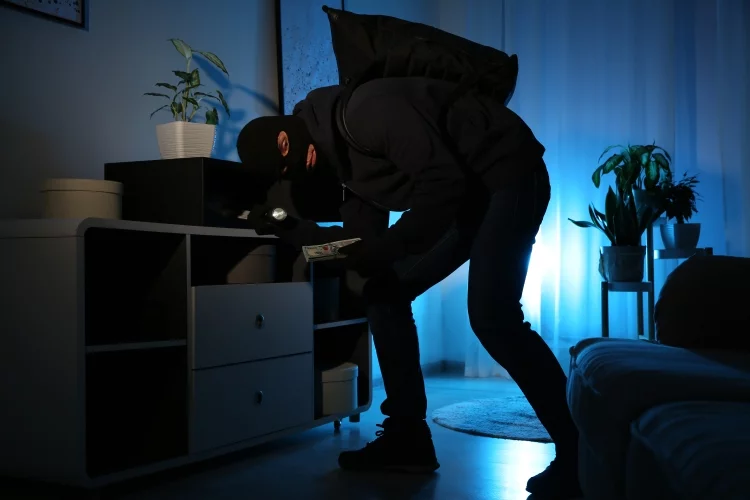
A "cold burglary" happens when no one is home. A "hot burglary" — also called a home invasion — occurs when you or someone in your household is present. In the United States, roughly 28% of all residential burglaries are hot burglaries. That means someone is home in more than one in four break-ins.
Hot burglaries carry a significantly higher risk of physical confrontation and violence. The threat isn't just property loss — it's personal safety. This is why security that signals active occupancy (visible cameras, motion-triggered lights, a dog) adds a distinct layer of protection beyond a locked door.
| Type | Home Status | Estimated US Frequency | Primary Risk | Most Effective Deterrent |
|---|---|---|---|---|
| Cold Burglary | Unoccupied | ~72% | Property theft | Alarm systems, exterior cameras, strong locks |
| Hot Burglary (Home Invasion) | Occupied | ~28% | Personal safety + theft | Occupancy signals, reinforced entry points, monitored alarm |
Your Risk by the Numbers
Research consistently shows that homes without security systems are roughly 300% more likely to be targeted than homes with visible, active protection. That's not a marginal difference — it's a factor of three. Interviews with convicted burglars confirm it: alarm systems and exterior cameras are among the top reasons they skip a property entirely.
Location adds context but doesn't change the core equation. Whether you're in a city, suburb, or rural area, the gap between protected and unprotected homes holds firm. Renters aren't exempt either — ground-floor units with easy window access face elevated risk, and a monitored system closes that gap just as effectively.
What Actually Stops Burglars: Evidence-Based Habits
Beyond the hardware, your daily habits have a measurable effect on how criminals perceive your home. The most effective security isn't always the most expensive — it's the most visible and consistent.
The Deterrence Effect of Visible Security
Surveys of convicted burglars show that visible security cameras cause approximately 60% of offenders to choose a different target. Monitored alarm signs, dogs, and neighbors who are clearly present also rank high. Burglars run a rapid cost-benefit calculation on every property they case. Anything that raises their perceived risk reduces your actual risk.
You don't need the most advanced system on the market. You need one that's unmistakably visible. A camera mounted at eye level near your front door sends a louder message than a hidden one tucked under the eaves. If you're still weighing the decision, read through the top reasons to install a home security system — the evidence is hard to argue against.
Low-Cost Changes With High Impact
Some of the highest-impact security measures are also among the cheapest:
- Reinforce your door frame. A deadbolt is only as strong as the material it's mounted in. Learn what actually makes a deadbolt secure before assuming yours is doing its job.
- Trim back bushes near windows and doors. Overgrown landscaping gives a criminal cover while they work on your lock or window.
- Get to know your neighbors. Neighborhood watch participation reduces burglary rates by 16–26% — a proven, zero-cost deterrent.
- Put interior lights on timers. Even cheap plug-in timers make an empty home look occupied during the peak daytime risk window.
- Don't advertise vacations online. An empty house is a target. A publicized empty house is a near-certain one.
For a practical walkthrough you can apply room by room, check out these 11 tips to secure your house and property from burglars.
Security Tools That Work — And Some That Don't
The home security market is packed with products. Not all of them perform equally — and some deliver a false sense of protection that may actually make you less careful about the basics.
Tools That Deliver Real Results
- Monitored alarm systems — monitoring is what separates a deterrent from a real response. A loud siren scares off some intruders; a police dispatch stops more.
- Video doorbells and exterior cameras — valuable for deterrence, evidence after the fact, and real-time awareness of who's at your door.
- Smart locks with auto-lock — forgetting to lock the door is a genuine vulnerability. Smart locks eliminate human error from the equation.
- Door reinforcement kits and security bars — especially useful for renters who can't modify the door frame. The best door security bars and jammers provide serious resistance without permanent installation.
- Upgraded lock cylinders — standard pin tumbler locks are vulnerable to picking and bumping. Understanding lock bumping and how to prevent it will tell you exactly what your current lock is — and isn't — stopping.
What Creates a False Sense of Safety
Warning: A fake security camera or an alarm company sticker without an actual working system behind it offers almost zero real deterrence — experienced burglars recognize the tells within seconds.
Other items that consistently underperform:
- Alarm decals alone — without a system installed, armed, and monitored
- Deadbolts set into hollow-core doors — the lock holds; the door frame doesn't
- Non-monitored standalone sirens in isolated locations — if nobody hears it, nothing happens
- Generic "Beware of Dog" signs with no dog behind the door
The pattern is consistent. Deterrents that can be verified by a passing observer — cameras with indicator lights, motion-activated lighting, audible alarms — work. Props that can be identified as fake don't. Put your budget into real deterrents, not the appearance of them.
When to Upgrade Your Security (And When You're Already Covered)
More gear doesn't automatically mean better protection. But specific conditions clearly signal that your current setup isn't keeping pace with your actual risk level.
Signs You Need to Act Now
Take action if any of these apply to you:
- Your home or a neighbor's home has been broken into recently
- Your locks are more than a decade old with no upgrades or reinforcement
- You have no exterior lighting at entry points
- You leave the home unoccupied for extended stretches — read our guide on protecting your home while you're on vacation before your next trip
- Local crime rates have increased noticeably
- You have no way to verify who's at your door before opening it
Even one of these conditions justifies a review. Multiple items together mean your exposure is real — and the cost of an upgrade is almost always less than the cost of a break-in in money, time, and stress.
When Your Current Setup Is Enough
If you have a monitored alarm, reinforced entry points, visible exterior cameras, and adequate lighting at every access point — you're in a solid position. At that stage, consistent maintenance matters more than adding new layers. Test your alarm monthly. Check that cameras haven't been blocked by overgrown plants. Inspect your locks for wear and play. A system that was effective two years ago may have gaps today simply from neglect.
Security is an ongoing practice, not a one-time purchase. The homeowners who stay protected are the ones who check, test, and update regularly — not the ones who spent the most money in a single session at the hardware store.
Frequently Asked Questions
What percentage of burglaries are home invasions?
In the United States, approximately 28% of residential burglaries are "hot burglaries," meaning someone is home during the break-in. These incidents carry a higher risk of personal confrontation and violence compared to cold burglaries where the home is unoccupied.
What time of day do most burglaries happen?
Most burglaries occur between 10 a.m. and 3 p.m. on weekdays — not at night. Criminals prefer daytime because most residents are at work and the neighborhood appears routine, making unusual activity less noticeable.
Do home security systems really deter burglars?
Yes — consistently. Homes without security systems are roughly 300% more likely to be targeted than those with visible protection. Surveys of convicted burglars confirm that alarm systems and exterior cameras are top reasons they skip a property and move on to an easier target.
What is the most common entry point burglars use?
The front door. Approximately 34% of break-ins occur through the front door, making it the single most common entry point. First-floor windows (23%) and back doors (22%) follow closely. Reinforcing these three areas covers roughly 79% of all entry scenarios.
How do I make my home look occupied when I'm away?
Use interior light timers set to turn on and off at normal times, ask a neighbor to collect mail and park in the driveway occasionally, avoid posting vacation plans on social media, and make sure your exterior cameras and alarm system are active before you leave.
Are fake security cameras worth using?
No. Experienced burglars can identify fake cameras within seconds by looking for indicator lights, cable routing, and build quality. A real camera — even an affordable one — provides both genuine deterrence and actual evidence if a break-in occurs. Fake hardware gives you a false sense of safety without the protection.
Next Steps
- Walk every entry point in your home today. Check your front door, back door, and all ground-floor windows. Look for weak frames, worn locks, or gaps that give cover to an intruder. Write down anything that needs reinforcing.
- Upgrade your lock hardware if it's more than 10 years old. Replace standard pin tumbler cylinders with bump-resistant and pick-resistant alternatives, and add a strike plate with 3-inch screws to every exterior door frame.
- Install or verify your exterior cameras. Position at least one camera at the front door at eye level where it's clearly visible. Test the feed, confirm night vision is working, and make sure nothing is blocking the lens.
- Set up light timers on at least two interior lamps. Program them to simulate normal occupancy hours — on in the evening, off late at night. This is especially important if you travel or commute long hours.
- Activate or sign up for a monitored alarm service. A loud siren is a starting point — but monitoring that dispatches a response is what closes the gap between deterrence and real protection. If you already have a system, test it this week to confirm it's functioning correctly.


About Robert Fox
Robert Fox spent ten years teaching self-defence in Miami before transitioning into home security consulting and writing — a background that gives him an unusually practical, threat-aware perspective on residential security. His experience spans physical security assessment, lock and alarm system evaluation, and the behavioral habits that make homes harder targets. At YourHomeSecurityWatch, he covers home security product reviews, background check and criminal records resources, and practical guides on protecting your property and family.
You can Get FREE Gifts. Furthermore, Free Items here. Disable Ad Blocker to receive them all.
Once done, hit anything below