4 Lock Bumping Videos: The Problem and How to Protect Your Home
by Robert Fox
According to security researchers, up to 95 percent of standard pin tumbler locks — the type found in the majority of residential front doors — are vulnerable to bump key attacks. Most households have never heard of this technique, yet it requires no advanced skill, costs almost nothing to execute, and leaves virtually no visible sign of forced entry. Our team has reviewed multiple real-world demonstrations and field reports to give home users a concrete picture of how to prevent lock bumping and which countermeasures actually deliver results. We cover this topic as part of our broader home security guides.

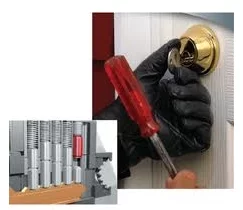
Lock bumping works by exploiting a fundamental property of pin tumbler locks. A bump key — cut to maximum depth at every position — is inserted one notch and struck with a small mallet or even a hand. The impact transfers kinetic energy to all the driver pins simultaneously, creating a fraction-of-a-second window where the shear line clears and the cylinder turns freely. The entire process can take under ten seconds.
What concerns our team most is how publicly documented this technique has become. Video demonstrations have circulated for years, meaning the knowledge barrier is essentially zero. Home users deserve equally accessible information about the countermeasures — which is exactly what this guide covers.
Contents
Understanding How Lock Bumping Works
The Mechanics of a Pin Tumbler Lock
Pin tumbler locks function through a deceptively simple principle: a series of spring-loaded pin stacks block the cylinder from rotating until the correct key lifts each pin stack to precisely the right height. When all pins align at the shear line simultaneously, the cylinder turns freely. This mechanism, well-documented in Wikipedia's entry on pin tumbler locks, has been the residential standard for over a century.
- Driver pins sit above the shear line and block rotation by default.
- Key pins are pushed upward by the corresponding cuts on a properly matched key.
- A bump key is cut to maximum depth at every position — when struck, it pushes all key pins upward simultaneously, briefly launching all driver pins above the shear line.
- That split-second gap is all an attacker needs to apply rotational pressure and open the lock.
Why Bump Keys Are So Accessible
Our team has tracked how openly bump keys are sold and discussed online. The picture is concerning:
- A complete bump key set covering the most common residential lock brands costs under $20 at multiple online retailers.
- Key blanks are sold legally at hardware stores; the filing technique is trivial to learn.
- The attack is effective against the vast majority of standard pin tumbler deadbolts and knob locks.
- Most locks manufactured before the mid-2000s have essentially no bump resistance engineered into them.
This is why understanding how to prevent lock bumping matters even in low-crime areas. The ease of access means the threat is never limited to experienced burglars.
Mistakes That Leave Homes Vulnerable to Bump Attacks
Trusting Brand Names Over Security Ratings
One of the most consistent errors our team observes is the assumption that recognizable hardware brands automatically mean bump resistance. Most major brands sell locks across a wide quality spectrum — their entry-level products often lack any meaningful anti-bump engineering.
Pro tip: ANSI/BHMA Grade 1 is the highest residential security rating — our team recommends prioritizing this certification over brand recognition when choosing any exterior lock.
What to look for instead:
- ANSI/BHMA Grade 1 certification clearly stated on the packaging or product page.
- Locks explicitly marketed as "bump-resistant" — but verify that third-party testing backs those claims.
- Our guide on what's the difference between bump proof and pick proof locks breaks down what each marketing term actually means and which certifications carry real weight.
Ignoring Strike Plates and Door Frames
Even a premium bump-resistant lock is only as strong as the door and frame around it. A weak strike plate gives way in one or two kicks regardless of lock quality — and many burglars prefer kicking to lock manipulation entirely.
- Most builder-grade strike plates use 3/4-inch screws that barely grip the door frame's wood.
- Replacing them with 3-inch screws anchored into the wall stud dramatically increases kick resistance.
- Reinforced strike plates and door jamb armor are low-cost upgrades that multiply the value of any lock improvement.
Our team's detailed breakdown on what makes a deadbolt lock secure covers throw bolt length, housing material, and strike plate specs in a single reference.
How to Prevent Lock Bumping: Practical Steps
Upgrading to Bump-Resistant Hardware
The most direct approach to how to prevent lock bumping is replacing standard pin tumbler locks with hardware that uses a mechanically different cylinder design. Several lock technologies are inherently resistant to bump attacks:
- Disc detainer locks — use rotating discs instead of pins; bump energy has no effect on this mechanism.
- Sidebar locks — require simultaneous alignment of an additional sidebar element that bump force cannot manipulate.
- High-security pin tumbler locks with spool or serrated pins — engineered specifically to resist the momentary pin jump (Medeco, Abloy, Mul-T-Lock are common examples).
- Smart locks with electronic cylinders — eliminate the pin tumbler mechanism entirely; no bump key works against a motor-driven bolt.
Adding Secondary Security Measures
No single upgrade is a complete solution. Our team consistently recommends layering defenses so that bypassing one measure still leaves others intact.
- Door security bars — a physical reinforcement that holds even if the lock cylinder is compromised. Our review of the best door security bars and jammers covers the strongest options available.
- Door and window sensors — trigger an alert the moment a door opens unexpectedly.
- Security cameras at entry points — visible cameras are a documented deterrent; most opportunistic burglars move on when they see one.
- Reinforced door frames and hinge security bolts — harden the surrounding structure so the door itself becomes a barrier, not just the lock.
For a wider view on layered home protection, our team points home users to the comprehensive list of 11 tips to secure a house and property from burglars.
Entry-Level Fixes vs. Professional-Grade Upgrades
Not every household needs a $400 high-security deadbolt. Our team breaks down where different protection levels make the most sense:
| Protection Level | Typical Products | Approx. Cost | Bump Resistance | Best Fit |
|---|---|---|---|---|
| Entry-Level | ANSI Grade 2 deadbolt with anti-bump pins | $30–$60 | Moderate | Low-crime areas, rental units |
| Mid-Range | ANSI Grade 1 deadbolt (Schlage B60N, Kwikset 980) | $60–$120 | Good | Most suburban households |
| High-Security | Medeco, Mul-T-Lock, Abloy Protec2 | $150–$350+ | Excellent | High-risk areas, frequent travelers |
| Smart Lock | August, Schlage Encode, Yale Assure | $150–$350 | Excellent (no pin cylinder) | Tech-forward users, rental management |
| Professional Install | High-security cylinder + reinforced frame + alarm integration | $400–$900+ | Maximum | High-value properties, commercial entries |
What Most Home Users Can Do Right Away
The practical starting point for most households doesn't require a locksmith or a large budget. Our team recommends this sequence:
- Replace builder-grade strike plates on all exterior doors with heavy-duty versions using 3-inch wood screws reaching the stud.
- Add a door chain or secondary bar lock to the most frequently used entry point.
- Install a video doorbell or peephole camera to screen visitors before opening the door.
- Upgrade at least one deadbolt — the primary front door — to a Grade 1 product with documented bump resistance.
- Consider a monitored security system with door sensors. Our overview of the 10 reasons to install a home security system walks through the full value proposition for home users evaluating that step.
When to Call a Locksmith
Some upgrades are best handled professionally. Our team recommends calling a licensed locksmith when:
- Installing high-security cylinders that require precise frame drilling or modification.
- A full entry-point security audit is needed, covering windows, garage doors, and secondary entries.
- Setting up a key control system — managing who holds key copies and preventing unauthorized duplication. Our interview on what is key control covers this in depth with input from a professional locksmith.
- A suspected break-in has occurred — even if nothing appears damaged, a professional can check for signs of bump tampering that are invisible to the untrained eye.
Long-Term Lock Maintenance and Security Upkeep
Routine Checks That Matter
Lock security isn't a one-time install-and-forget situation. Our team recommends building periodic checks into any home maintenance routine:
- Test deadbolt throw and resistance annually — the bolt should engage firmly with no wobble or rattle in the strike.
- Check and retighten strike plate screws each year — wood shifts seasonally, and screws loosen gradually over time.
- Lubricate cylinders with graphite or purpose-made lock lubricant — never use oil-based products that attract grime and cause stiffness.
- Inspect door alignment each season — a misaligned door puts stress on the bolt mechanism and degrades it faster than normal wear.
- Audit key copies regularly — lost or untracked keys are a separate security vulnerability that no lock upgrade addresses.
When to Replace Rather Than Repair
Maintenance has limits. Our team watches for these signs that a lock has passed its useful service life:
- The cylinder feels noticeably looser or turns with less resistance than it once did.
- The key requires jiggling or force to operate smoothly and consistently.
- Visible wear, corrosion, or physical damage on the cylinder face.
- The lock is more than 10–15 years old and predates modern bump-resistance engineering.
- Any suspected bump or pick attempt has occurred, even without visible damage — professional inspection is the appropriate response.
Most home users benefit from thinking of exterior locks the way they think of smoke detectors: they have a service life, and proactive replacement on a reasonable schedule is simply part of responsible upkeep. For a broader checklist of ongoing home security habits, our team's guide on how to protect a home when away on vacation is a practical companion read.
Frequently Asked Questions
Does every deadbolt need to be replaced to prevent lock bumping?
Not necessarily. Some newer Grade 1 deadbolts already incorporate spool or serrated pins that provide meaningful bump resistance. Our team recommends checking the manufacturer's specifications first — and if the lock is more than a decade old or carries no documented anti-bump features, replacement is the safer call.
Are smart locks immune to lock bumping?
Smart locks that use a fully electronic or motorized bolt mechanism — with no traditional key cylinder — are effectively immune to bump attacks. However, some smart locks retain a backup key cylinder, which may still be vulnerable. Our team recommends verifying whether the backup cylinder carries an ANSI Grade 1 rating with anti-bump engineering before assuming full protection.
How can most people tell if a bump attack has been attempted?
Lock bumping typically leaves no obvious marks. The most common indicators are fine scratches around the keyhole from repeated key insertions, small metal shavings around the cylinder face, or a cylinder that feels looser than usual. Most home users won't catch these signs without knowing what to look for — which is why professional assessment after any suspected intrusion is worth the cost.
Is possessing a bump key legal?
Legality varies by jurisdiction. In many U.S. states, bump keys are legal to own but illegal to use with intent to enter a property without authorization. Our team recommends consulting local statutes before purchasing a bump key set, even for the purpose of testing one's own locks at home.
Final Thoughts
Lock bumping is a real, low-skill threat that most standard residential locks are poorly equipped to handle — but the countermeasures are accessible, affordable, and effective when applied systematically. Our team recommends starting with one concrete action: check the ANSI grade rating on every exterior deadbolt, replace anything below Grade 1, and layer in a reinforced strike plate while doing so. From there, adding door sensors and a monitored alarm system builds a defense posture that's genuinely difficult to overcome quietly — and that's exactly the goal.


About Robert Fox
Robert Fox spent ten years teaching self-defence in Miami before transitioning into home security consulting and writing — a background that gives him an unusually practical, threat-aware perspective on residential security. His experience spans physical security assessment, lock and alarm system evaluation, and the behavioral habits that make homes harder targets. At YourHomeSecurityWatch, he covers home security product reviews, background check and criminal records resources, and practical guides on protecting your property and family.
You can Get FREE Gifts. Furthermore, Free Items here. Disable Ad Blocker to receive them all.
Once done, hit anything below