You just picked up a Sig Sauer P365 — one of the most popular concealed carry pistols on the market — and now you're staring at dozens of holster options with no clear idea of which one actually works for your body type, carry position, or lifestyle. Sound familiar? Picking the wrong holster means an uncomfortable carry, a slow draw, or worse, a safety issue you didn't see coming. The right holster makes all the difference between a gun you actually carry daily and one that sits in a drawer.
In 2026, the P365 holster market is packed with options ranging from budget Kydex shells to premium hybrid leather designs. We've dug through real-world performance data, user feedback, and hands-on testing to bring you the best choices available right now. Whether you carry inside the waistband (IWB) at the appendix position or prefer an outside the waistband (OWB) setup for range work and open carry, there's a solid pick on this list for you. You can also browse our full security and self-defense reviews for related gear.
If you're storing your P365 at home when you're not carrying, pairing it with a quality safe is smart. Check out our roundup of the best biometric gun safes to keep your firearm secure and quickly accessible. Now let's get into the picks.
Contents
- Top Rated Picks of 2026
- Detailed Product Reviews
- Vedder Holsters LightTuck IWB — Best Overall IWB
- CrossBreed SuperTuck IWB — Best Hybrid Leather/Kydex
- Fierce Defender IWB Kydex — Best for AIWB Carry
- Rounded OWB Paddle Holster — Best OWB for Concealment
- Blackpoint Tactical Mini Wing OWB — Best Premium Leather OWB
- Safariland 7378RDS 7TS — Best Retention Holster
- Blackhawk Stache IWB — Best Budget IWB
- What to Look For When Buying
- What People Ask
- Key Takeaways
Top Rated Picks of 2026
- #PreviewProductRating
- Bestseller No. 1
 Rating:

- Bestseller No. 2
 Rating:
 - Bestseller No. 3
 Rating:
 - Bestseller No. 4
 Rating:
 - Bestseller No. 5
 Rating:
- Bestseller No. 6
 Rating:
 - Bestseller No. 7
 Rating:


Detailed Product Reviews
1. Vedder Holsters LightTuck IWB Kydex — Best Overall IWB
The Vedder LightTuck is the holster most P365 owners end up recommending to each other, and it's easy to see why. It's precision-molded from .08-inch Kydex specifically for the P365, which means the fit is tight, predictable, and consistent every single draw. The single mounting clip rides on standard 1.5-inch belts and lets you adjust the ride height and cant (the angle of the gun) to dial in exactly how the gun sits against your hip. There's no guessing — you set it, and it stays put.
The LightTuck's open-top design means no retention strap to fumble with on the draw. Retention is handled entirely by the Kydex shell, and you can fine-tune the pressure with the adjustment screw near the trigger guard. The shell is formed with a full sweat guard (the section that covers your skin from the back of the slide) to protect both your skin and the gun's finish during long carry days. For daily IWB carry at the 3–5 o'clock strong-side position, this holster delivers an excellent combination of comfort, security, and fast access.
Vedder makes this holster in the USA and stands behind it with a lifetime guarantee. The print (how well the gun's outline hides under a t-shirt) is minimal thanks to the slim Kydex profile. If you want one holster that does almost everything right for everyday concealed carry, this is the one to start with.
Pros:
- Precision-molded fit for P365 — consistent retention every draw
- Adjustable ride height and cant angle
- Full-length sweat guard protects skin and finish
- Lifetime guarantee from a US manufacturer
- Slim profile for minimal printing under clothing
Cons:
- Single clip may shift without a dedicated carry belt
- Kydex can feel stiff against the body vs. hybrid options initially

2. CrossBreed Holsters SuperTuck IWB — Best Hybrid Leather/Kydex
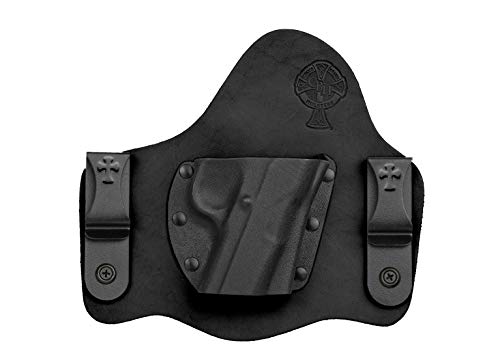
CrossBreed's SuperTuck is the gold standard for hybrid holsters — a design that combines a molded Kydex retention pocket with a wide black cowhide leather backing panel. The leather backer is what sets this holster apart from pure Kydex designs: it spreads the weight of the gun across a larger surface area of your hip, which dramatically increases all-day comfort. If you've ever ended a carry day with a sore hip from a stiff plastic holster digging in, the SuperTuck is your fix.
The Kydex pocket is custom-molded for the P365 and provides crisp, audible retention on holstering. The holster covers the 3 to 5 o'clock carry position (strong-side hip to just behind the hip) and uses two steel J-hooks that clip over your belt. These hooks are adjustable for both ride height and cant, giving you flexibility for different clothing and carry positions. The cowhide leather breaks in over time and molds slightly to your body, getting more comfortable the more you wear it.
The SuperTuck is a right-hand-draw design that's purpose-built for concealed carry. The leather backing keeps the gun's sharp edges from pressing directly into your skin, which matters a lot on a compact pistol like the P365 that has more hard corners than a full-size handgun. This is the holster to choose if comfort over long wear periods is your top priority.
Pros:
- Wide leather backer dramatically improves all-day comfort
- Molded Kydex pocket gives secure, click-in retention
- Adjustable dual J-hooks for ride height and cant
- Leather breaks in and conforms to your body over time
Cons:
- Bulkier than pure Kydex — harder to tuck in a dress shirt
- Leather requires occasional maintenance to prevent cracking
- Right-hand draw only
3. Fierce Defender IWB Kydex Holster with Claw — Best for AIWB Carry
If you carry appendix (AIWB — appendix inside the waistband, at the 12 o'clock position in front of your hip bone), the Fierce Defender is built specifically for you. The defining feature is the built-in claw attachment — a small wing that presses against the inside of your waistband and levers the grip of the gun inward toward your body, dramatically reducing printing. Without a claw, the grip of an appendix-carried gun tends to stick out and tent your shirt. With one, it disappears.
The shell is made from thick .08-inch Kydex molded precisely for the P365. Fierce Defender builds these in the USA and the tolerances are tight — this isn't a generic shell shaped to fit ten different guns. The retention is adjustable for both the gun and the magazine (for mag carrier add-ons), and the holster is designed to work with a standard 1.5-inch carry belt. The claw system requires a rigid gun belt to function properly — a flimsy fashion belt won't provide the resistance the claw needs to push the grip inward.
This holster is marketed toward experienced concealed carriers, and that's honest. AIWB carry requires proper technique and a good belt. But for those who carry appendix daily, the claw is a game-changer for concealment — and the Fierce Defender delivers it in a well-built, USA-made package at a competitive price point.
Pros:
- Built-in claw dramatically reduces appendix printing
- Thick .08-inch Kydex — durable and precisely molded for P365
- Adjustable retention for both gun and magazine
- Made in the USA
Cons:
- Requires a stiff gun belt for the claw to work properly
- Not ideal for beginners unfamiliar with AIWB carry technique
4. Rounded by Concealment Express OWB Paddle Holster — Best OWB for Concealment
Outside the waistband (OWB) holsters get a bad reputation for concealment, but the Rounded paddle holster from Concealment Express punches back against that idea. It rides tight against the body with a fiber-reinforced stealth belt clip that keeps the holster from flopping away from your hip like cheaper paddle designs. With an untucked shirt, this holster conceals well enough for practical daily carry if you prefer OWB.
The holster is precision-formed from .08-inch Kydex over proprietary CAD-designed aluminum molds — a manufacturing approach that delivers consistent quality from unit to unit. The undercut trigger guard keeps the Kydex from catching on your finger during the draw. The open-face design (called "Over-Cut") accommodates threaded barrels and suppressor-height sights, which matters if you've added any muzzle device or upgraded your P365's sight system. A full-length sweat guard and rear sight shield protect both you and the gun's finish.
The standout feature here is the adjustable "Posi-Click" retention system. When you seat the gun, you hear a distinct click confirming it's locked in. The retention pressure adjusts via hardware forward of the trigger guard. Cant adjustment runs from -5 to +20 degrees, which means you can angle it for strong-side carry, cross-draw, or even appendix OWB positions. If you're on the range or in a situation where you need fast, unobstructed draws, this OWB setup delivers.
Pros:
- Audible "Posi-Click" retention confirmation on holstering
- Cant adjustable -5 to +20 degrees for multiple carry positions
- Over-cut accommodates threaded barrels and suppressor sights
- Fiber-reinforced belt clip keeps holster tight against the body
- All hardware uses black oxide steel with threadlock — screws stay put
Cons:
- OWB format is harder to conceal than IWB in tight clothing
- Paddle mount can shift on softer belts
5. Blackpoint Tactical Leather OWB Mini Wing Holster — Best Premium Leather OWB
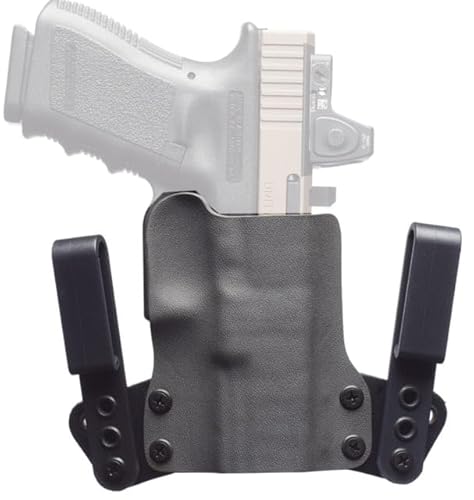
Blackpoint Tactical sits at the premium end of the holster market, and the Mini Wing OWB shows exactly why. This is a genuine leather OWB holster designed to sit close to the body and achieve surprising concealment for an outside-the-waistband design. The "mini wing" design uses leather wings that anchor to your belt on both sides of the holster, distributing weight evenly and pulling the whole assembly flush against your hip. The result is a holster that stays stable, prints minimally, and looks and feels exceptional.
The leather construction is premium — this holster is hand-fitted and finished in the USA. The Kydex-reinforced mouth (opening) means it stays open for one-handed reholstering, which is a safety-critical feature that cheap leather holsters often skip. The P365-specific fit provides solid passive retention without adjustment screws. Over time, the leather molds to your gun and your body for a truly custom feel.
This is the holster to consider if you prioritize craftsmanship and carry style alongside function. It costs more than most options on this list, but the build quality justifies the price for serious daily carriers who plan to use the same holster for years. It also makes an excellent choice for professionals who want a polished look without sacrificing access speed.
Pros:
- Premium American-made leather construction
- Mini wing design keeps holster flat and close to the body
- Kydex-reinforced mouth for safe one-handed reholstering
- Develops a custom fit as leather molds over time
Cons:
- Higher price point than Kydex competitors
- Leather requires periodic conditioning to maintain quality
6. Safariland 7378RDS 7TS ALS Concealment Holster — Best Retention Holster
Safariland is the brand that law enforcement and military professionals trust for duty use, and the 7378RDS brings that level of retention to civilian carriers who want maximum gun security. The ALS (Automatic Locking System) is Safariland's signature technology — when you holster the gun, an internal locking mechanism automatically engages around the ejection port area, securing the firearm against grabs, falls, and weapon retention attempts. To draw, you press a thumb release on the front of the holster as your hand grips the gun — it becomes natural muscle memory after practice.
The 7378RDS is specifically designed for red dot optic-equipped weapons, making it the right call if your P365 has a Romeo Zero, Shield RMSc, or similar micro red dot mounted on the slide. Most standard holsters can't accommodate optics — this one is built for it. The SafariSeven material (a proprietary nylon blend) is non-abrasive against gun finishes and highly temperature-resistant. The combo mount includes both a paddle for quick on/off and an adjustable belt slide (1.5 to 1.75 inches) for more secure attachment.
This holster is more appropriate for range use, vehicle carry, or duty-style carry than for deep concealment under a tight shirt. The ALS system and optic-ready design make it the go-to choice for P365 owners with red dots who need active retention. It also pairs well with a car gun safe for vehicle-based security setups where you alternate between the safe and holster.
Pros:
- Automatic Locking System (ALS) provides Level I active retention
- Designed specifically for red dot optic-equipped P365s
- SafariSeven material is non-abrasive and temperature-stable
- Combo mount — includes both paddle and adjustable belt slide
Cons:
- ALS thumb release requires training to use smoothly under stress
- Larger profile than minimalist IWB options — not ideal for deep concealment
7. Blackhawk Stache IWB Base Kit — Best Budget IWB
Blackhawk is one of the most recognized names in tactical gear, and the Stache IWB delivers solid performance at a budget-friendly price. The injection-molded polymer design is ambidextrous — the same holster works for right-hand or left-hand draw, which is unusual and genuinely useful if you switch carry sides or share the holster with someone. The 1.5-inch J-style belt clip adjusts for both height and cant, letting you dial in your preferred carry position without extra hardware.
The low-profile shirt guard adds a layer of comfort between the gun's rear controls and your skin during IWB carry. It's designed to stay out of the way during the draw stroke, which is a detail that matters on a daily carry holster. The Stache base kit gives you the core holster system — Blackhawk also sells premium add-on components like appendix platforms and magazine carriers for when you want to expand the setup.
The Stache won't match the precision fit of a custom Kydex shop's work, but it performs well above its price point for a beginner's first IWB holster or as a backup carry option. If you're new to concealed carry with the P365 and want a reliable starting point without spending $60–$80, the Stache Base Kit is where to start. The ambidextrous design also makes it a practical choice for range training where you might practice support-side draw drills. Speaking of responsible gun ownership, our guide to the best budget gun safes under $500 is worth reading alongside this one.
Pros:
- Ambidextrous design works for right or left-hand draw
- Adjustable J-clip for cant and ride height
- Budget-friendly entry point from a trusted brand
- Expandable with Blackhawk Stache premium accessories
Cons:
- Injection-molded polymer fit is less precise than custom Kydex
- Base kit lacks magazine carrier — sold separately
What to Look For When Buying Sig P365 Holsters
Carry Position and Holster Type
The first decision you need to make isn't which holster to buy — it's where on your body you plan to carry. IWB holsters (inside the waistband) conceal better because the gun sits inside your pants, pressed against your body. OWB holsters (outside the waistband) are more comfortable for most people and allow a faster draw, but they require a cover garment like a jacket or untucked shirt to conceal properly.
Within IWB carry, position matters. Strong-side carry (3–5 o'clock on the right side for right-handed shooters) is the most common and the easiest to learn. Appendix carry (12–1 o'clock, in front of your hip) has grown dramatically in popularity because it keeps the gun in front of your body where you can always see and access it. Appendix carry requires a holster specifically designed for it — ideally with a claw attachment like the Fierce Defender — or you'll have comfort and concealment problems.
According to the Bureau of Alcohol, Tobacco, Firearms and Explosives (ATF), concealed carry laws vary significantly by state, so always confirm your local regulations before choosing a carry method.
Kydex vs. Leather vs. Hybrid
Kydex is a thermoplastic that's molded to exact gun dimensions. It's waterproof, doesn't soften in heat, and provides consistent retention from day one. Pure Kydex holsters like the Vedder LightTuck and Fierce Defender are the most popular choice for daily carry in 2026 because they're low-maintenance and extremely durable.
Leather holsters feel luxurious and break in beautifully, but they require more care — periodic conditioning, drying out after sweat exposure, and an initial break-in period where retention may be too stiff. Hybrid holsters combine the best of both materials: a Kydex retention pocket for the gun paired with a leather or neoprene backing panel for comfort against the skin. The CrossBreed SuperTuck is the benchmark example of this design done right.
Retention Level and Safety
Retention refers to how securely the holster holds the gun. Passive retention uses the holster's shape and friction to hold the gun — most Kydex holsters use this approach, and it's appropriate for concealed carry. Active retention adds a mechanical lock (like Safariland's ALS system) that requires a deliberate action to disengage before drawing. Active retention is standard for duty carry and open carry where someone might attempt to grab your weapon.
For everyday concealed carry, adjustable passive retention is the standard — tight enough that the gun won't fall out if you're active, loose enough for a smooth draw. Look for a holster with a retention adjustment screw so you can fine-tune the fit as the Kydex settles in. Always test retention by holstering the gun (unloaded during testing) and turning the holster upside down — the gun should stay seated with a firm shake.
Belt Compatibility and Carry Belt Quality
A holster is only as good as the belt it rides on. Standard fashion belts are too flexible to support a handgun — the weight causes the holster to sag, tilt, and shift during the day. A dedicated carry belt (also called a gun belt) is stiffer, usually 1.5 inches wide, and keeps the holster locked in position all day. Most holsters on this list are designed for 1.5-inch belts.
If you're running an AIWB holster with a claw like the Fierce Defender, a rigid gun belt is not optional — it's required for the claw system to function. The claw pushes against the inside of the belt and waistband to rotate the grip inward. Without a stiff belt, the claw just bends the belt and accomplishes nothing. Budget for a quality carry belt alongside your holster purchase.
What People Ask
What is the best holster for the Sig P365 for everyday carry?
The Vedder LightTuck IWB is the best all-around choice for everyday concealed carry in 2026. It's precisely molded for the P365, offers adjustable retention and cant, includes a full sweat guard, and comes with a lifetime guarantee. For those who prioritize all-day comfort, the CrossBreed SuperTuck's leather-backed hybrid design is the runner-up.
Can I use an IWB holster for appendix carry with the Sig P365?
Yes, but you need the right holster for appendix carry. Standard IWB holsters can be worn appendix, but a holster designed specifically for AIWB (appendix inside the waistband) — like the Fierce Defender with its built-in claw — will conceal much better and sit more comfortably. The claw pushes the grip inward, eliminating the printing problem that generic IWB holsters create at the appendix position.
What's the difference between OWB and IWB holsters?
IWB (inside the waistband) holsters place the gun inside your pants between your body and the waistband. They conceal better because most of the gun's profile is hidden. OWB (outside the waistband) holsters mount the gun on the outside of your pants. They're generally more comfortable and allow a faster draw but require a cover garment to conceal. OWB is preferred for range use, open carry, and situations where a jacket or untucked shirt is standard.
Does the Sig P365 with a red dot optic require a special holster?
Yes. Most standard holsters are not cut out to accommodate a mounted red dot sight (RDS), which sits on top of the slide and adds height. The Safariland 7378RDS is specifically designed for optic-equipped P365s and similar pistols with red dot sights. Using a standard holster on an optic-equipped gun risks damaging the sight or preventing proper seating of the firearm in the holster.
What holster material is best for the Sig P365 — Kydex or leather?
Kydex is the better choice for most P365 carriers. It's waterproof, heat-resistant, requires zero maintenance, and provides consistent retention from the first day you use it. Leather breaks in more comfortably over time and looks great, but it requires conditioning and is affected by moisture and heat. Hybrid holsters (Kydex pocket + leather backer) are the best of both worlds if comfort is your primary concern alongside reliable retention.
Do I need a special belt to use a Sig P365 holster?
Yes, for most carry setups. A dedicated gun belt — typically 1.5 inches wide and made from reinforced leather or polymer-stiffened nylon — is essential for keeping any holster stable and properly positioned throughout the day. Standard fashion belts are too flexible and will cause your holster to sag, shift, and print more noticeably. If you're running a claw-equipped AIWB holster, a rigid gun belt is non-negotiable for the claw system to work correctly.
Buy on Walmart
- Vedder Holsters LightTuck IWB Kydex Gun Holster Compatible w — Walmart Link
- CrossBreed Holsters SuperTuck IWB Concealed Carry Holster - — Walmart Link
- Fierce Defender IWB Kydex Holster Sig P365 1 Series W/Claw - — Walmart Link
- Rounded OWB Paddle Holster Fits: Sig Sauer P365 Holster - RH — Walmart Link
- Blackpoint Tactical Leather OWB Mini Wing Holster, SIG SAUER — Walmart Link
- Safariland 7378RDS 7TS ALS Concealment Paddle and Belt Loop — Walmart Link
- Blackhawk_Stache IWB Sig P365 Base Kit BK Sig P365 — Walmart Link
Buy on eBay
- Vedder Holsters LightTuck IWB Kydex Gun Holster Compatible w — eBay Link
- CrossBreed Holsters SuperTuck IWB Concealed Carry Holster - — eBay Link
- Fierce Defender IWB Kydex Holster Sig P365 1 Series W/Claw - — eBay Link
- Rounded OWB Paddle Holster Fits: Sig Sauer P365 Holster - RH — eBay Link
- Blackpoint Tactical Leather OWB Mini Wing Holster, SIG SAUER — eBay Link
- Safariland 7378RDS 7TS ALS Concealment Paddle and Belt Loop — eBay Link
- Blackhawk_Stache IWB Sig P365 Base Kit BK Sig P365 — eBay Link
Key Takeaways
- The Vedder LightTuck is the best overall IWB holster for daily P365 carry in 2026 — precision-molded Kydex, adjustable retention, and a lifetime guarantee make it the benchmark choice.
- For appendix carry, the Fierce Defender with its built-in claw is the definitive option — the claw eliminates grip printing and it's built to tight tolerances in the USA.
- If comfort over long carry days is your top priority, the CrossBreed SuperTuck's leather-backed hybrid design distributes weight better than any pure Kydex holster on the market.
- P365 owners running a red dot optic need the Safariland 7378RDS — it's the only option on this list purpose-built to accommodate optic-equipped slides with active Level I retention.


About Robert Fox
Robert Fox spent ten years teaching self-defence in Miami before transitioning into home security consulting and writing — a background that gives him an unusually practical, threat-aware perspective on residential security. His experience spans physical security assessment, lock and alarm system evaluation, and the behavioral habits that make homes harder targets. At YourHomeSecurityWatch, he covers home security product reviews, background check and criminal records resources, and practical guides on protecting your property and family.
You can Get FREE Gifts. Furthermore, Free Items here. Disable Ad Blocker to receive them all.
Once done, hit anything below