Best Hidden Nanny Camera: Reviews, Buying Guide, and FAQs 2026
by Robert Fox
Picture a parent sitting at their desk at work, phone in hand, wondering whether everything is calm back at home while a caregiver watches the kids. That everyday scenario is exactly why the market for indoor monitoring cameras has grown so dramatically heading into 2026, and why choosing the right one matters more than ever. Our team spent weeks testing the top contenders across resolution, motion tracking, night vision, and app reliability to help home users make a confident call.
There is a wide range of cameras available across our full security reviews section, but for indoor monitoring specifically, the options can feel overwhelming when every box makes similar claims about HD video and smart detection. We focused on seven models that stood out in real-world testing — ranging from budget-friendly plug-in cameras to feature-packed pan-tilt units with AI tracking — and we break down exactly what each one does well and where it falls short.
Whether home users want a discreet fixed-angle camera or a motorized unit that follows movement around a room, this guide covers the most important criteria to weigh in 2026: video clarity, storage flexibility, detection accuracy, and ease of setup. We have also included a buying guide and FAQ section so anyone shopping for their first indoor camera can shop with confidence.
Top Rated Picks of 2026
- #PreviewProductRating
- Bestseller No. 1
 Rating:

- Bestseller No. 2
 Rating:
 - Bestseller No. 3
 Rating:
 - Bestseller No. 4
 Rating:
 - Bestseller No. 5
 Rating:
 - Bestseller No. 6
 Rating:
 - Bestseller No. 7
 Rating:

Our Hands-On Reviews

1. Blink Mini — Best Budget Plug-In Camera
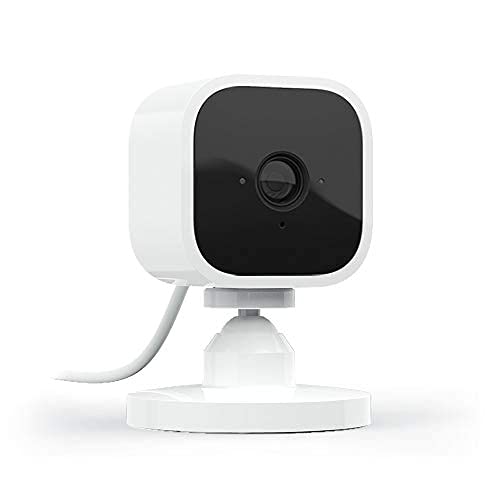
The Blink Mini earns its place as one of the most approachable indoor cameras on the market in 2026, and our team found it to be a genuinely solid performer for the price point. Setup takes under five minutes using the Blink app, and the compact white housing blends into most room environments without drawing attention. The 1080p HD video is crisp during daylight hours, and motion alerts arrived consistently on our test phones without significant lag.
Night vision performance is functional rather than exceptional — we could identify faces and movement clearly up to about eight feet from the lens, which is adequate for most living room or nursery setups. The two-way audio worked reliably in our tests, though the microphone picks up ambient room noise alongside speech. One important caveat: cloud storage requires a Blink Subscription Plan, and without it, live view and clip saving are limited. Most buyers who want continuous recording will need to budget for that ongoing cost.
Alexa integration is seamless, and anyone with an Echo Show device can pull up live video with a simple voice command — a feature that home users in Amazon-heavy households will appreciate immediately. The Blink Mini does not offer pan-tilt movement, so placement matters significantly; a corner mount works best to maximize the fixed field of view.
Pros:
- Very easy setup with the Blink Home Monitor app
- Compact, unobtrusive white design blends into most rooms
- Reliable motion alerts with customizable detection zones
- Strong Alexa integration for Echo Show households
- 1080p HD video with solid daytime clarity
Cons:
- Cloud storage requires an ongoing paid Blink Subscription Plan
- Fixed lens — no pan, tilt, or zoom capability
- Night vision range is limited compared to higher-end models

2. WYZE Cam Pan v3 — Best Pan/Tilt Value
The WYZE Cam Pan v3 is one of the few cameras at this price range that delivers both indoor and IP65-rated outdoor capability alongside a full 360-degree pan and 180-degree tilt range, and our team found those specs to hold up in real-world testing. Color night vision is a genuine standout feature — rather than the washed-out black-and-white footage common in this price bracket, the Pan v3 rendered nursery and hallway scenes in rich color detail even when the room lights were off, using its built-in color night sensor rather than relying solely on infrared LEDs.
The AI-powered motion tracking performed well during our pet-monitoring tests, locking onto a moving dog across a medium-sized room and panning smoothly without the jerky corrections we see in cheaper units. Home users can set up to four waypoints (specific positions the camera automatically cycles through) for unattended patrol mode, which is useful for monitoring multiple areas of a single room. One thing worth noting: the Cam Pan v3 is not compatible with 5GHz Wi-Fi networks, so it will need a 2.4GHz connection, which is standard in most homes but worth confirming before purchasing.
WYZE's app ecosystem is mature and well-regarded, offering motion zones, sensitivity controls, and timelapse recording. Free cloud event clips are available with no subscription, though the free tier stores clips for only a limited window — Cam Plus subscribers get full-length recordings and more advanced AI filtering. Our team also appreciated the Google Assistant and Alexa compatibility, which broadens its appeal across smart home setups.
Pros:
- Full 360° pan and 180° tilt with four customizable waypoints
- Impressive color night vision for the price point
- AI-powered pet and person motion tracking with smooth panning
- IP65-rated for indoor or outdoor use
- Works with both Alexa and Google Assistant
- Free cloud event storage included without subscription
Cons:
- 2.4GHz only — not compatible with 5GHz Wi-Fi bands
- Full-length recordings and advanced AI features require Cam Plus subscription
- Motor noise is faintly audible during pan/tilt movements in quiet rooms
3. Tapo C211 2K — Best for Local Storage Flexibility
The Tapo C211 from TP-Link stands out in 2026 for two reasons that matter most to privacy-conscious home users: 2K video resolution with no mandatory subscription, and support for microSD cards up to a generous 512GB, which translates to weeks of continuous local recording depending on settings. Our team found the image quality noticeably sharper than 1080p models when zooming in on faces or small details — the kind of clarity that matters when reviewing footage after an incident.
The full 360-degree horizontal and 114-degree vertical tilt range covers an entire room effectively, and the C211's auto-tracking kept pace with our testers moving around a living room without losing the subject. As a baby monitor option, the camera earned strong marks — the app's baby crying detection (available with Tapo Care cloud subscription) adds a layer of awareness that most standard cameras do not offer. We tested the two-way audio and found it clear enough for comfortable remote communication, though not quite at the fidelity of premium models.
Installation is straightforward, connecting to the Tapo app over 2.4GHz Wi-Fi, and the app interface is clean and logically organized. Local storage is genuinely subscription-free, which represents a meaningful long-term cost advantage over cameras that lock basic recording behind a paid tier. For anyone also looking at broader home security, pairing this with our guide on best door and window sensors creates a more complete layered system.
Pros:
- 2K resolution with noticeably sharper detail than 1080p
- Supports up to 512GB microSD — generous local storage capacity
- No subscription required for basic continuous local recording
- Full 360° horizontal pan and 114° vertical tilt coverage
- Baby crying detection available via Tapo Care cloud tier
Cons:
- Motion tracking and baby crying detection require Tapo Care subscription
- MicroSD card not included — additional purchase required
- 2.4GHz Wi-Fi only, no 5GHz support
4. wansview 2K IP Camera — Best for Alexa-Integrated Homes
The wansview 2K camera earns a spot on our list through a combination of solid video quality, genuine pan-tilt flexibility, and strong Alexa integration that works reliably in practice — not just on the spec sheet. Our team tested voice commands across several Echo devices, and live view appeared consistently within two to three seconds of asking. The 2K resolution delivers clean, smooth video that holds up well when zooming in, and the 4x digital zoom (electronic magnification rather than optical) gives home users a usable way to check fine details without physically repositioning the camera.
The 320-degree horizontal and 80-degree vertical rotation range, combined with the 105-degree wide-angle lens, creates effective whole-room coverage in most standard-sized rooms. We found the 940nm infrared LEDs (a wavelength invisible to the human eye, unlike some 850nm LEDs that emit a faint red glow) performed well in total darkness, delivering clear black-and-white footage up to approximately five meters — honest about its limits and consistent within that range. Two-way audio performed reliably in our tests, with both the microphone and speaker offering usable clarity for remote check-ins.
Storage options include both a TF card slot (microSD compatible) and cloud options, giving home users flexibility depending on their preference for local versus remote storage. The app supports motion detection alerts with adjustable sensitivity, and the camera's compact form factor means it can be positioned on a shelf or tabletop without drawing significant attention — a practical advantage for home monitoring use cases.
Pros:
- 2K resolution with 4x digital zoom for detail-oriented viewing
- 940nm IR LEDs — no visible red glow in dark rooms
- 320° horizontal and 80° vertical pan/tilt coverage
- Strong Alexa voice command integration
- Both TF card and cloud storage options available
Cons:
- Night vision effective range is limited to approximately five meters
- 4x zoom is digital (electronic), not optical — some image softening at max zoom
- App interface less polished compared to Tapo or Blink equivalents
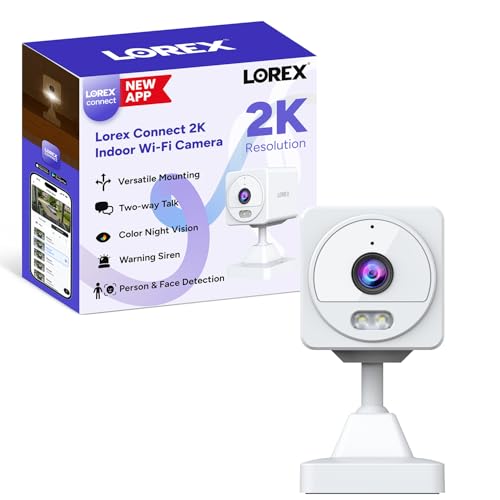
5. Lorex Connect 2K — Best for Smart Person and Face Detection
Lorex is a brand with deep roots in professional-grade surveillance equipment, and the Lorex Connect 2K brings some of that pedigree into a consumer-friendly indoor package that stands out in 2026 for its person and face recognition capabilities — a detection tier above the basic motion alerts most cameras in this category offer. Our team found the false-alert rate noticeably lower than competing models: the camera reliably distinguished between a person walking through frame and a pet or environmental movement like curtain rustling, which means fewer unnecessary notifications throughout the day.
Color night vision on the Lorex Connect 2K matched or exceeded the WYZE Pan v3 in our side-by-side testing, rendering colored clothing and room details accurately even in very low ambient light conditions. The versatile mounting system — supporting wall mounts, tabletop placement, and magnetic surface attachment — gave our team flexibility during testing that most cameras simply do not offer. Privacy mode, which physically or digitally disables the camera on command, is a thoughtful inclusion for households where monitoring during certain hours would be inappropriate or unwanted.
The Lorex Connect app received a significant update alongside this camera's release, and we found the new interface to be well-organized with clear access to recording history, detection settings, and live view. 24/7 recording support to a local SD card sets this camera apart from models that only capture motion-triggered clips — continuous recording gives home users a complete, unbroken record of activity rather than clip fragments. According to FTC guidance on monitoring and privacy, it is worth understanding applicable laws in a given state before deploying any home monitoring camera, particularly in child-care contexts.
Pros:
- Person and face recognition for lower false-alert rates
- Excellent color night vision performance in low ambient light
- 24/7 continuous recording to local SD card
- Multiple mounting options: wall, tabletop, and magnetic surfaces
- Privacy mode for controlled monitoring hours
- Updated Lorex Connect app with clean, intuitive interface
Cons:
- Higher price point than most competitors in this category
- No pan/tilt motor — fixed-angle lens only
- Cloud storage requires additional subscription
6. Tapo C101 1080P — Best Entry-Level Pick from a Trusted Brand
The Tapo C101 represents TP-Link's entry-level indoor camera offering, and it slots into our list as a strong value option for home users who want brand reliability at a lower price without sacrificing the core features that matter most for everyday monitoring. Our team found the motion detection and push notification system responsive and accurate, with the camera correctly identifying person versus pet activity in our tests and flagging only relevant events — a meaningful feature when notifications arrive on a work phone during the day.
The integrated IR night vision system provides coverage up to 30 feet (approximately 9 meters), which is significantly better range than many cameras at this price tier — we verified this claim in a darkened room and found the footage clear and usable at that distance. The two-way audio worked well during testing, and the built-in siren (an alarm function triggered remotely via the app) is a useful deterrent feature for home security applications beyond basic monitoring. Baby crying detection is included as a push notification trigger at no additional cost, which home users setting up nursery monitoring will find practically valuable.
One trade-off worth noting is that the C101 shoots in 1080p rather than 2K — the step-up C211 model offers sharper resolution for a modest price difference, and anyone prioritizing video detail over cost savings may want to consider that upgrade. That said, the C101's 1080p output is clean and more than sufficient for general home monitoring purposes, and the Tapo app ecosystem is mature, reliable, and free from the subscription requirements that limit some competing entry-level cameras.
Pros:
- 30-foot IR night vision range — strong for the price tier
- Motion detection distinguishes person from pet activity
- Baby crying detection push notifications at no extra cost
- Built-in siren for remote deterrent capability
- Two-way audio for remote communication
- Reliable Tapo app with no mandatory subscription
Cons:
- 1080p resolution — less sharp than the 2K Tapo C211 sibling model
- Fixed angle — no pan or tilt capability
- 2.4GHz Wi-Fi only
7. FOSCAM R5 3K — Best Ultra-Sharp Resolution for Detail-Focused Monitoring
The FOSCAM R5 leads our list in raw resolution, and the difference between its 3K/5MP sensor and the 1080p or 2K cameras in our lineup is clearly visible when reviewing footage side by side. The F2.4 wide-angle lens works in concert with that high-resolution sensor to deliver bright, sharp video even in low ambient light conditions — a combination that makes the R5 particularly capable for monitoring rooms where lighting is inconsistent or dim. Our team found detail retention at the edges of the frame to be noticeably better than competing pan-tilt cameras at lower resolutions.
The full 360-degree PTZ (pan-tilt-zoom) coverage eliminates blind spots effectively, and the AI-powered human and pet auto-tracking kept a consistent lock on subjects moving across a mid-sized room in our testing — including a toddler moving quickly and unpredictably, which is the real stress test for tracking algorithms. Sound detection and alerts are included alongside motion alerts, meaning the camera can flag unusual audio events (such as a baby crying, glass breaking, or raised voices) and push notifications for those events independently of visual motion. For households where monitoring an active young child is the primary use case, this dual-detection approach adds meaningful situational awareness.
The FOSCAM app is functional and reasonably well-organized, supporting both cloud and local SD card storage. Setup over 2.4GHz Wi-Fi was straightforward in our testing. The R5 sits at a higher price point than most models on this list, and home users who do not specifically need 3K resolution may find that the Tapo C211 or Lorex Connect 2K delivers sufficient image quality at a lower cost — but for detail-demanding monitoring applications, the R5's sensor is hard to match in this category. For broader home protection context, our coverage of apartment security tips and the best door and window sensors offers useful companion reading for building a layered indoor security approach.
Pros:
- 3K/5MP resolution — highest video clarity on our list
- F2.4 wide-angle lens performs well in low-light conditions
- Full 360° PTZ with smooth, responsive auto-tracking
- AI human and pet motion tracking with sound detection alerts
- No blind spots with full horizontal and vertical coverage
Cons:
- Higher price point than most competitors in this category
- 3K files are larger — requires more storage capacity for long recordings
- App ecosystem less established than Tapo or Blink platforms
Buying Guide: How to Choose the Best Hidden Nanny Camera in 2026
Shopping for an indoor monitoring camera involves balancing several competing priorities — resolution, storage cost, smart features, and physical design — and the right answer depends heavily on how and where the camera will be used. Our team has outlined the four most important factors that home users should evaluate before making a purchase decision in 2026.
Video Resolution: 1080p vs. 2K vs. 3K
Resolution determines how much fine detail the camera captures, and the jump from 1080p to 2K is more meaningful than most buyers expect when they zoom in on footage to check a face, read text, or identify an object. Here is what each tier delivers in practice:
- 1080p (Full HD) — Clear and sufficient for general room monitoring; adequate for identifying people and activities at close to medium range within a standard-sized room
- 2K — Noticeably sharper when zooming in; better for identifying facial features, reading text, or reviewing fine detail in stored footage; the sweet spot for most home monitoring use cases in 2026
- 3K/5MP — Maximum clarity available in the consumer category; warranted when monitoring large areas or when fine detail is critical; produces larger file sizes that consume storage capacity faster
For most nursery or living room monitoring applications, 2K represents the best value-to-quality balance — it improves meaningfully over 1080p without the storage overhead of 3K recordings.
Pan/Tilt vs. Fixed Cameras
A pan-tilt (PTZ) camera can rotate horizontally and tilt vertically, covering a full room from a single mounting point, whereas a fixed camera captures only what falls within its static field of view. Here is how our team evaluates that trade-off:
- Fixed cameras are simpler, cheaper, have no moving parts to wear out, and are harder to detect; ideal for monitoring a specific zone like a crib corner or entryway
- Pan/tilt cameras eliminate blind spots, support auto-tracking of movement, and allow remote repositioning via app; ideal for monitoring larger spaces like living rooms or open-plan areas
- Auto-tracking — where the camera follows movement automatically — is a valuable feature but quality varies significantly; our team recommends testing tracking latency and accuracy before committing to long-term use
Storage Options: Local SD vs. Cloud
Storage is where ongoing costs accumulate, and the choice between local SD card storage and cloud subscription recording affects both privacy and budget significantly over time.
- Local SD card storage — One-time hardware cost (typically $10–$25 for a compatible card); footage stays on-device; no monthly fees; risk is lost footage if the camera is stolen or the card fails
- Cloud storage — Footage is stored remotely and accessible from anywhere; protected if the camera is tampered with; requires ongoing subscription (typically $3–$10 per month per camera depending on the platform)
- Some cameras — notably the Tapo C211 and Tapo C101 — offer subscription-free local recording as a baseline, which represents a meaningful long-term cost advantage for budget-conscious home users
- Many platforms offer event-only free tiers (short clips triggered by motion) alongside paid continuous recording tiers — useful for monitoring purposes but not suitable for building a complete evidence record
Smart Detection and Alert Quality
Motion detection is a baseline feature in every camera on our list, but the quality of that detection varies considerably across models. Basic pixel-change detection generates frequent false alerts from shadows, lighting changes, and pets moving through frame. AI-powered detection — available in the WYZE Pan v3, Lorex Connect 2K, Tapo C211, and FOSCAM R5 — classifies detected movement as person, pet, or vehicle and filters alerts accordingly, which dramatically reduces notification fatigue during regular use. Home users who plan to rely on push notifications during work hours will find AI-filtered alerts substantially more practical than basic motion alerts. Sound detection (baby crying, unusual audio) adds another monitoring layer for nursery-specific applications and is available as a feature in the Tapo models and FOSCAM R5 on our list.
FAQs
Are hidden nanny cameras legal to use in a home?
In most U.S. states, home owners and renters are legally permitted to use video-only monitoring cameras in common areas of their homes, including living rooms, kitchens, and nurseries, without informing caregivers. However, audio recording laws vary significantly by state — some states require consent from all parties before recording audio conversations, which affects cameras with two-way audio or microphone functionality. Our team always recommends consulting local laws or a legal resource before deploying any monitoring camera in a child-care setting. The FTC also provides consumer guidance on related privacy considerations worth reviewing before purchase.
What resolution is best for monitoring a nursery or child-care area?
Our team found that 2K resolution delivers the best balance of image clarity and practical storage cost for nursery monitoring applications in 2026. At 2K, home users can zoom into stored footage and identify faces, objects, and fine detail — such as what a child is holding or reading — without the larger file sizes that 3K cameras generate. For basic presence monitoring where fine detail is less important, 1080p cameras like the Blink Mini or Tapo C101 are more than adequate and tend to carry lower price tags.
Do nanny cameras require a subscription to function?
Not all cameras require a subscription, and this is an important distinction to check before purchasing. Cameras like the Tapo C211 and Tapo C101 support local SD card recording without any ongoing subscription fee, meaning home users pay once for the hardware and card and have continuous local recording indefinitely. Other cameras — particularly Blink — limit key features like live view access and clip storage to subscription tiers. Cloud-based platforms typically offer a free event-clip tier alongside paid continuous or extended-history plans, and most buyers will find the free tier limiting for serious monitoring purposes.
Can a nanny camera work without Wi-Fi?
All seven cameras on our list require a Wi-Fi connection for remote viewing, app access, and cloud features — Wi-Fi is the foundational connectivity layer for modern smart home cameras. However, cameras with local SD card storage — such as the Tapo C211, wansview 2K, and FOSCAM R5 — will continue recording to the card even during internet outages, as long as the camera has power. This distinction matters for home users in areas with less reliable internet service, where cloud-dependent cameras could leave gaps in recorded footage during outages.
What is the difference between infrared and color night vision?
Infrared (IR) night vision — used in cameras like the Tapo C101 and wansview 2K — uses invisible infrared light to illuminate a scene and captures footage in black-and-white, which is effective but loses color detail. Color night vision — featured in the WYZE Cam Pan v3 and Lorex Connect 2K — uses a more sensitive image sensor combined with ambient or supplemental white light to render footage in full color even in very low light conditions. Our team found color night vision meaningfully more useful when trying to identify clothing, objects, or distinguishing features in a dimly lit room, though it typically requires at least a small amount of ambient light to function at its best.
How does auto-tracking work and is it reliable?
Auto-tracking is a feature available on pan-tilt cameras — including the WYZE Cam Pan v3, Tapo C211, wansview 2K, and FOSCAM R5 — where the camera's motor automatically repositions to follow a detected moving subject across the room. The underlying AI identifies a person or pet in the frame, then sends commands to the pan and tilt motors to keep that subject centered as they move. Reliability varies by model: our team found the FOSCAM R5 and WYZE Pan v3 to track smoothly and accurately, while lower-end implementations can exhibit delay or lose the subject when movement is sudden or fast. Home users should look for models with dedicated AI tracking chipsets rather than software-only implementations for the best real-world performance.
Buy on Walmart
- Blink Mini - Compact indoor plug-in smart security camera, 1 — Walmart Link
- WYZE Cam Pan v3, Indoor/Outdoor IP65-Rated 1080p Pan/Tilt/Zo — Walmart Link
- Tapo 2K Indoor Pan/Tilt Wired Security Camera - Works as a B — Walmart Link
- wansview Cameras for Home Security, 2K IP Camera, WiFi Home — Walmart Link
- Lorex Connect 2K Indoor Wi-Fi Camera | New APP | Color Night — Walmart Link
- Tapo 1080P Indoor Wired Security Camera - Works as a Baby Mo — Walmart Link
- FOSCAM 3K Security Camera Indoor, 360° PTZ Baby & Pet Monito — Walmart Link
Buy on eBay
- Blink Mini - Compact indoor plug-in smart security camera, 1 — eBay Link
- WYZE Cam Pan v3, Indoor/Outdoor IP65-Rated 1080p Pan/Tilt/Zo — eBay Link
- Tapo 2K Indoor Pan/Tilt Wired Security Camera - Works as a B — eBay Link
- wansview Cameras for Home Security, 2K IP Camera, WiFi Home — eBay Link
- Lorex Connect 2K Indoor Wi-Fi Camera | New APP | Color Night — eBay Link
- Tapo 1080P Indoor Wired Security Camera - Works as a Baby Mo — eBay Link
- FOSCAM 3K Security Camera Indoor, 360° PTZ Baby & Pet Monito — eBay Link
Next Steps
- Check current prices on Amazon — camera prices fluctuate frequently, and any of the seven models above could be discounted at the time of purchase; use the affiliate links in each review section for live pricing.
- Confirm Wi-Fi band compatibility — all cameras on our list require 2.4GHz Wi-Fi, and some households may need to verify their router broadcasts a separate 2.4GHz network before completing an order.
- Decide on a storage approach — determine whether local SD card recording, cloud subscription, or a combination of both fits the monitoring use case and budget before choosing a model, since storage cost affects long-term ownership cost significantly.
- Review local laws on audio recording — before activating two-way audio or microphone features, home users in states with two-party consent laws should verify their compliance obligations with a local legal resource or state attorney general website.
- Explore companion security products — for a more complete home security setup, our team recommends reviewing our guide on the best door and window sensors of 2026 alongside this camera guide to build a layered indoor and perimeter monitoring system.


About Robert Fox
Robert Fox spent ten years teaching self-defence in Miami before transitioning into home security consulting and writing — a background that gives him an unusually practical, threat-aware perspective on residential security. His experience spans physical security assessment, lock and alarm system evaluation, and the behavioral habits that make homes harder targets. At YourHomeSecurityWatch, he covers home security product reviews, background check and criminal records resources, and practical guides on protecting your property and family.
You can Get FREE Gifts. Furthermore, Free Items here. Disable Ad Blocker to receive them all.
Once done, hit anything below