Picture this: a property manager is upgrading a 12-unit building and needs locks that will hold up to constant daily use, look professional, and meet fire-door ratings. She searches online, gets buried in technical jargon, and ends up more confused than when she started. That's exactly why we put together this guide. Mortise locks are a different animal from standard cylindrical locksets — they're built into a pocket (the mortise) cut into the door, giving them superior strength, a slimmer profile, and far more function options than surface-mounted hardware.
Whether the goal is a residential front door upgrade, a commercial office suite, or a behavioral health facility requiring ligature-resistant hardware, the market in 2026 offers options at every performance tier. Our team reviewed seven of the most popular mortise locks on Amazon, cross-referencing ANSI/BHMA grade ratings, finish durability, backset specs, and real-world installation feedback. The picks below cover everything from budget-friendly apartment hardware to Grade 1 commercial workhorses.
If mortise locks are new territory, it helps to understand how they differ from standard deadbolts. For a broader look at high-security door hardware, our guide to the best high security door locks covers the full landscape. For anyone also evaluating smart-lock integration, our best HomeKit door lock reviews are worth a read alongside this one. The mortise locks category page also has curated picks updated for 2026.
Contents
- Top Rated Picks of 2026
- Product Reviews
- Baldwin 6321.003.R Estate Mortise Lock — Best for Residential Elegance
- Yale AUCN8847FL 8800 Series Mortise Lockset — Best for Commercial Apartment Buildings
- Corbin Russwin ML2051-NSM-626 — Best for Heavy-Duty Entry
- SOPHIA Commercial/Residential Heavy Duty Mortise Lockset — Best ADA-Compliant Lever Lock
- BEST Access Systems 45H7D3H626 — Best for Storeroom Control
- Falcon MA541DG626 Dane-Gala 626 — Best Mid-Range Commercial Option
- TownSteel MRX-S-L-07-32D — Best for Behavioral Health Facilities
- Buying Guide
- What People Ask
- Final Thoughts
Top Rated Picks of 2026
- #PreviewProductRating
- Bestseller No. 1
 Rating:

- Bestseller No. 2
 Rating:
 - Bestseller No. 3
 Rating:
 - Bestseller No. 4
 Rating:
 - Bestseller No. 5
 Rating:
 - Bestseller No. 6
 Rating:
 - Bestseller No. 7
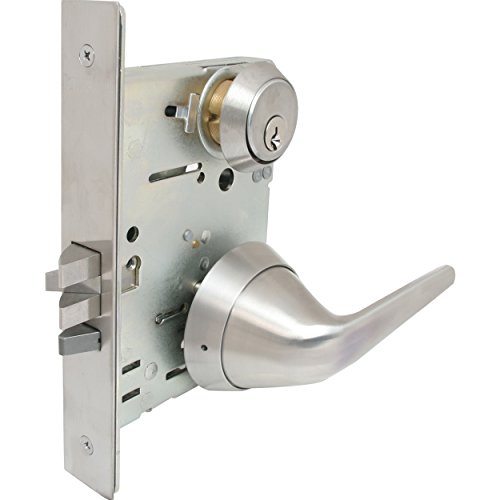 Rating:

Product Reviews
1. Baldwin 6321.003.R Estate Mortise Lock — Best for Residential Elegance
Baldwin has been synonymous with premium residential hardware for decades, and the 6321.003.R Estate handleset earns that reputation with every detail. Built for right-handed door installations, this unit ships with a 2-1/2-inch backset — slightly shorter than the standard 2-3/4 inch, which is an important measurement to verify before ordering. The Lifetime Polished Brass finish is lacquered solid brass, not plated zinc, so it resists tarnishing and corrosion far better than lower-cost alternatives. Our team found the construction noticeably heavier than typical residential hardware, a direct result of the full mortise body replacing the hollow cylindrical mechanism.
The emergency egress feature is a genuine safety differentiator at this price point. When the outside lever is locked, the inside can still retract the latchbolt and deadbolt simultaneously — critical for residential fire-egress compliance. The entrance function handles everyday traffic cleanly: the outside knob is keyed, the inside turns freely, and the mortise body accommodates standard key cylinders. Installation requires careful door mortise work; Baldwin includes detailed templates, but this isn't a beginner DIY job. Professional installation is worth the cost given the lock's $300+ price bracket.
The polished brass aesthetic is a perfect match for traditional and transitional home styles. It pairs well with Baldwin's broader Estate hardware line, which means consistent hardware across the entire entry — a detail that matters to homeowners who invest in curb appeal. Overall, the 6321.003.R is our top pick for anyone prioritizing residential craftsmanship and long-term finish durability.
Pros:
- Solid brass construction with lifetime finish warranty
- Emergency egress on inside lever for safety compliance
- Premium heft and smooth latchbolt action
- Consistent with Baldwin's full Estate hardware line
Cons:
- 2-1/2" backset is non-standard — must verify door prep before ordering
- Right-hand only; no reversible option in this SKU
- Premium price point is overkill for rental or commercial applications

2. Yale AUCN8847FL 8800 Series Mortise Lockset — Best for Commercial Apartment Buildings
Yale's 8800 Series is a staple in commercial apartment and multi-family construction, and the AUCN8847FL variant is a prime example of why. This is a Grade 1 ANSI/BHMA certified mortise lock, which means it meets the highest standard for operational cycles, security, and finish durability set by the industry's governing body. The apartment function combines a deadbolt with a latchbolt — outside entry requires a key, while the inside thumbturn provides quick egress without a key. The escutcheon plate provides a clean, professional appearance on commercial doors.
The field-reversible handing is one of the most practical features on this lock. Rather than stocking separate right-hand and left-hand units, facilities managers can order a single SKU and configure it on-site — a real cost saver for large builds. The 626 Satin Chrome finish is applied over a solid zinc alloy body; it's resistant to everyday wear and holds up well under high-traffic conditions. One important note: this model ships cylinder-not-included (CY = cylinder). Buyers need to source a compatible Yale or Best-in-class 6-pin cylinder separately, which adds to the total cost but also allows master-key system integration.
The UL-CUL 3-Hour Fire Door listing is the feature that sets this apart from Grade 1 locks that don't carry the fire rating. For commercial apartment corridors and stairwell doors, fire-rated hardware isn't optional — it's code. Our team confirmed this lock meets those requirements out of the box (with appropriate cylinder). For property managers evaluating broader security setups, pairing this lock with a quality home security system adds a second layer of protection that hardware alone can't provide.
Pros:
- ANSI Grade 1 — highest commercial performance rating
- UL-CUL 3-Hour Fire Door listed
- Field-reversible handing reduces SKU complexity for large projects
- Compatible with master-key systems when cylinder is selected properly
Cons:
- Cylinder sold separately — adds cost and sourcing step
- Higher price than comparable Grade 2 apartment locks
- Commercial appearance may feel clinical for upscale residential applications
3. Corbin Russwin ML2051-NSM-626 ML2000 Series — Best for Heavy-Duty Entry
Corbin Russwin has been manufacturing institutional hardware since 1839, and the ML2000 Series reflects that heritage. The ML2051-NSM-626 is an entry function mortise lock finished in 626 Satin Chrome — the same no-nonsense finish used across commercial and institutional projects from schools to hospitals. The ML2000 Series body is engineered for long-lasting performance, built from high-quality materials that resist the mechanical wear that wears out lesser locks within a few years of heavy use. The NSM trim designation indicates a no-sideplate escutcheon design, giving it a cleaner profile on heavy commercial doors.
The entry function means outside access is key-controlled while inside always allows free egress — the standard configuration for office suites, storage rooms, and commercial entrances. The 626 finish is a satin chrome that holds up exceptionally well against fingerprints, cleaning chemicals, and the daily abuse of high-traffic environments. Our team noted that the mortise body fits industry-standard door preps, making it a straightforward upgrade for existing commercial door frames already mortised for a lock body of this class.
Corbin Russwin locks are widely supported by institutional locksmiths, meaning parts, cylinders, and service expertise are easy to find — an important consideration for facilities managers who need ongoing support. The ML2051 isn't a flashy consumer lock; it's a serious piece of institutional hardware. If the application demands reliability in high-cycle commercial environments over multi-year service intervals, this is a sound investment.
Pros:
- Corbin Russwin's institutional-grade build quality
- Satin chrome finish resists chemicals and daily wear
- Industry-standard prep fits existing commercial door frames
- Strong parts availability and locksmith support network
Cons:
- Product listing specs are sparse — verify ANSI grade before purchasing
- Not suited for decorative residential applications

4. SOPHIA Commercial/Residential Heavy Duty Mortise Lockset — Best ADA-Compliant Lever Lock
SOPHIA's mortise lockset punches above its price class in 2026. The entrance function is well-engineered: the outside lever is locked via a 20° thumbturn rotation, while the inside lever always allows free egress — critical for compliance. When the deadbolt is thrown, the outside lever locks automatically, eliminating the need for a separate locking step. The auxiliary latch deadlocks the latchbolt when the door closes, preventing credit-card shimming attacks. These are features often found only on higher-priced commercial hardware, making SOPHIA a compelling value proposition.
The non-handed design is a genuine operational advantage. The same unit installs on left-hand or right-hand doors without any modification, which eliminates ordering errors and simplifies inventory for contractors and property managers handling multiple units. The 2-3/4" backset accommodates standard door prep on most residential and commercial doors built to 161 door prep specifications. The stainless steel latch bolt with 1/2" throw and 3-3/8" diameter roses are solid specs for this price tier. ADA-compliant lever handles ensure the hardware meets accessibility standards for commercial installations.
The 32D Satin Chrome (US32D) finish is clean and professional. At the specified door thickness range of 1-3/8" to 1-3/4", this lock fits the majority of both residential and light commercial doors. Our assessment is that SOPHIA has identified the right feature set for contractors and property managers who need reliable, code-compliant hardware at a realistic price. For anyone also evaluating deadbolt-only upgrades, our roundup of the best heavy duty deadbolt locks covers that angle in depth.
Pros:
- Non-handed — works on left or right door swing without modification
- ADA-compliant lever design
- Auxiliary latch prevents shimming attacks
- Competitive price for the feature set offered
- Standard 2-3/4" backset fits most door preps
Cons:
- Newer brand with a shorter track record than Yale or Corbin Russwin
- Limited color/finish options beyond Satin Chrome
5. BEST Access Systems 45H7D3H626 Mortise Lock — Best for Storeroom Control
BEST Access Systems — now part of dormakaba — has a long history in institutional and commercial access control. The 45H7D3H626 is a storeroom function mortise lock with a 3-lever trim in Satin Chrome, measuring 11.5 inches overall. Storeroom function means the outside lever is always locked — entry is always by key — while the inside lever allows free egress at all times. This is the right function for server rooms, pharmaceutical storage, inventory rooms, and any application where unmonitored access must be prevented.
The 3-lever trim is a defining visual characteristic. Unlike standard single-lever escutcheons, the 3-lever configuration signals institutional intent and provides ergonomic grip for frequent key-in-lever use. The 626 Satin Chrome finish matches BEST's broader hardware ecosystem, making it easy to maintain consistent hardware aesthetics across a facility. The 11.5-inch case length is standard for full-function commercial mortise bodies in this class.
BEST is deeply integrated into commercial master-key systems — their patented key control systems are widely used in schools, hospitals, and government facilities. Buying a BEST lock opens the door to their key control infrastructure if that's the next step in a facility's access management plan. The 45H7D3H626 is not a budget purchase, but for facilities that need reliable storeroom lockdown with institutional-grade credentials, the investment is justified. The brand's support network and parts availability are industry benchmarks.
Pros:
- Storeroom function — outside always locked, perfect for secure rooms
- Backed by dormakaba's institutional access control ecosystem
- Compatible with BEST master-key systems
- 3-lever trim provides ergonomic key operation
Cons:
- Higher price tier than comparable storeroom alternatives
- Storeroom function has a narrow use case — not suited for general entry doors
6. Falcon MA541DG626 MA541 Dane-Gala 626 — Best Mid-Range Commercial Option
Falcon — a Sargent brand — occupies the mid-market commercial space with a reputation for dependable hardware at reasonable price points. The MA541DG626 uses the Dane-Gala lever trim, a clean contemporary design that works across office, retail, and light institutional applications. The 626 finish keeps it consistent with the satin chrome aesthetic that dominates commercial door hardware. Our team's first impression was that the lock body feels appropriately solid for its price class — not as heavy as Yale's 8800 or BEST's hardware, but far sturdier than residential-grade cylindrical locksets.
The MA541 series covers standard commercial door functions, and this SKU's configuration suits entry and office use cases common in mid-size commercial buildouts. Installation follows standard commercial mortise procedures. The Taiwan-manufactured hardware reflects Falcon's approach to cost management — the quality control is acceptable for the application, but facilities requiring the highest-tier ANSI Grade 1 ratings should verify specifications before specifying this lock for code-critical applications like fire doors.
Quality door hardware at this price point is genuinely useful for retrofit projects, tenant improvement work, and commercial spaces where budget is a real constraint but residential-grade hardware won't pass inspection. Falcon's distribution through major commercial hardware distributors means lead times are generally short and replacement parts are accessible. Our recommendation is that the MA541DG626 works well in moderate-traffic commercial environments where institutional-grade hardware is unnecessary.
Pros:
- Competitive mid-market price for commercial mortise hardware
- Clean contemporary Dane-Gala lever aesthetic
- Good distribution network for parts and replacements
- Suitable for moderate-traffic office and retail applications
Cons:
- Taiwan manufacturing; ANSI grade certification should be verified for spec work
- Not rated for fire door applications
- Less brand recognition than Yale, Corbin Russwin, or BEST
7. TownSteel MRX-S-L-07-32D Mortise Lock — Best for Behavioral Health Facilities
The TownSteel MRX-S-L-07-32D is a highly specialized piece of hardware, and it excels precisely because it solves a problem that most lock manufacturers don't address at all. Ligature-resistant trim is mandated in behavioral health facilities, psychiatric units, and correctional settings where standard lever handles or pulls could be misused. TownSteel engineered the MRX trim specifically to eliminate horizontal surfaces, anchor points, and gaps that could accept ligatures. The storeroom function — outside always locked — adds a layer of controlled access appropriate for these sensitive environments.
The ANSI/BHMA A156.13-2005 Grade 1 certification confirms this lock meets the highest performance standard for mortise hardware — not just the ligature-resistance aspect but the full mechanical durability spec. The UL 10C 3-Hour Fire Door rating is equally important for institutional construction: behavioral health facilities are code-regulated for fire egress, and having both the ligature-resistant feature and the fire rating in a single lock body simplifies specification significantly. Satin Stainless Steel (32D) is the appropriate finish for institutional environments given its resistance to cleaning agents and disinfectants.
Installation requires a qualified commercial locksmith familiar with institutional hardware. The MRX body fits standard commercial door prep. TownSteel's focus on behavioral health hardware means their technical support is genuinely knowledgeable about the specific code requirements in this space. This lock has no application in residential or standard commercial settings — it's designed for one environment and does that job definitively. For architects and facility managers specifying hardware for healthcare or correctional construction in 2026, the MRX-S-L-07-32D is a well-documented, code-compliant solution. Institutions evaluating broader security infrastructure may also benefit from reviewing access control keypad options alongside their lockset specifications.
For context on how ligature-resistant hardware fits within broader hospital security frameworks, TownSteel's approach aligns with current Joint Commission and CMS guidelines for patient safety environments.
Pros:
- Purpose-built ligature-resistant lever trim for behavioral health applications
- ANSI/BHMA Grade 1 certified — highest mechanical performance standard
- UL 10C 3-Hour Fire Door rated
- Satin Stainless Steel resists hospital-grade disinfectants
Cons:
- Highly specialized — no value in general commercial or residential settings
- Premium price reflects the specialized engineering
- Requires licensed commercial installation
Buying Guide: How to Choose the Best Mortise Lock
ANSI/BHMA Grade Ratings — The Most Important Spec
Before any other consideration, the ANSI/BHMA grade rating determines whether a lock is appropriate for a given application. Grade 1 is the highest rating, tested to 250,000 operational cycles, and required for commercial and high-traffic applications. Grade 2 suits moderate-use residential and light commercial doors. Grade 3 covers low-traffic residential use only.
- Grade 1: Commercial offices, apartment buildings, institutional facilities, fire-rated doors
- Grade 2: Residential front doors, light commercial interior doors
- Grade 3: Interior residential doors, low-security closets and utility rooms
Several locks on this list — Yale 8800, TownSteel MRX, BEST Access Systems — carry clear Grade 1 designations. For any door that will see heavy daily use or requires fire-door compliance, Grade 1 is not optional.
Lock Function — Match the Hardware to the Application
Mortise locks offer far more function configurations than standard cylindrical sets. Choosing the wrong function creates either a security gap or an egress problem. The most common functions are:
- Entrance: Outside key-controlled, inside free egress. Standard for front doors and commercial entries.
- Apartment: Outside key-controlled, inside thumbturn deadbolt + free latch egress. Standard for apartment unit doors.
- Storeroom: Outside always locked (key always required), inside always free. For secure storage, server rooms, pharmaceutical rooms.
- Office: Outside locked by inside button, outside key overrides. Standard for private offices that need to lock from inside.
Every product on this list is pre-configured from the factory in a specific function. Changing lock function typically requires a different lock body or internal module — it's not a field adjustment on most hardware. Confirm the function before ordering.
Fire Door Ratings and Code Compliance
Not every mortise lock is approved for use on fire-rated doors. Commercial construction codes require hardware on rated openings — corridor doors, stairwell doors, apartment entry doors — to carry UL listings for 3-hour fire resistance. The Yale 8800 Series and TownSteel MRX both carry UL 10C 3-Hour ratings. Using non-rated hardware on a fire door opening creates a code violation and potential liability. Always verify the door's fire rating label before specifying hardware, and confirm the lock's UL listing matches or exceeds the door's rating.
Backset, Door Prep, and Cylinder Compatibility
Mortise locks require the door to be mortised (a rectangular pocket cut into the door edge) — a more involved installation than cylindrical lock prep. Key measurements to verify before purchasing:
- Backset: Distance from door edge to center of keyhole/lever. Most commercial mortise locks use 2-3/4". Baldwin's 6321 uses 2-1/2" — unusual for residential and non-interchangeable without redrilling.
- Door thickness: Most mortise locks accommodate 1-3/4" thick doors standard in commercial construction. Verify before ordering for residential hollow-core or oversized doors.
- Cylinder type: Several locks on this list — including Yale — ship without cylinders. Confirm cylinder compatibility (SFIC, standard 6-pin, or proprietary) before purchasing, especially for master-key system integration.
What People Ask
What is a mortise lock and how does it differ from a cylindrical lock?
A mortise lock fits into a rectangular pocket (mortise) cut into the door edge, whereas a cylindrical lock is bored through the face of the door. Mortise locks have a larger, more complex lock body that integrates both the latch and deadbolt mechanisms into a single unit. This construction is structurally stronger, more resistant to kick-in attacks, and supports a wider range of functions. Most commercial doors in the United States are built to accept mortise hardware as the standard.
What ANSI grade should most buyers choose for a front door?
For a residential front door, Grade 2 is the minimum acceptable standard, and Grade 1 is the preferred choice for any door that sees regular daily use or is the primary security point for a property. Grade 1 locks are tested to 250,000 operational cycles and carry more stringent strength requirements for the deadbolt and latchbolt throw. The cost difference between Grade 2 and Grade 1 hardware is modest relative to the security and longevity gains.
Are mortise locks more secure than deadbolts?
In general, yes. A properly installed mortise lock integrates both the latch and deadbolt into a single reinforced body set deep within the door, distributing the load across a larger surface area than a cylindrical deadbolt. The full mortise body also eliminates the gap between latch and deadbolt that exists when cylindrical hardware is stacked on a door. For the strongest deadbolt-only option without going full mortise, our guide to the best heavy duty deadbolts is worth reviewing.
Can a standard homeowner install a mortise lock?
Installing a mortise lock from scratch — cutting the mortise pocket, drilling for the cylinder, and aligning the strike plate — requires woodworking skill and precision tools. On doors already mortised for a previous lock of the same body size, the replacement process is straightforward. For new installations, most homeowners are better served by hiring a licensed locksmith or door installer. The cost of professional installation is small relative to the lock's price and the consequences of a misaligned installation.
What does 'cylinder not included' mean on commercial mortise locks?
The cylinder is the plug that accepts the key and operates the lock mechanism. Some commercial mortise locks — like the Yale 8800 Series — ship without a cylinder so the buyer can source one compatible with their existing master-key system. This is standard practice in commercial construction. If a master-key system is in place, the facilities manager or locksmith specifies the appropriate cylinder to integrate the new lock into the existing keyway. Buyers who don't have a master-key system should order a matching cylinder from the same manufacturer to ensure compatibility.
What is a ligature-resistant lock and who needs one?
A ligature-resistant lock uses specially designed trim — levers, escutcheons, and hardware — that eliminate surfaces, gaps, and protrusions that could anchor a cord or fabric strip. These locks are required by Joint Commission standards in behavioral health units, psychiatric inpatient facilities, and correctional settings. Standard lever handles, even Grade 1 commercial units, do not qualify as ligature-resistant. The TownSteel MRX series on this list is purpose-engineered for these applications and carries the relevant certifications for specification in healthcare construction.
Buy on Walmart
- Baldwin 6321.003.R Estate Right Handed Handleset and Knob En — Walmart Link
- Yale - AUCN8847FL x 626 x LC 8847FL RH AUCN 626 LESS CY 8800 — Walmart Link
- Corbin Russwin ML2051-NSM-626 ML2000 Series Mortise Entry Lo — Walmart Link
- SOPHIA Commercial/Residential Heavy Duty Mortise Lockset Doo — Walmart Link
- BEST Access Systems 45H7D3H626 Mortise Lock, 11.5" Length — Walmart Link
- Falcon MA541DG626 MA541 Dane-Gala 626 Mortise Lock — Walmart Link
- TownSteel MRX-S-L-07-32D Mortise Lock with Ligature Resistan — Walmart Link
Buy on eBay
- Baldwin 6321.003.R Estate Right Handed Handleset and Knob En — eBay Link
- Yale - AUCN8847FL x 626 x LC 8847FL RH AUCN 626 LESS CY 8800 — eBay Link
- Corbin Russwin ML2051-NSM-626 ML2000 Series Mortise Entry Lo — eBay Link
- SOPHIA Commercial/Residential Heavy Duty Mortise Lockset Doo — eBay Link
- BEST Access Systems 45H7D3H626 Mortise Lock, 11.5" Length — eBay Link
- Falcon MA541DG626 MA541 Dane-Gala 626 Mortise Lock — eBay Link
- TownSteel MRX-S-L-07-32D Mortise Lock with Ligature Resistan — eBay Link
Final Thoughts
Mortise locks are a long-term investment in door security, and the right choice depends entirely on the application — a residential homeowner's needs are fundamentally different from a hospital or apartment building. Our team's top picks for 2026 cover the full spectrum: the Baldwin Estate for premium residential installations, the Yale 8800 for fire-rated commercial apartments, and the TownSteel MRX for behavioral health facilities where standard hardware simply isn't sufficient. Browse the full selection on our mortise locks category page and match the hardware to the door — getting that fit right is the entire job.


About Robert Fox
Robert Fox spent ten years teaching self-defence in Miami before transitioning into home security consulting and writing — a background that gives him an unusually practical, threat-aware perspective on residential security. His experience spans physical security assessment, lock and alarm system evaluation, and the behavioral habits that make homes harder targets. At YourHomeSecurityWatch, he covers home security product reviews, background check and criminal records resources, and practical guides on protecting your property and family.
You can Get FREE Gifts. Furthermore, Free Items here. Disable Ad Blocker to receive them all.
Once done, hit anything below