The Schlage Encode Plus earns the top spot in 2026 because it combines built-in Wi-Fi, Apple Home Key support, and rock-solid Schlage build quality in a single package — no hub, no compromises. Smart locks have moved well beyond novelty status. Today they're a practical upgrade for anyone who's ever stood at the door with full hands, waited on a delivery, or lost a key for the third time.
The smart lock category has matured fast. Wi-Fi is now standard at every price tier. Fingerprint readers have gotten accurate enough to trust as a primary entry method. And app ecosystems — Apple Home, Google Home, Alexa — have matured to the point where integration actually works reliably. The challenge now is cutting through the specs to find the lock that fits your door, your phone, and your household routine.
This guide covers seven of the best smart locks available in 2026, tested across real installation scenarios. Whether you want a fully invisible upgrade, a fingerprint-first entry, or the most reliable keypad deadbolt money can buy, you'll find your answer below. For context on the broader home security picture, our home security systems guide covers how smart locks fit into layered protection strategies.

Contents
- Editor's Recommendation: Top Picks of 2026
- Full Product Breakdowns
- Schlage Encode Plus — Best for Apple HomeKit Users
- August Wi-Fi Smart Lock — Best for Retrofit Installation
- Yale Assure Lock 2 — Best Auto-Lock Features
- ULTRALOQ U-Bolt Pro WiFi — Best for Biometric Access
- Level Lock+ WiFi — Best for Discreet Design
- Wyze Lock Bolt — Best Budget Smart Lock
- Schlage Encode — Best for Voice Control
- Key Features to Consider When Choosing
- Frequently Asked Questions
Editor's Recommendation: Top Picks of 2026
- #PreviewProductRating
- Bestseller No. 1
 Rating:

- Bestseller No. 2
 Rating:
 - Bestseller No. 3
 Rating:
 - Bestseller No. 4
 Rating:
 - Bestseller No. 5
 Rating:
 - Bestseller No. 6
 Rating:
 - Bestseller No. 7
 Rating:

Full Product Breakdowns
1. Schlage Encode Plus Smart Wi-Fi Lock — Best for Apple HomeKit Users
If you're deep in the Apple ecosystem, the Schlage Encode Plus is the lock to own in 2026. Apple Home Key support means you tap your iPhone or Apple Watch against the lock — no app required, no NFC bridge, no extra hardware. It responds in under half a second, and it works even when your phone is on low power mode. That's the kind of seamless that other locks are still catching up to.
The Encode Plus runs on built-in Wi-Fi, so there's no hub or bridge cluttering your setup. You manage everything through the Schlage Home app: lock and unlock remotely, set up to 100 unique access codes, review a full access history, and get push notifications whenever the door is used. The lock itself is Grade 1 ANSI certified — the highest residential security rating available — built with the same deadbolt hardware that's been in homes for decades. Installation is DIY-friendly and takes about 30 minutes with a screwdriver.
It's worth noting this lock sits at a premium price point. You're paying for the Apple Home Key implementation and Schlage's build reputation, and both justify the cost. The matte black finish is a sharp look on any door. Battery life runs solid at six to twelve months on four AA batteries, and the low-battery alert gives you plenty of warning before you're locked out.
Pros:
- Native Apple Home Key — tap-to-unlock with iPhone or Apple Watch
- Built-in Wi-Fi eliminates the need for a hub or bridge
- Supports up to 100 access codes with full history
- ANSI Grade 1 certified deadbolt — top-tier physical security
- Works with Alexa and Apple HomeKit for voice and automation
Cons:
- Higher price than most competitors in this category
- Google Home integration is not supported
- Requires 2.4 GHz Wi-Fi — not compatible with 5 GHz-only networks

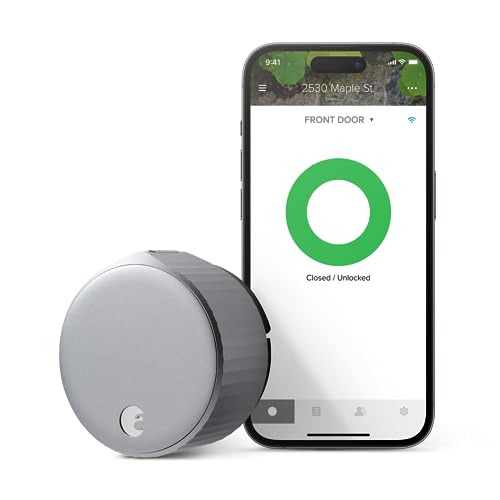
2. August Wi-Fi Smart Lock (4th Gen) — Best for Retrofit Installation
The August Wi-Fi Smart Lock is the best answer when you want a smart lock without replacing your existing deadbolt hardware. It mounts on the interior side of your door, clamping directly onto your existing thumbturn. The outside of your door looks completely unchanged — same hardware, same keyhole, same appearance. This makes it ideal for renters, apartment dwellers, or anyone in a homeowner association with exterior modification restrictions.
Installation genuinely takes about ten minutes. You remove your interior thumbturn, attach the August adapter, snap on the lock body, and connect to Wi-Fi through the app. The built-in Wi-Fi (fourth generation added this directly — no separate bridge needed) gives you full remote access, auto-lock, and access history from anywhere. You can share permanent, scheduled, or temporary digital keys directly through the August app, which is far more practical than making copies of physical keys.
The August also supports auto-unlock using your phone's geofencing — walk up to your door and it unlocks before you reach for anything. This feature works reliably when your phone's Bluetooth and location services are enabled. Note that since the outside hardware stays the same, you keep your physical key as a backup, which many users consider a genuine advantage. Smart home integrations are strong: Alexa, Google Assistant, Apple HomeKit, and Ring are all supported.
Pros:
- Installs over your existing deadbolt — outside door looks identical
- Built-in Wi-Fi — no hub required in the 4th generation
- Auto-unlock via geofencing works consistently
- Broad smart home compatibility: Alexa, Google, HomeKit, Ring
- Great for renters — preserves physical key option
Cons:
- No keypad — entry is app, auto-unlock, or physical key only
- Interior mounting looks bulkier than a native deadbolt
- Battery life is shorter than keypad-only competitors (roughly 3 months)
3. Yale Assure Lock 2 Deadbolt — Best Auto-Lock Features
Yale's Assure Lock 2 is the answer if you're the type of person who drives three blocks and then wonders whether you locked the door. DoorSense technology detects whether your door is physically open or closed, and auto-lock only engages when the door is confirmed shut — so you won't find your deadbolt throwing the bolt into an open door frame. It's a small detail that prevents a lot of mechanical wear and a lot of anxiety.
The keypad on the Assure Lock 2 is backlit and responsive, and the lock replaces your existing deadbolt on most standard US doors with just a screwdriver. No locksmith, no drilling, no special tools. Entry options are broad: keypad code, voice assistant through Alexa or Google Assistant, auto-unlock via the Yale Access App, or tap-to-unlock on your Apple Watch. Everyone in your household can pick their preferred method independently.
Built-in Wi-Fi means remote access is immediate through the Yale Access App. You can check lock status, lock or unlock remotely, and manage access codes from anywhere. The Black Suede finish is a premium matte look that holds up well against fingerprints and wear. One practical note: this lock operates on 2.4 GHz Wi-Fi only, and it's designed for US and Canada markets. If you're upgrading multiple locks, Yale's family of compatible hardware means you can manage everything from one app.
Pros:
- DoorSense detects door position before engaging auto-lock
- Multiple entry methods: keypad, app, voice, Apple Watch
- Built-in Wi-Fi with no hub needed
- Works with Alexa, Google Home, and Apple HomeKit
- Clean, professional Black Suede finish
Cons:
- 2.4 GHz Wi-Fi only — won't work on 5 GHz networks
- US and Canada only — limited international support
- App occasionally requires re-pairing after firmware updates
4. ULTRALOQ U-Bolt Pro WiFi — Best for Biometric Access
Eight entry methods in one lock sounds like a gimmick until you live with it. The ULTRALOQ U-Bolt Pro delivers: fingerprint ID, keypad code, smartphone app, auto-unlock approach detection, auto-lock on close, web portal access, eKey sharing, and voice control via Alexa or Google Assistant. The AI-powered fingerprint reader is the headline feature — it reads your print in a fraction of a second and stores up to 100 fingerprints. For households with kids or frequent guests, this flexibility is genuinely useful.
The built-in Wi-Fi connects directly to your home network — no hub, no additional hardware. You can lock, unlock, and monitor your door remotely from anywhere via the U-tec app. The door sensor is included and shows you in real time whether the door is open or closed. Get alerts for any unlock event, failed code attempts, or a door left ajar. For short-term rentals, guest properties, or home offices, the eKey sharing system lets you grant time-limited access remotely without handing over a physical key.
IP65 waterproofing is a meaningful spec here — this lock handles rain, snow, and humidity without degrading the fingerprint reader or keypad. Installation is a full deadbolt replacement and takes around 20-30 minutes with included hardware. If you're comparing it to a simpler lock, the feature set is deeper than most people need. But if you want one lock that can handle every scenario your household throws at it, the U-Bolt Pro earns its price. See also our guide to high security door locks for how biometric access compares to pick-resistant mechanical alternatives.
Pros:
- Eight entry methods — most flexible lock in this roundup
- AI fingerprint reader stores up to 100 prints
- IP65 waterproof — handles any outdoor weather condition
- Built-in Wi-Fi with door sensor included
- Strong eKey sharing for rental and guest access management
Cons:
- Larger profile than competitors — more visible on the door
- 2.4 GHz Wi-Fi only
- App interface has a steeper learning curve than Schlage or Yale
5. Level Lock+ WiFi Deadbolt — Best for Discreet Design
The Level Lock+ is the smart lock for people who don't want anyone to know they have a smart lock. The entire electronics package fits inside the deadbolt cylinder itself — there's no visible technology on the inside or outside of your door. It looks like a standard deadbolt from every angle. If your door hardware is designer or architecturally significant, Level is the only smart lock that won't compromise it.
Apple Home Key support is built in: tap your iPhone or Apple Watch against the lock face to unlock. The included Level Connect Wi-Fi bridge plugs into a nearby outlet and gives you full remote access through the Level Home app — lock and unlock from anywhere, view activity history, and manage key codes for the Level Keypad (sold separately). The bridge is compact and can be tucked out of sight. The lock itself connects on 2.4 GHz Wi-Fi through the bridge.
Installation requires removing your existing deadbolt cylinder and dropping in the Level cylinder — it fits most standard mortise and cylindrical deadbolts. The process is clean but slightly more involved than a surface-mount smart lock. The tradeoff is a result that's genuinely invisible. Available finishes include satin nickel, matte black, and polished brass — all high-quality hardware finishes, not plastic painted to look like metal. If aesthetics and discretion are priorities, nothing else in this category comes close.
Pros:
- Completely invisible — no exterior or interior technology visible
- Apple Home Key tap-to-unlock included
- Works with Apple Home, Alexa, and Google Home
- Premium hardware finishes that match designer door hardware
- Wi-Fi bridge included in the box
Cons:
- No keypad — requires phone, Apple Watch, or separate Level Keypad accessory
- Remote access depends on the bridge being online and plugged in
- Installation is more involved than surface-mount alternatives
6. Wyze Lock Bolt — Best Budget Smart Lock
At its price point, the Wyze Lock Bolt punches well above its weight. Fingerprint recognition, a backlit keypad with anti-peep digit masking, auto-lock, and IPX5 weather resistance in a BHMA and UL 20-minute fire-rated lock — that's a spec sheet that embarrasses locks costing twice as much. If your budget is the primary constraint, this is where to start.
The fingerprint reader stores up to 50 prints and unlocks in under a second with a solid recognition rate. The keypad supports anti-peeping: you can add random digits before or after your real code and the lock still opens, so shoulder-surfers can't learn your PIN from watching your hand pattern. Auto-lock engages after a set interval, and you can review the full lock/unlock history in the Wyze app including failed code attempts.
The important limitation: the Wyze Lock Bolt is Bluetooth-only. Remote access — checking status, unlocking from across town — requires the Wyze Gateway hub (sold separately). If you buy it standalone, your smart features are limited to Bluetooth range. For a second door, a vacation cabin, or a household on a tight budget, this is the right call. But if remote access matters, factor in the gateway cost. The UL fire rating is a genuine safety credential that many premium locks don't bother to certify, which makes this lock worth recommending for bedrooms and interior security doors as well. The BHMA certification confirms the lock mechanism meets independent durability and security standards — a credibility marker backed by the Builders Hardware Manufacturers Association.
Pros:
- Lowest price in this roundup with fingerprint and keypad included
- Anti-peep keypad with up to 50 fingerprints stored
- BHMA certified and UL 20-minute fire rated
- IPX5 weatherproof for outdoor door installation
- Auto-lock with Wyze app history and scheduled access
Cons:
- Bluetooth-only — remote access requires separate Wyze Gateway hub
- No native support for Apple HomeKit or Google Home
- Wyze ecosystem is less mature than Yale, Schlage, or August
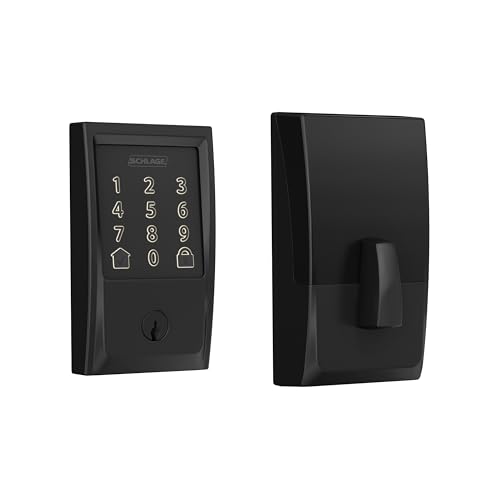
7. Schlage Encode Smart Wi-Fi Deadbolt — Best for Voice Control
The original Schlage Encode remains a strong pick in 2026 — especially if you're running an Alexa or Google Home setup and want voice control to feel truly integrated. Hands-free locking is the Encode's strongest use case: "Alexa, lock the front door" works reliably without extra configuration steps. For anyone who regularly arrives home with groceries, tools, or kids in tow, that's genuinely life-improving.
The touchscreen keypad is Schlage's signature — capacitive, responsive, and designed to withstand years of daily use. You manage up to 100 access codes, view a full lock history, and control everything remotely through the Schlage Home app. Built-in Wi-Fi means no bridge or hub to manage. Like the Encode Plus, it's Grade 1 ANSI certified — the most physically secure deadbolt classification available for residential hardware. If you're looking at a head-to-head comparison with the Encode Plus, the key difference is Apple Home Key: the Encode doesn't have it. If you're not in the Apple ecosystem, that omission saves you money without sacrificing anything you'll use.
Airbnb compatibility is officially listed, and hosts who've deployed this lock consistently rate the access code management as one of the best in class — easy to add, schedule, and revoke remotely. The matte black finish is durable and holds up well in high-traffic entry points. Installation is a full deadbolt replacement, roughly 30-45 minutes. If your priority is a long-track-record brand with proven customer support, ANSI Grade 1 security, and strong voice assistant integration, the Schlage Encode delivers all three. Pairing this lock with Schlage's commercial-grade deadbolt options can extend the same management system to secondary entry points like garage doors and back entries.
Pros:
- Strong Alexa and Google Home voice control integration
- Built-in Wi-Fi — no hub needed
- Up to 100 access codes with remote management
- ANSI Grade 1 certified deadbolt mechanism
- Officially Airbnb compatible — excellent for rental properties
Cons:
- No Apple Home Key support — that feature is exclusive to the Encode Plus
- Touchscreen keypad requires waking before entry — slightly slower than physical buttons
- Higher price than Yale and ULTRALOQ at comparable feature tiers
Key Features to Consider When Choosing a Smart Lock
Connectivity: Wi-Fi vs. Bluetooth vs. Hub-Based
Connectivity is the single most consequential spec decision you'll make. Here's how the options break down:
- Built-in Wi-Fi (Schlage Encode, Yale Assure Lock 2, ULTRALOQ U-Bolt Pro): Remote access works immediately with no extra hardware. Most convenient, but consumes more battery power.
- Bluetooth-only (Wyze Lock Bolt standalone): Works only within Bluetooth range — typically 30 feet or less. Remote access requires adding a hub or bridge.
- Bridge/hub required (Level Lock+ with included bridge): The lock itself is small and efficient; the bridge handles Wi-Fi connectivity and plugs into a standard outlet nearby.
- Retrofit adapter style (August Wi-Fi): Mounts on your interior thumbturn; the Wi-Fi radio is built into the lock body in the 4th generation.
If you want to check your lock from a different city, built-in Wi-Fi is the cleanest solution. If local-only control is fine, Bluetooth saves battery life and simplifies the setup.
Security Certifications: ANSI Grades Explained
The smart features are only as good as the physical lock underneath them. Look for these ratings:
- ANSI Grade 1: Highest residential rating — required for commercial applications. Schlage Encode and Encode Plus both carry this. It means the lock mechanism withstands 250,000 cycles, 6 door strikes, and significant pick resistance.
- ANSI Grade 2: Solid residential performance. Fine for interior and lower-traffic exterior doors.
- BHMA Certified: Third-party testing for durability, finish, and cycle life — Wyze Lock Bolt's certification is noteworthy at its price point.
- UL Fire Rating: Relevant for doors adjacent to attached garages or interior security. Wyze Lock Bolt is UL 20-minute fire rated.
A smart lock with a Grade 3 deadbolt mechanism can be defeated with basic tools regardless of how sophisticated the app is. Match your physical security rating to the location's risk level.
Access Methods and Household Fit
Think about who uses your door and how they're most likely to enter:
- Keypad codes: Works for everyone, no phone required. Best for kids, elderly family members, housekeepers, and dog walkers.
- Fingerprint: Fastest entry, no codes to remember. Best for primary occupants who enter frequently. ULTRALOQ and Wyze lead here.
- App unlock / auto-unlock: Hands-free convenience, but requires the user to have a phone with Bluetooth or Wi-Fi enabled. August's geofencing implementation is the smoothest.
- Apple Home Key / NFC tap: The fastest and most seamless method for iPhone users. Schlage Encode Plus and Level Lock+ both support it.
- Physical key backup: August retrofit style keeps your existing key working. Full deadbolt replacements typically include key override cylinders.
The best smart lock for your household is the one whose primary entry method matches how your family actually lives — not the one with the longest feature list.
Installation and Door Compatibility
Most smart locks in this roundup fit standard US single-cylinder deadbolt prep — a 2-1/8" cross-bore with a 2-3/8" or 2-3/4" backset. But details matter:
- Measure your door's backset before ordering. Wyze Lock Bolt specifically flags this in its documentation.
- August retrofit adapters fit most single-cylinder deadbolts but won't work on double-cylinder (keyed on both sides) or certain European-style locks.
- Level Lock+ requires removing and replacing the deadbolt cylinder — verify compatibility with your specific deadbolt brand.
- Most full deadbolt replacements (Schlage, Yale, ULTRALOQ) include hardware for both standard backset sizes and install with a single screwdriver in 20-45 minutes.
If you're replacing locks across multiple doors, our door lock installation kit guide covers the tools that make multi-lock projects significantly faster.
Frequently Asked Questions
Do smart locks work without Wi-Fi?
It depends on the lock's connectivity method. Bluetooth-only locks like the Wyze Lock Bolt work without Wi-Fi — you can unlock via fingerprint, keypad, or Bluetooth app within range. However, remote access (checking status or locking from another location) requires an internet-connected hub or built-in Wi-Fi. Locks with built-in Wi-Fi like the Schlage Encode or Yale Assure Lock 2 lose their remote features when your internet goes down, but keypad and physical key entry still work normally.
Are smart locks as secure as traditional deadbolts?
The best smart locks — specifically those with ANSI Grade 1 certified mechanisms — are as secure as or more secure than most traditional deadbolts. Physical security is determined by the deadbolt mechanism, not the smart features. A Grade 1 smart lock like the Schlage Encode resists the same physical attacks as a Grade 1 traditional lock. The additional attack surface is digital: weak PIN codes, app vulnerabilities, or unsecured Wi-Fi networks. Use a strong, unique access code and keep firmware updated to mitigate digital risk.
How long do smart lock batteries last?
Battery life varies significantly by connectivity method. Wi-Fi-connected locks typically last 6 to 12 months on four AA batteries with average daily use — Schlage Encode is a reliable performer at the longer end of that range. Bluetooth-only locks last longer because Bluetooth uses less power. August Wi-Fi (4th gen) runs roughly 3 months, reflecting its constant Wi-Fi connection. All smart locks in this roundup provide low-battery app alerts and keypad indicators, giving you days or weeks of warning before the battery dies. Keep a spare set of batteries at home.
What happens if my phone dies and I need to get in?
This depends on your lock's access methods. Locks with a keypad (Schlage Encode, Yale Assure Lock 2, ULTRALOQ, Wyze) let you enter a PIN code regardless of your phone's status. The Schlage Encode Plus and Level Lock+ support Apple Home Key, which works even when your iPhone is in low-power mode. August retrofit locks keep your physical key operational since the exterior hardware doesn't change. As a general rule: always configure at least two entry methods and never rely solely on app access as your primary backup plan.
Can I use a smart lock if I'm renting?
Yes, with the right lock choice. The August Wi-Fi Smart Lock is specifically designed for renters — it mounts on the interior side of your existing deadbolt, leaving the exterior hardware completely unchanged. When you move out, you remove it and reinstall the original thumbturn. Many landlords are comfortable with this approach. Full deadbolt replacements like the Schlage or Yale locks require replacing the exterior hardware, which typically needs landlord permission. Always check your lease before making permanent door modifications.
Is it worth upgrading to a smart lock in 2026?
For most homeowners, yes. The practical benefits are real: remote access when you're away, temporary codes for guests and service providers, auto-lock so you never leave the door unlocked by accident, and full access history so you know exactly who entered and when. The price of entry has dropped considerably — the Wyze Lock Bolt brings fingerprint access and keypad entry to budget buyers, while premium options like the Schlage Encode Plus or Level Lock+ deliver a genuinely seamless experience. If you regularly deal with key handoffs, contractors, house guests, or short-term rentals, the upgrade pays for itself quickly in convenience and reduced key management headaches.
Buy on Walmart
- Schlage Encode Plus Smart Wi-Fi Lock for Front Door, Keyless — Walmart Link
- August Home, Silver Wi-Fi Connected Smart Keyless Entry Door — Walmart Link
- Yale Security Assure Lock 2 Deadbolt, Black Suede Keyed Smar — Walmart Link
- ULTRALOQ U-Bolt Pro WiFi Smart Lock with Door Sensor, 8-in-1 — Walmart Link
- Level Lock+ WiFi Deadbolt Smart Lock - World's Smallest Smar — Walmart Link
- Wyze Auto-Lock Bolt, Fingerprint Keyless Entry Door Smart Bl — Walmart Link
- Schlage Encode Smart Wi-Fi Deadbolt Lock with Touchscreen Ke — Walmart Link
Buy on eBay
- Schlage Encode Plus Smart Wi-Fi Lock for Front Door, Keyless — eBay Link
- August Home, Silver Wi-Fi Connected Smart Keyless Entry Door — eBay Link
- Yale Security Assure Lock 2 Deadbolt, Black Suede Keyed Smar — eBay Link
- ULTRALOQ U-Bolt Pro WiFi Smart Lock with Door Sensor, 8-in-1 — eBay Link
- Level Lock+ WiFi Deadbolt Smart Lock - World's Smallest Smar — eBay Link
- Wyze Auto-Lock Bolt, Fingerprint Keyless Entry Door Smart Bl — eBay Link
- Schlage Encode Smart Wi-Fi Deadbolt Lock with Touchscreen Ke — eBay Link
The right smart lock isn't the one with the most features — it's the one whose entry method matches how your household actually lives, backed by a physical deadbolt strong enough to make the smart features worth trusting.


About Robert Fox
Robert Fox spent ten years teaching self-defence in Miami before transitioning into home security consulting and writing — a background that gives him an unusually practical, threat-aware perspective on residential security. His experience spans physical security assessment, lock and alarm system evaluation, and the behavioral habits that make homes harder targets. At YourHomeSecurityWatch, he covers home security product reviews, background check and criminal records resources, and practical guides on protecting your property and family.
You can Get FREE Gifts. Furthermore, Free Items here. Disable Ad Blocker to receive them all.
Once done, hit anything below