Best Commercial Deadbolts: Reviews, Buying Guide, and FAQ 2026
by Robert Fox
Which commercial deadbolt actually holds up when someone is determined to get through your door? That question keeps facility managers, security consultants, and serious homeowners up at night — and the answer matters more than most buyers realize. After hands-on evaluation of the top-rated options available in 2026, the Mul-T-Lock MT5+ Hercular stands out as the clear frontrunner for anyone who refuses to compromise on cylinder-level security.
Commercial deadbolts are not the same animal as the residential hardware you find at your local home improvement store. They are engineered to meet ANSI/BHMA Grade 1 standards, the toughest benchmarks in the industry, covering everything from cycle life (250,000+ operations) to forced-entry resistance. If you are protecting a business entrance, a rental property, or a high-traffic door in your home, reaching for a Grade 1 commercial unit is the right call. Explore the full commercial deadbolt reviews category for a broader view of what the market offers.
The seven products below cover the full spectrum — from ultra-high-security disc detainer cylinders to keypad mortise locks and budget-friendly Grade 2 units. Whether you need pick resistance measured in hours or a simple keyed upgrade that meets commercial fire-door specs, this guide gives you the definitive breakdown. For context on how these compare to residential hardware, check out our guide to the best high security door locks — then come back here for the commercial-grade specifics.
Contents
- Top Rated Picks of 2026
- Full Product Breakdowns
- Mul-T-Lock MT5+ Hercular — Best Overall
- Abloy Protec2 — Best Anti-Pick Protection
- Sargent KP-8278-LNJ-26D — Best Keypad Commercial Deadbolt
- Arrow E61 Deadbolt — Best Budget Commercial
- Dexter Commercial DB1000-DCT — Best Double Cylinder
- Master Lock DSCHDD32D — Best Bump-Resistant Value
- Falcon D141BD 626 — Best for Fire Doors
- Buying Guide
- What People Ask
- Key Takeaways
Top Rated Picks of 2026
- #PreviewProductRating
- Bestseller No. 1
 Rating:

- Bestseller No. 2
 Rating:
 - Bestseller No. 3
 Rating:
 - Bestseller No. 4
 Rating:
 - Bestseller No. 5
 Rating:
 - Bestseller No. 6
 Rating:
 - Bestseller No. 7
 Rating:

Full Product Breakdowns
1. Mul-T-Lock MT5+ Hercular Single Cylinder Deadbolt — Best Overall High-Security
The Mul-T-Lock MT5+ Hercular is the lock you buy when you are done guessing about security. Built on Mul-T-Lock's legendary telescopic pin technology, the MT5+ cylinder adds a fifth locking element — a sidebar system — that makes conventional pick tools essentially useless against it. This is a lock that locksmiths respect, and that endorsement alone tells you something. The Satin Chrome finish is clean and professional, fitting commercial doors without looking out of place.
What separates the Hercular from cheaper deadbolts is the full hardened steel construction of the bolt and body housing. The cylinder itself is anti-drill, with hardened steel inserts that destroy drill bits before they reach the pins. Key control is tight — Mul-T-Lock's patented key profile means you cannot walk into a hardware store and duplicate these keys. Each unit ships with two keys and a key code I.D. card, giving you a documented chain of custody for your keyway. For high-stakes access points, that matters enormously.
Installation is straightforward for a locksmith or experienced DIYer. The thumbturn on the interior side is smooth, and the bolt throw is solid without being sticky. If you are serious about securing a commercial entry point and want the best cylinder technology available outside of a $2,000 Medeco system, the MT5+ Hercular is your answer. Pair it with a reinforced strike plate and a solid-core door and you have created a formidable barrier. Also worth reading: our full breakdown of the best pick-resistant locks for a deeper look at cylinder-level security options.
Pros:
- MT5+ cylinder with sidebar mechanism — extremely pick and bump resistant
- Hardened steel anti-drill inserts protect the cylinder
- Key control with patented profile — no unauthorized duplication
- Ships with key code I.D. card for documented key management
- Professional satin chrome finish suits commercial applications
Cons:
- Premium price point — significantly more expensive than Grade 1 Schlage options
- Key duplication requires authorized dealer — inconvenient for large operations needing many copies

2. Abloy Protec2 Single Cylinder Deadbolt with Lockable Thumbturn — Best Anti-Pick Protection
If you have done any research into high-security locks, you have encountered Abloy. The Finnish manufacturer's disc detainer cylinder technology has no pins, springs, or traditional components to pick — it uses rotating discs that align only with the correct key. The Abloy Protec2 is widely considered one of the most pick-proof cylinders in the world, routinely stumping even professional locksport competitors. For 2026, it remains the gold standard for buyers who view picking as a primary threat model.
The lockable thumbturn is a feature you will appreciate if your door faces a vulnerable glass panel or sidelight. When the thumbturn is locked, an intruder cannot simply break a nearby window, reach in, and turn the knob — they need the key. This feature is standard on the Protec2 and reflects thoughtful engineering for real-world applications. The sleek modern design also integrates cleanly into contemporary commercial and upscale residential environments where aesthetics matter alongside security.
Installation is on par with other single-cylinder deadbolts. The bolt mechanism is smooth and the build quality is immediately apparent when you handle the unit — there is a density and precision to it that cheaper locks simply do not have. Key duplication is tightly controlled through Abloy's dealer network, giving you genuine key control. The price is steep. But when you are securing a critical access point and need absolute confidence in your cylinder, the Protec2 delivers that confidence without qualification.
Pros:
- Disc detainer mechanism — no pins to pick, bump, or decode
- Lockable thumbturn prevents bypass through adjacent glass
- Exceptional key control through authorized dealer network
- Modern, refined design suitable for high-end commercial environments
Cons:
- Highest price point in this category — a serious investment
- Dealer-only key duplication adds friction for day-to-day management
- Not compatible with standard key-cutting equipment
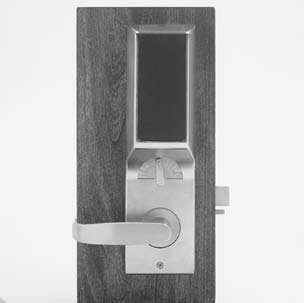
3. Sargent KP-8278-LNJ-26D Keypad Entry Mortise Lock — Best Keypad Commercial Deadbolt
Sargent is a name that belongs on any serious commercial hardware shortlist. The KP-8278-LNJ-26D combines keypad entry with a mortise lock chassis — a combination that puts it in a different class than the cylindrical deadbolts on this list. Mortise locks are the commercial standard for high-traffic doors because the lock body is set into the door rather than attached to its surface, making forced entry dramatically harder. The satin stainless steel finish is both durable and institutional-grade attractive.
The keypad eliminates key management headaches in multi-user environments. No more tracking who has keys, no re-keying when an employee leaves — you change the code. The cylinder-less design on this model means there is no traditional keyway to pick or bump. The Grade-appropriate chassis is built to handle the cycle volumes a commercial door sees daily. Whether you are managing a small office, a storage facility, or a secure back entrance, the Sargent KP-8278 gives you access control without the cost of a full electronic access system.
Proper installation requires a mortise cutout in the door, which means this is not a weekend retrofit for most people — you need a door prepared for mortise hardware or a qualified locksmith. But once installed, it is rock solid. The keypad interface is intuitive and the satin texture holds up well against the abrasion of daily use. For buyers who need keypad convenience without sacrificing commercial build quality, this is the unit that belongs on your shortlist.
Pros:
- Mortise chassis — superior forced-entry resistance versus cylindrical deadbolts
- Keypad entry eliminates traditional key management
- No cylinder means no pick or bump attack surface
- Satin stainless steel finish is durable and professional
Cons:
- Requires mortise door prep — not a simple retrofit
- Higher installation complexity and cost
- No backup key entry if keypad fails or battery dies
4. Arrow E61 Deadbolt 26D 2-3/8 — Best Budget Commercial Pick
Arrow Lock has been manufacturing commercial hardware for decades, and the E61 represents the brand's straightforward approach to professional-grade security without the premium price. In satin chrome (26D), this deadbolt fits cleanly into commercial door prep and delivers the solid, no-frills performance that budget-conscious facility managers need. The E61 is the working-class hero of this lineup — not flashy, not packed with extra features, but dependably functional at a price point that makes equipping multiple doors practical.
The 2-3/8" backset is the standard commercial dimension, and the unit installs in minutes with a basic drill and screwdriver. The satin chrome finish is consistent and corrosion resistant for interior commercial applications. Arrow uses a Schlage C keyway on many of its products, which means rekeying fits into an existing master key system if you are already running Schlage hardware throughout your facility — a genuine operational advantage for building managers.
Where the E61 falls short is cylinder security. This is a six-pin Schlage-compatible cylinder, solid for the price, but it lacks the pick resistance of the Mul-T-Lock or Abloy options above. For interior office doors, storage rooms, and secondary entrances where the threat model is opportunistic rather than professional, that trade-off is acceptable. For your primary exterior entry point, invest more. But if you are equipping a dozen interior doors on a budget, the Arrow E61 gets the job done reliably.
Pros:
- Accessible price point for multi-door commercial applications
- Standard 2-3/8" backset — fits commercial door prep without modification
- Schlage C keyway compatibility integrates into existing master key systems
- Clean satin chrome finish suits professional environments
Cons:
- Basic cylinder security — not suitable for high-risk primary entries
- Minimal documentation and features compared to premium options
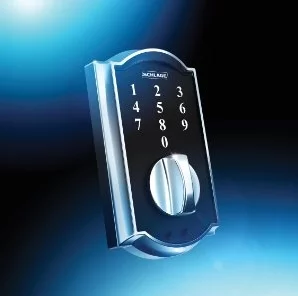
5. Dexter Commercial Hardware DB1000-DCT-626-SFIC Grade 1 Double Cylinder Deadbolt — Best Double Cylinder
Double cylinder deadbolts require a key on both sides of the door — no thumbturn on the interior. That design is specifically chosen for doors adjacent to glass panels or windows where a thumbturn would create a bypass vulnerability. The Dexter DB1000-DCT is the Grade 1 double cylinder choice for serious commercial applications, built to the 1-3/8" to 1-7/8" standard door range with SFIC (Small Format Interchangeable Core) compatibility that sets it apart from basic double cylinders.
SFIC compatibility is a significant feature for facility managers operating a master key system. Interchangeable cores allow you to rekey a lock in seconds without a locksmith — you pop the core with a control key, drop in a new one, and the lock is rekeyed. For buildings with frequent personnel changes, this capability pays for itself quickly. The Schlage C six-pin cylinder option (keyed different) provides solid baseline security, and the universal square corner latch with 2-3/8" to 2-3/4" adjustability handles most commercial door configurations without special ordering.
The included lipless strike is commercial-grade and the overall build reflects Dexter's reputation for durable institutional hardware. Note the important safety consideration with any double cylinder: in a fire emergency, occupants need a key to exit. Local fire codes may restrict double cylinder use in certain occupancies. Always verify compliance before specifying this hardware. For applications where it is appropriate, the DB1000-DCT delivers Grade 1 performance with the operational efficiency of interchangeable core architecture. See also our review of the best heavy duty deadbolt locks for more Grade 1 options.
Pros:
- Grade 1 certified — meets the highest ANSI/BHMA performance standard
- SFIC compatibility enables rapid rekeying without a locksmith
- Adjustable backset (2-3/8" to 2-3/4") fits most commercial doors
- Double cylinder eliminates glass-adjacent bypass vulnerability
Cons:
- Double cylinder requires key to exit — potential fire safety/code issue
- Higher cost than basic Grade 1 single cylinder options
- SFIC cores sold separately — factor additional cost into budget
6. Master Lock DSCHDD32D Heavy Duty Double Cylinder Grade 2 — Best Bump-Resistant Value
Master Lock is not typically the first name that comes to mind in commercial security discussions, but the DSCHDD32D makes a legitimate case for its inclusion. This Grade 2 double cylinder unit delivers a feature most competitors at this price skip entirely: bump stop technology built directly into the cylinder. Bump keys — a widely available attack tool — are a genuine threat to standard pin tumbler cylinders. Having bump resistance engineered into a mid-range lock is a meaningful security upgrade for buyers who cannot justify premium lock pricing.
The six-pin Schlage C compatible cylinder is standard commercial fare, offering reasonable pick resistance for the grade. The fixed 2-3/4" backset limits installation flexibility compared to adjustable units, so verify your door prep before ordering. The brushed chrome finish is attractive and reasonably durable. The heavy-duty housing feels solid in hand — Master Lock has invested in the physical build here even at this price point.
Grade 2 means this unit is certified for commercial use but at a lower performance threshold than Grade 1. For secondary entries, interior commercial doors, or residential applications where a commercial-grade finish matters, the DSCHDD32D is an excellent value. The bump stop feature genuinely differentiates it from other options in this price range. Just be clear-eyed about the Grade 2 limitation if you are considering this for a primary exterior commercial entry.
Pros:
- Bump stop technology — resists bump key attacks out of the box
- Schlage C compatible cylinder — integrates with existing keyways
- Strong value proposition at mid-range price point
- Attractive brushed chrome finish suits commercial and upscale residential
Cons:
- Grade 2, not Grade 1 — lower cycle life and forced entry resistance rating
- Fixed 2-3/4" backset only — no installation flexibility
- Double cylinder fire safety considerations apply (same as above)
7. Falcon D141BD 626 (SFIC) D100 Series Grade 1 — Best for Fire Doors
The Falcon D141BD earns a specific place on this list that no other product here can claim: it is UL Listed for 3-hour fire door applications. That certification is not a marketing claim — it is a tested, documented rating that means this deadbolt survives the conditions of a 3-hour fire rating test. If you are specifying hardware for a fire-rated door assembly, your options narrow considerably, and the Falcon D100 series belongs at the top of that short list.
Beyond the fire rating, this unit is engineered thoughtfully for commercial installation efficiency. The integrated anti-pry shield behind the cylinder assembly adds a meaningful layer of forced-entry resistance while simultaneously simplifying installation by consolidating components. The non-handed design means you order one SKU regardless of door swing — a small operational detail that eliminates a frustrating class of specification errors. SFIC compatibility, like the Dexter above, gives facility managers rapid rekey capability without calling a locksmith.
The satin chrome (626) finish is consistent and professional. The integrated trim design reduces the parts count in the box and translates to cleaner, faster installation. If your project involves a fire corridor, a stairwell door, or any other assembly where the 3-hour UL fire rating is a code requirement, the Falcon D141BD is not just a good choice — it is likely the only choice that checks all the boxes simultaneously. Grade 1 performance, SFIC flexibility, fire certification, and a clean commercial aesthetic in one package. You will not find a better-specified unit at this intersection of requirements. Also worth a look if you need complementary hardware: our guide to best mortise locks covers fire-rated mortise options as well.
Pros:
- UL Listed for 3-hour fire door applications — a rare and critical certification
- Integrated anti-pry shield improves security and simplifies installation
- Non-handed design — works on any door swing, eliminates ordering errors
- SFIC compatible for rapid rekeying
- Grade 1 certified — highest commercial performance standard
Cons:
- Chassis-only (deadbolt body without cylinder) — SFIC core purchased separately
- Overkill and over-budget for non-fire-rated applications
Buying Guide: How to Choose the Best Commercial Deadbolt
ANSI/BHMA Grade: The Spec That Actually Matters
Every commercial deadbolt conversation starts with grade. The ANSI/BHMA grading system has three tiers: Grade 1 (heavy-duty commercial), Grade 2 (light commercial/heavy residential), and Grade 3 (residential only). For any commercial application, Grade 1 is the baseline, not a premium upgrade. Grade 1 locks are tested to 250,000 operational cycles, must withstand specific levels of torque and forced entry, and carry far more rigorous construction requirements than lower grades. If a vendor cannot tell you a lock's ANSI grade, that tells you everything you need to know.
- Grade 1: Primary commercial entries, high-traffic doors, exterior applications
- Grade 2: Acceptable for secondary entries, interior commercial doors, lower-traffic areas
- Grade 3: Residential use only — do not specify for any commercial door
Cylinder Security: Pins, Discs, and Attack Resistance
The cylinder is the security core of any deadbolt. Standard six-pin Schlage C cylinders are adequate for deterring casual entry but fall short against a prepared attacker with picks or a bump key. If your threat model includes skilled intrusion attempts, you need to move up the cylinder hierarchy. Disc detainer technology (Abloy) eliminates traditional picking entirely. Sidebar systems (Mul-T-Lock MT5+) add a bypass-defeating secondary locking mechanism to standard pin tumbler architecture. Bump stop technology (Master Lock) addresses one specific attack at a lower price point.
Ask yourself honestly: who is trying to get through this door, and what tools will they have? The answer shapes your cylinder specification more than any other single factor. For a detailed look at how cylinders rank against professional attack tools, our guide to pick-resistant locks is required reading before you finalize your specification.
Key Control and Master Key Systems
Key control means restricting who can duplicate keys to your lock. Standard Schlage C keys can be cut at any hardware store — that is by design, for convenience, but it is a significant security exposure. Patented restricted keyways — used by Mul-T-Lock, Abloy, and others — require proof of authorization and dealer access before duplication. For commercial buildings, this matters. You need to know that when an employee leaves, their key cannot be quietly duplicated before they turn it in.
SFIC (Small Format Interchangeable Core) systems take a different approach: instead of restricting key duplication, they make core replacement so fast (seconds, with a control key) that rekeying after personnel changes becomes a routine operational task rather than an expensive locksmith callout. The Dexter DB1000 and Falcon D141BD both support SFIC. For large facilities with frequent access changes, SFIC often delivers better practical security than patented keyways.
Special Certifications: Fire Ratings, UL Listings, and Local Codes
Commercial hardware exists within a regulatory framework that residential buyers rarely encounter. Fire-rated door assemblies require hardware with matching fire certifications — a standard deadbolt voids the fire rating of a rated door assembly. The Falcon D141BD's UL 3-hour fire listing is the specification to match for fire-corridor doors. Beyond fire ratings, local building codes may restrict double cylinder deadbolts in certain occupancies due to egress requirements. Always verify code compliance before specifying hardware, particularly double cylinder units. The cost of a code violation and forced retrofit will always exceed the cost of getting the specification right the first time.
What People Ask
What is the difference between a Grade 1 and Grade 2 commercial deadbolt?
ANSI/BHMA Grade 1 deadbolts are certified for heavy-duty commercial use, tested to 250,000 operational cycles with stricter forced-entry and torque resistance standards. Grade 2 is rated for light commercial or heavy residential use with lower performance thresholds. For primary commercial exterior doors, Grade 1 is the correct specification. Grade 2 is acceptable for interior secondary doors with lower traffic and lower security requirements.
Are double cylinder deadbolts legal for commercial use in 2026?
Double cylinder deadbolts (requiring a key on both sides) are legal in many commercial applications but restricted or prohibited in others. Building and fire codes in many jurisdictions prohibit double cylinders on doors that serve as required exits in occupied spaces, because they delay emergency egress. Always verify local building codes and fire code requirements before specifying a double cylinder unit. In applications where they are permitted — doors adjacent to glass panels, for instance — they provide a genuine security advantage.
What does SFIC mean on a commercial deadbolt?
SFIC stands for Small Format Interchangeable Core. It is a cylinder format standard (BEST SFIC is the dominant specification) that allows the lock core — the removable cylinder — to be swapped in seconds using a control key rather than requiring disassembly or a locksmith. For facility managers, this means rekeying any SFIC-compatible lock after a personnel change is a tool-free, 30-second operation. SFIC cores are purchased separately from the deadbolt chassis and can be integrated into a building-wide master key system.
How do I know if my commercial door is prepped for a deadbolt?
Commercial doors are typically drilled for a specific backset — the distance from the door edge to the center of the lock bore, most commonly 2-3/8" or 2-3/4". Check the existing bore diameter (1-1/8" is standard for most cylindrical deadbolts), the backset measurement, and whether a strike plate is already installed in the frame. Mortise locks like the Sargent KP-8278 require a mortise pocket cut into the door, which is a separate door prep entirely. If you are unsure, a commercial locksmith can assess the door and recommend compatible hardware in minutes.
What is bump key resistance and which deadbolts on this list have it?
Bump keys are specially cut keys that, when struck while inserted in a lock, can cause standard pin tumbler cylinders to briefly align and open. It is a genuine attack that works on the majority of residential and basic commercial locks. On this list, the Master Lock DSCHDD32D includes explicit bump stop technology in its cylinder. The Abloy Protec2 is inherently immune to bumping because its disc detainer mechanism has no pins to displace. The Mul-T-Lock MT5+ is substantially bump resistant due to its sidebar mechanism. If bump resistance is a priority, any of these three is a sound choice.
Is the Mul-T-Lock MT5+ worth the premium over a standard Grade 1 Schlage deadbolt?
For primary commercial entries where physical security is the priority and the threat includes skilled intrusion attempts, yes. The MT5+ cylinder operates on a fundamentally different security level than a standard Schlage B-series. The telescopic pin and sidebar technology resists picking, bumping, and decoding attacks that would compromise a standard cylinder. The key control is tighter. The anti-drill inserts protect against power tool attacks. If you are comparing on price alone, a Schlage B60N costs less. But if you are comparing on actual security delivered per dollar, the Mul-T-Lock MT5+ justifies its price for high-stakes applications.
Buy on Walmart
- Mul-t-lock MT5+ Hercular Single Cylinder deadbolt w/Thumb Tu — Walmart Link
- Abloy Protec2 Single Cylinder Deadbolt with Lockable Thumbtu — Walmart Link
- Sargent KP-8278-LNJ-26D Keypad Entry w/ Cylinder less Deadbo — Walmart Link
- Arrow E61 Deadbolt 26d 2-3/8 — Walmart Link
- Dexter Commercial Hardware DB1000-DCT-626-SFIC Grade1 Double — Walmart Link
- Master Lock DSCHDD32D Heavy Duty Double Cylinder, Grade 2 Co — Walmart Link
- Falcon D141BD 626 (SFIC) D100 Series Grade 1 Non-Handed Heav — Walmart Link
Buy on eBay
- Mul-t-lock MT5+ Hercular Single Cylinder deadbolt w/Thumb Tu — eBay Link
- Abloy Protec2 Single Cylinder Deadbolt with Lockable Thumbtu — eBay Link
- Sargent KP-8278-LNJ-26D Keypad Entry w/ Cylinder less Deadbo — eBay Link
- Arrow E61 Deadbolt 26d 2-3/8 — eBay Link
- Dexter Commercial Hardware DB1000-DCT-626-SFIC Grade1 Double — eBay Link
- Master Lock DSCHDD32D Heavy Duty Double Cylinder, Grade 2 Co — eBay Link
- Falcon D141BD 626 (SFIC) D100 Series Grade 1 Non-Handed Heav — eBay Link
Key Takeaways
- The Mul-T-Lock MT5+ Hercular is the best overall commercial deadbolt in 2026 for buyers who need cylinder-level security that resists picking, bumping, and drilling with documented key control.
- For fire-rated door assemblies, the Falcon D141BD is the only option on this list with a UL 3-hour fire door listing — specifying anything else on a rated assembly voids the fire certification.
- SFIC compatibility (Dexter DB1000, Falcon D141BD) is the smartest operational choice for multi-door facilities with frequent personnel changes, eliminating the cost and friction of traditional locksmith rekeying.
- Never specify below ANSI/BHMA Grade 1 for a primary commercial exterior entry — Grade 2 and Grade 3 hardware is simply not built to the cycle life and forced-entry standards that commercial doors demand.


About Robert Fox
Robert Fox spent ten years teaching self-defence in Miami before transitioning into home security consulting and writing — a background that gives him an unusually practical, threat-aware perspective on residential security. His experience spans physical security assessment, lock and alarm system evaluation, and the behavioral habits that make homes harder targets. At YourHomeSecurityWatch, he covers home security product reviews, background check and criminal records resources, and practical guides on protecting your property and family.
You can Get FREE Gifts. Furthermore, Free Items here. Disable Ad Blocker to receive them all.
Once done, hit anything below