My neighbor spent three weekends troubleshooting a dead battery in his front-door smart lock before he finally called a locksmith. That whole saga led me straight into this Lockey mechanical pushbutton lock review — because sometimes the simplest solution really is the best one. If you've been browsing our lock reviews looking for a keyless option that runs with zero batteries and zero Wi-Fi dependency, the Lockey 2835MGDC is worth a close look.

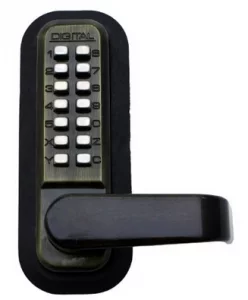
The 2835MGDC is a fully mechanical lever lock operated by a pushbutton combination. There are no electronics inside, no app to configure, and no battery compartment to forget about. That makes it a genuinely different product from the smart locks filling the market today — and whether that difference works in your favor depends entirely on your situation and your door.
This review covers everything you need to make a confident decision: who this lock actually suits, the mistakes buyers commonly make, how it stacks up against smart alternatives, what you'll realistically spend, and how to keep it working smoothly for years. By the end, you'll know whether this lock belongs on your door.
Contents
- When This Lock Makes Sense — and When It Doesn't
- Mistakes New Buyers Make With Keyless Locks
- Getting the Most Out of Your Lockey 2835MGDC
- Lockey 2835MGDC vs. Smart Lock Alternatives
- What It Really Costs: Pricing and Installation Breakdown
- Keeping Your Lockey Lock Working Like New
- Beginner or Experienced Homeowner: Who Should Buy This Lock?
- Frequently Asked Questions
- Key Takeaways
When This Lock Makes Sense — and When It Doesn't
The Right Fit for Your Home
The Lockey 2835MGDC shines in specific situations. If you manage a rental property and rotate tenants regularly, changing the mechanical combination costs nothing and takes about thirty seconds — no locksmith, no rekeying fee, no new keys to cut. That kind of operational simplicity adds up fast when you're managing multiple units or dealing with frequent turnover.
It's also a strong choice for gates, sheds, pool enclosures, and secondary access points where you want controlled entry without handing out physical keys. Kids can punch in a code and get through the side gate without ever losing a key in the grass. Elderly family members who struggle with key rings often find pushbutton locks far easier to manage day to day, and guests visiting for a weekend don't need to wait on you to let them in.
One often-overlooked advantage: this lock is completely bump-proof by design. Because there's no traditional keyway, there's nothing for a bump key to exploit. Bump keys work by transmitting kinetic energy through the pin tumbler mechanism inside a keyed lock — a mechanism the 2835MGDC doesn't have at all. If you've read our interview on lock bumping with Root Junky, you know how common this attack method has become in residential break-ins, and how few homeowners are prepared for it.

When to Look Elsewhere
This lock isn't right for every door. If your front entry is your main access point and you want remote unlocking — opening the door from your phone while you're away from home — a fully mechanical lock can't do that. You'd need a Wi-Fi or Z-Wave enabled smart lock for that kind of use case.
Similarly, if you need an audit trail — a record of exactly who unlocked the door and when — a mechanical lock won't give you that. For monitoring contractor access or shared spaces with multiple users who need individual accountability, a smart lock with a connected app is the more appropriate tool. The 2835MGDC is powerful within its scope, but that scope has clear edges, and it's worth knowing them upfront.
Climate is another factor. In regions that drop well below freezing for extended periods, mechanical buttons can stiffen if not properly lubricated. The lock is rated for outdoor use, but maintenance becomes more important — and more frequent — in harsh weather conditions.
Mistakes New Buyers Make With Keyless Locks
Code Sharing Gone Wrong
The most common mistake is treating the combination like a password you'll update "someday." Once you share a code — with a contractor, a dog sitter, a houseguest — that code stays active until you manually change it. Many homeowners simply forget, and end up with a half-dozen people who still have access long after they should. There's no expiration, no notification, no automated revocation.
Unlike smart deadbolts that let you create temporary user codes for specific windows of time, the 2835MGDC runs on a single shared combination. Everyone uses the same code. Changing it to cut off one person's access means cutting off everyone's access until you notify authorized users of the new combination. That's not a dealbreaker — it just requires a deliberate habit and a simple communication plan.
Installation Oversights
Another frequent pitfall is misreading door prep requirements before ordering. The 2835MGDC uses a standard 2-3/8" or 2-3/4" backset — the distance from the center of the latch hole to the door edge — but you need to confirm your door matches before you buy. Installing it on a door with the wrong prep often means additional drilling or purchasing a separate latch, which adds both cost and frustration.
Door alignment matters more than most people expect. A sagging or warped door frame puts continuous stress on the latch bolt, which makes the lock progressively harder to operate. If your door doesn't swing cleanly and close with light pressure, address that first. No lock — this one or any other — performs well when it's fighting a poorly hung door.

Getting the Most Out of Your Lockey 2835MGDC
Setting a Strong Code
The 2835MGDC supports combinations of varying lengths and allows repeated digits within the sequence. Avoid obvious patterns — 1-2-3-4, repeated numbers, birth years, or your street address. A good code is easy for authorized users to memorize but meaningless to a stranger. Think of it like a bank PIN: routine to you, random to anyone else.
Here's something worth knowing: the sequence of button presses matters on this lock. That increases the effective number of possible combinations compared to simpler combination padlocks where order doesn't count. You have more security headroom than the button count alone might suggest, which makes a thoughtfully chosen code genuinely strong.

Using the Auto-Lock Feature
The 2835MGDC is available in a spring-latch configuration that automatically re-engages when the door closes behind you. If you opt for the deadbolt version instead, you lock it manually from the inside. Think through your actual daily routine before choosing — a spring latch suits high-traffic doors perfectly, while a deadbolt offers stronger resistance to forced entry and is a better fit for overnight security on a primary entry point.
The double-sided configuration requires a code to exit as well as enter. This is especially useful for pool gates, where child safety regulations in many jurisdictions require controlled, one-directional access, or for storage rooms where you want to know exactly who is coming and going at any given time.


Lockey 2835MGDC vs. Smart Lock Alternatives
How does a fully mechanical keyless lock actually compare to the electronic models filling the market? The answer depends on what you prioritize. Here's a straightforward breakdown of where each type wins and where it falls short.

| Feature | Lockey 2835MGDC | Typical Smart Lock |
|---|---|---|
| Power Required | None | Batteries (AA or 9V) |
| Remote Access | No | Yes (via app) |
| Bump-Proof | Yes (no keyway) | Varies by model |
| Multiple User Codes | No (single code) | Yes (most models) |
| Access Log | No | Yes |
| Ongoing Costs | Near zero | Batteries every 6–12 months |
| Wireless Hack Risk | None (no wireless) | Low to moderate |
| Weather Durability | High (all-metal build) | Varies by brand |
| Installation Complexity | Moderate (standard prep) | Easy to moderate |
The comparison makes the trade-off clear. Smart locks win on convenience and monitoring. The Lockey wins on simplicity, long-term cost, and the complete absence of battery failure risk. If you're comparing specific smart models, the Kwikset 909 SmartCode deadbolt offers multiple user codes and a connected app — but you're managing battery cycles and app reliability in return. Neither option is universally better. Your door, your priorities.
What It Really Costs: Pricing and Installation Breakdown
Upfront Costs
The Lockey 2835MGDC typically retails between $130 and $180 depending on finish and configuration. Available finishes include satin chrome, oil-rubbed bronze, and antique brass. Choose a finish that matches your existing hardware — mismatched hardware on the same door looks unpolished and can affect how buyers perceive your home if you ever sell.
The double-sided version sits at the higher end of that price range. That's competitive with entry-level smart locks but noticeably more than a standard keyed lever. You're paying for the mechanical combination system and the all-metal construction, both of which justify the premium over cheap alternatives.
Installation and Long-Term Costs
If your door is already prepped for a lever lock, you can install this yourself in under an hour using a standard screwdriver and the included instructions. No electrician, no hub, no app subscription. If you'd rather have a locksmith handle it, expect to pay $50–$100 for a straightforward installation on a prepped door.
Long-term costs are minimal. No batteries to replace, no firmware to update, no subscription service to maintain. A tube of dry graphite lubricant — a few dollars at any hardware store — is the only ongoing supply you'll need. Over five years of regular use, the total cost of ownership runs considerably lower than most smart locks that cycle through batteries and occasionally need tech support to re-pair with a hub or router.
Keeping Your Lockey Lock Working Like New
Routine Cleaning
Dirt and debris are the primary enemies of any mechanical pushbutton lock. The button channels collect dust, pollen, and grime over time — especially on outdoor-facing doors and gates exposed to wind and rain. Every few months, blow out the channels with a can of compressed air and follow with a dry cloth wipe-down of the entire exterior surface. That's a ten-minute task that prevents most mechanical problems before they develop.
One important warning: avoid WD-40 and other oil-based lubricants. They feel helpful in the moment but attract dust and will eventually cause the mechanism to gum up. This is one of the most common maintenance mistakes people make with mechanical locks, and it's easily avoided once you know it.
Lubrication Schedule
For proper lubrication, use dry graphite powder or a Teflon-based spray. Apply it lightly inside the button channels and along the latch mechanism twice a year, or more frequently if the lock is on a door that sees dozens of uses per day. In colder climates, lubricate before the first hard freeze of the season and again in early spring when daily temperature swings are most dramatic.
Changing your combination regularly is also good security hygiene. Updating the code every six to twelve months — or immediately after a tenant vacates, a contractor finishes, or any authorized user's access should end — keeps the access list tight. The process takes under a minute once you've done it a couple of times, and the video at the bottom of this page walks you through the exact steps.
Beginner or Experienced Homeowner: Who Should Buy This Lock?
For First-Time Buyers
If this is your first keyless lock, the 2835MGDC is a forgiving entry point. There's no app to configure, no hub to install, no Wi-Fi password to enter during setup. You set a code, you use the code — that's the full learning curve. The mechanical simplicity means fewer things can go wrong, which makes it far less intimidating than most electronic alternatives on the market.
Before you order, take five minutes to confirm a few things: measure your backset, check that your door edge is properly mortised (meaning chiseled flat to accept a latch plate), and verify your door thickness falls between 1-3/8" and 1-3/4". These are quick measurements that prevent a frustrating installation experience and save you return shipping costs.
For Experienced Homeowners and Property Managers
If you've installed several locks or managed multiple properties, you'll appreciate the 2835MGDC for different reasons. The combination-change speed is a genuine operational advantage during tenant turnover. Zero batteries means fewer service calls across a portfolio of doors. The all-metal construction holds up better than plastic-housing smart locks in high-use, outdoor-exposed settings where cheaper hardware degrades within a season or two.
Experienced homeowners often want to layer this lock into a broader security setup. A pushbutton lever on a side gate pairs naturally with a monitored camera covering that same entry — the lock handles access control while the camera handles verification and deterrence. As our overview of how burglars select targets makes clear, layered obstacles are far more effective than any single security measure. The 2835MGDC fits cleanly into that kind of layered approach without requiring any connectivity or power infrastructure to support it.
Frequently Asked Questions
Does the Lockey 2835MGDC require batteries?
No. The 2835MGDC is entirely mechanical — there are no electronics, no battery compartment, and no power source of any kind. It operates purely through the physical pushbutton combination mechanism, which means battery failure is simply not a concern with this lock.
How many digits can the combination be?
The 2835MGDC supports combinations of varying lengths, and you can include repeated digits. Because the sequence of presses matters — not just which buttons are pressed — the number of possible combinations is higher than a basic fixed-length code lock. The exact range depends on the specific model configuration, so check the product documentation for the version you purchase.
Can this lock be used on an exterior front door?
Yes, the 2835MGDC is rated for exterior use and is built from all-metal components designed to handle outdoor conditions. That said, if your primary concern is remote access or monitoring who enters your home, a smart lock may better suit a front door. The 2835MGDC excels on secondary access points like gates, garages, and sheds.
How do you change the combination on the 2835MGDC?
Changing the combination is a straightforward process that takes about a minute once you're familiar with it. You'll need to access the inside mechanism using a small tool, enter the current code, then set the new one. The video embedded in this review walks through the exact steps, and the instruction sheet included with the lock covers it clearly as well.
Is the 2835MGDC resistant to picking and bumping?
Yes. Because the 2835MGDC has no traditional keyway, it cannot be picked with standard lock picks or attacked with a bump key. Bump keys work by exploiting the pin tumbler mechanism inside keyed locks — a mechanism this lock doesn't have. It's one of the more significant security advantages of a fully mechanical pushbutton design.
What finishes and configurations are available?
The 2835MGDC is available in satin chrome, oil-rubbed bronze, and antique brass. It comes in both single-sided (code to enter only) and double-sided (code required to enter and exit) configurations. The double-sided version is popular for pool gates and controlled-access storage areas where you want to restrict movement in both directions.
Key Takeaways
- The Lockey 2835MGDC is a fully mechanical, battery-free pushbutton lock that is bump-proof by design — making it a strong choice for rental properties, gates, and secondary access points where simplicity and durability matter most.
- Its single shared combination is a genuine limitation compared to smart locks that support multiple user codes and access logs, so it suits situations where you control a small, trusted group of users.
- Long-term costs are minimal — no batteries, no subscriptions, no firmware — and routine maintenance requires only a can of compressed air and dry graphite lubricant twice a year.
- For best results, choose the right configuration (spring-latch vs. deadbolt, single vs. double-sided) before purchasing, confirm your door prep dimensions, and build a habit of changing the code whenever access should be revoked.


About Robert Fox
Robert Fox spent ten years teaching self-defence in Miami before transitioning into home security consulting and writing — a background that gives him an unusually practical, threat-aware perspective on residential security. His experience spans physical security assessment, lock and alarm system evaluation, and the behavioral habits that make homes harder targets. At YourHomeSecurityWatch, he covers home security product reviews, background check and criminal records resources, and practical guides on protecting your property and family.
You can Get FREE Gifts. Furthermore, Free Items here. Disable Ad Blocker to receive them all.
Once done, hit anything below