Our team was wrapping up a neighborhood security consultation when a local locksmith pulled out a bump key, set it against a standard residential deadbolt, tapped it twice with a rubber mallet, and opened the door in under four seconds. That single demonstration changed how we evaluate residential entry points. Lock bumping home security risks are not a hypothetical — they affect the majority of homes protected by standard pin tumbler locks right now, and most homeowners have no idea. We sat down with Root Junky, a respected locksmith and widely followed security educator, to get a clear picture of how bump attacks work and what actually stops them. Our full breakdown of the technique and countermeasures lives at our lock bumping guide.

Root Junky has spent years making lock security accessible to general audiences through his YouTube channel, and his perspective is grounded in hands-on testing rather than manufacturer marketing. What struck our team immediately was how direct he was: most residential locks installed today remain bumpable, the security industry has not communicated this clearly, and the fix is available to anyone willing to invest in the right hardware. The interview covered bump mechanics, lock certification, smart lock tradeoffs, and the fastest upgrades most people can make without a full overhaul.
We organized everything into five categories — from immediate protective actions to long-term layered strategy and honest cost breakdowns. Each section reflects Root Junky's guidance combined with our team's own research and product testing.
Contents
- Addressing Lock Bumping Home Security Risks: Protective Steps That Work
- What Most People Get Wrong About Bump Attack Vulnerability
- Building a Lasting Defense Against Lock Bumping
- Immediate Steps to Reduce Bump Vulnerability Today
- What Bump-Resistant Security Actually Costs
- Frequently Asked Questions
- Final Thoughts
Addressing Lock Bumping Home Security Risks: Protective Steps That Work
Understanding the Mechanic
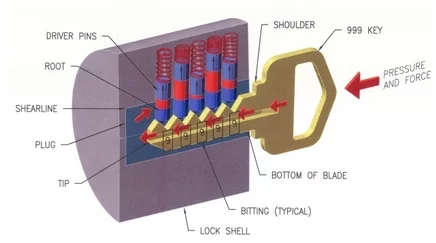
Root Junky opened our conversation with a precise explanation of why this technique remains so effective across so many lock brands. A bump key is cut to the minimum depth on every position within a target keyway profile. When struck with controlled impact, the energy transfer simultaneously displaces all driver pins upward, creating a brief moment where the shear line clears and the plug rotates freely. No lockpicking skill is required. No specialized training. Just a compatible key and a firm tap.
Root Junky's core points on the mechanic:
- Standard pin tumbler cores — used in the overwhelming majority of residential locks — are inherently susceptible to this energy transfer
- Bump keys for common keyway profiles are widely available and inexpensive to obtain
- Successful bumps routinely happen in under ten seconds with minimal practice
- Because there is no forced entry damage, standard post-incident analysis often misses bump attacks entirely
- Security cameras and alarms respond after or during entry — they do not interrupt the bump itself
Root Junky also pointed to real burglary case studies where investigators found no signs of forced entry, and bump attacks were the likely explanation. The absence of evidence is part of what makes this threat difficult to track statistically.
Choosing Certified Locks
Our team asked Root Junky for a specific purchasing framework rather than general brand advice. His answer was structured around certification and mechanism type — not brand prestige or price point.
- ANSI/BHMA Grade 1 is the floor for any exterior door deadbolt worth installing
- Locks with explicit bump-resistance designation from the manufacturer have been tested against this specific attack vector — look for that claim in writing, not just implied in marketing
- Sidebar mechanisms (Medeco, ASSA Abloy high-security lines) and disc-detainer designs (Abloy) are structurally resistant to bump attacks because they do not rely on standard pin tumbler physics
- Spool and serrated security pins raise difficulty significantly, though Root Junky was clear they do not make bumping impossible — they raise the bar high enough to deter most opportunistic attempts
Pro insight from Root Junky: A lock's retail price is not a reliable proxy for bump resistance. Always look for an explicit manufacturer claim of bump protection backed by certification — not a general "high security" label.
What Most People Get Wrong About Bump Attack Vulnerability
The Deadbolt Myth
The most common misconception Root Junky encounters — and one that our team hears frequently — is that a deadbolt provides meaningful protection against bump attacks. This is incorrect. Most deadbolts use the same pin tumbler core as the knob or lever set beside them. A deadbolt's value is in resisting kick-in force and brute-entry — it does nothing to prevent the pin-float event that makes bumping possible.
Root Junky's myth corrections from our interview:
- Myth: "A deadbolt means the door is bump-proof." Reality: Without a specific bump-resistance designation, the deadbolt is almost certainly vulnerable.
- Myth: "Only trained criminals can pull this off." Reality: Root Junky has personally watched first-time students bump a lock within five minutes of learning the technique.
- Myth: "Double-cylinder deadbolts stop bump attacks." Reality: Double cylinders address key duplication and interior access, not bump mechanics.
- Myth: "Bumping only happens in high-crime areas." Reality: Burglars follow opportunity, not geography — a point explored thoroughly in our analysis of how burglars actually think and select targets.
- Myth: "Smart neighborhoods don't need to worry about this." Reality: Root Junky's data shows affluent neighborhoods are frequently targeted precisely because the rewards are higher.
Price Versus Performance
Root Junky was pointed on this: the residential lock market contains many products marketed as "high security" that offer no meaningful bump resistance. Finishes, smart features, brand recognition, and retail placement are not indicators of attack resistance. The only reliable signals are explicit third-party certification or documented mechanical design that defeats pin-float physics. Our team strongly recommends treating any lock purchase as a technical decision requiring specification verification, not a brand loyalty exercise.
Building a Lasting Defense Against Lock Bumping
The Layered Security Approach
Root Junky's central philosophy — and one that our team applies in every security consultation — is that no single product eliminates residential entry risk. The objective is layered defense: each component adds friction, time, and detection capability that collectively discourages and documents unauthorized entry attempts.
A complete layered system includes:
- A certified bump-resistant lock at every exterior door (mechanical first line)
- A reinforced strike plate secured with 3-inch screws reaching the structural stud behind the door frame
- A camera covering each entry point — our review of the LaView PoE security camera system covers one strong option for whole-property coverage
- A monitored alarm with door and window sensors generating alerts on any entry event
- Motion-activated exterior lighting eliminating concealment opportunities at entry points
- A smart lock with real-time access logging — the Kwikset SmartCode 913 is one keypad deadbolt our team has evaluated for this integration role
Root Junky emphasized that the majority of residential burglaries are stopped not at the lock itself, but at the moment an intruder decides the property presents too much friction and risk. Time and visibility are the two most effective deterrents in every scenario.
Smart Lock Integration
Smart locks that eliminate the physical keyway entirely remove the bump attack surface at the design level. Electronic deadbolts operating via keypad, fingerprint, or app-based entry have no keyway to bump. Our review of the Kwikset 909 SmartCode electronic deadbolt examines how keypad-only operation changes the entry threat model for standard residential doors.
Root Junky's considerations for smart lock adoption:
- Confirm whether the lock includes a physical key cylinder backup — and if it does, verify that cylinder is bump-rated
- Verify the electronic mechanism includes tamper detection and alert capability
- Keep firmware current — electronic vulnerabilities represent a separate attack class that requires ongoing attention
- Confirm battery backup options to prevent lockouts during power events
Warning: Many smart locks include a physical key cylinder as a backup override. If that cylinder is a standard pin tumbler design, the lock remains fully bumpable through that keyway — the electronic entry does not protect against it.

Immediate Steps to Reduce Bump Vulnerability Today
Quick Hardware Changes
For situations where a full lock replacement is not immediately possible, Root Junky outlined interventions that provide meaningful risk reduction without major installation work. These are not permanent solutions, but they shift the difficulty curve enough to matter in an opportunistic scenario.
- Install a door chain or security bar on the interior — physical secondary locks require inside presence to defeat, making bump entry non-functional while the home is occupied
- Add a floor-mounted door barricade bar at sleeping-hour entry points
- Have an experienced locksmith repin existing locks with spool or serrated driver pins — this is a low-cost modification that significantly raises bump difficulty without replacing the hardware
- Mount a vibration-sensing door alarm — this detects the mallet impact before entry completes, triggering an alert that can interrupt the attempt
- Install a wide-angle peephole or video doorbell to observe activity at the door without opening it
Root Junky also recommended a rapid self-audit: locate the ANSI grade marking on every exterior lock (stamped on the faceplate or listed in the original packaging). Grade 3 locks — common in apartment and builder-grade construction — provide the lowest resistance. Replacing even one Grade 3 with a Grade 1 deadbolt is a meaningful, immediate improvement.
Deterrence Tactics
Hardware changes address mechanical vulnerability. Deterrence addresses the decision an intruder makes before attempting entry. Root Junky's field experience consistently shows that most burglars conduct a fast reconnaissance pass — they are looking for signals that a property is monitored, occupied, or otherwise risky.
- Visible camera housings at all entry points, including secondary access routes
- Alarm company signage on windows and in the yard — independently shown to reduce targeting probability
- Active neighborhood watch participation with community reporting channels
- Exterior lighting that eliminates concealment at every entry and window approach
The intersection of physical lock vulnerability and broader threat awareness is a recurring theme across our expert interview series. Our conversation with Wayne Winton of Tri-County Locksmith Service covers additional professional perspectives on residential lock selection worth reading alongside Root Junky's take.
What Bump-Resistant Security Actually Costs
Budget Tiers at a Glance
Root Junky was straightforward about cost expectations, and our team matched his findings against current market pricing. Bump-resistant security does not require a complete home overhaul. The table below outlines what most households can expect to invest at each protection tier.
| Security Tier | What It Includes | Approximate Cost | Bump Risk Reduction |
|---|---|---|---|
| Basic | ANSI Grade 1 deadbolt + reinforced strike plate with 3-inch screws | $50–$120 | Moderate — reduces vulnerability, does not eliminate it |
| Intermediate | Security-pin deadbolt (spool/serrated) + door vibration alarm | $120–$280 | High — requires meaningful skill and time to defeat |
| Advanced | Certified bump-resistant lock (Medeco, Mul-T-Lock, Abloy) + smart lock integration | $300–$700 | Very High — resists standard bump attack at the mechanism level |
| Comprehensive | Advanced locks + PoE camera system + monitored alarm + motion lighting | $700–$2,000+ | Extremely High — full detection and deterrence layer |
Root Junky's consistent recommendation: the Intermediate tier delivers the strongest cost-to-protection ratio for most residential settings. Building toward Comprehensive by adding cameras and alarm integration over time is a practical approach that spreads cost without leaving a home exposed in the interim.
Return on Investment
Our team regularly hears the objection that security hardware is expensive for a risk that may never materialize. Root Junky reframes this efficiently: the average residential burglary generates between $2,000 and $3,000 in direct losses from stolen property and physical damage — and that figure does not account for insurance complications, replacement friction, or psychological impact.
- Many home insurance carriers offer premium reductions for properties with certified lock installations — worth verifying directly with the insurer
- Smart locks with detailed access logs reduce liability exposure in rental and shared-occupancy situations
- Prevention is consistently cheaper than recovery — Root Junky applies this principle across all of his security content, and our team's experience with clients confirms it at every budget level
- Certified high-security locks also retain value and transferability when a household moves — they are an investment in the property, not just the current occupant's security
Frequently Asked Questions
What exactly is lock bumping and why does it work on so many locks?
Lock bumping uses a specially cut key struck with a sharp impact to momentarily displace all driver pins in a pin tumbler lock simultaneously, creating a window where the plug rotates freely. It works because the spring-loaded pin tumbler design — used in the vast majority of residential locks globally — is mechanically susceptible to this specific energy transfer. The design itself is the vulnerability, not any individual brand's quality.
Can lock bumping home security risks be eliminated entirely?
Yes — but only through hardware that does not use pin tumbler mechanics. Disc-detainer designs (Abloy), sidebar mechanisms (Medeco, ASSA Abloy), and lever-tumbler systems are not susceptible to standard bump attacks. Fully electronic locks with no physical keyway also eliminate the attack surface completely. Layered security remains the most comprehensive overall approach regardless of lock type.
How much skill does it take to bump a lock?
Root Junky demonstrated in our session that standard pin tumbler locks can be bumped with very little practice — often on the first or second attempt once the technique is explained. The bump key and a basic striking tool are the only requirements. The low barrier to entry is precisely what makes this risk significant and why our team takes it seriously in every security evaluation.
Are security pins an effective countermeasure to bump attacks?
Spool and serrated security pins substantially increase bump difficulty by creating false sets that resist the energy transfer from the mallet strike. They do not make bumping mechanically impossible, but they raise the required skill and time significantly — enough to deter the opportunistic attacks that represent the majority of residential burglaries. For most homes, a Grade 1 lock repinned with spool pins is a strong intermediate solution.
Which lock brands does Root Junky specifically recommend for bump resistance?
Root Junky consistently points to manufacturers using non-pin-tumbler mechanisms or verified security pins: Medeco (sidebar), Mul-T-Lock (telescopic pin system), Abloy (disc-detainer), and ASSA Abloy high-security lines. Our team also recommends cross-referencing any purchase against ANSI/BHMA Grade 1 certification and explicit bump-resistance documentation — not just brand marketing claims.
Does switching to a smart lock fully solve the bump attack problem?
A smart lock with no physical keyway eliminates bump vulnerability at the entry point entirely. However, many smart locks include a physical key cylinder as a backup override mechanism, and if that cylinder uses standard pin tumbler design, it remains fully bumpable. Our team recommends verifying the keyway specifications of any smart lock before treating it as a bump countermeasure — the electronic convenience does not automatically close the mechanical gap.
Final Thoughts
Lock bumping home security risks are real, well-documented, and — critically — addressable with hardware and strategy that is accessible to most households today. Our conversation with Root Junky gave our team a sharper framework for where residential security consistently falls short and what actually closes those gaps. Our recommendation is to start with a simple audit this week: identify the ANSI grade on every exterior lock, flag any standard pin tumbler deadbolts, and prioritize replacement with a certified bump-resistant option — then build toward a full layered system by adding cameras, door sensors, and smart lock integration at a pace that fits the budget.


About Robert Fox
Robert Fox spent ten years teaching self-defence in Miami before transitioning into home security consulting and writing — a background that gives him an unusually practical, threat-aware perspective on residential security. His experience spans physical security assessment, lock and alarm system evaluation, and the behavioral habits that make homes harder targets. At YourHomeSecurityWatch, he covers home security product reviews, background check and criminal records resources, and practical guides on protecting your property and family.
You can Get FREE Gifts. Furthermore, Free Items here. Disable Ad Blocker to receive them all.
Once done, hit anything below