Kwikset 909 SmartCode Deadbolt Review (2026): Smart Lock Tested
by Robert Fox
Roughly 34 percent of burglars enter a home through the front door, according to the Bureau of Justice Statistics — a figure that transforms the deadbolt from a mundane hardware choice into a consequential security decision. This Kwikset 909 SmartCode deadbolt review examines one of the most widely installed keypad locks on the residential market, a model that has earned a place on millions of front doors by delivering keyless entry without requiring Wi-Fi, a smart-home hub, or a smartphone app. Readers comparing options across the broader landscape of electronic keyless deadbolts will find the 909 SmartCode occupying a well-defined niche: standalone, affordable, and installation-friendly for homeowners who want more than a traditional keyed lock but less than a fully connected system.

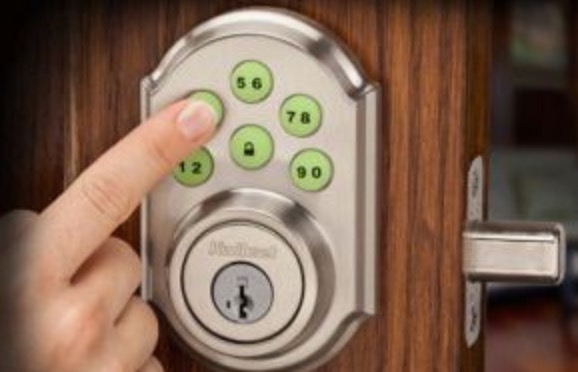
The 909 is the entry-level tier of Kwikset's SmartCode line, positioned below the Z-Wave-capable 910 and the Zigbee-compatible 914. It runs on four AA batteries, uses a 10-button illuminated keypad, and supports up to 30 unique user codes — all without a network connection or monthly subscription. That design philosophy reflects a specific and underserved consumer preference: security through simplicity. The tradeoff is the absence of remote access, activity logs, and voice assistant integration.
Across the home security product reviews cataloged on this site, smart locks draw consistent attention because they sit at the intersection of daily convenience and physical vulnerability. The 909 surfaces repeatedly in those discussions because it addresses a practical reality — most households do not need cloud connectivity in their deadbolt, they need reliability. The sections below cover the lock's origins, performance profile, practical applications, setup best practices, and real-world failure modes in detail.
Contents
- What the Kwikset 909 SmartCode Is — and Why It Exists
- Strengths and Weaknesses: An Honest Assessment
- Where the 909 SmartCode Performs Best
- Getting the Most Out of the Kwikset 909 SmartCode
- Common Problems and How to Fix Them
- Pricing, Value, and What Buyers Actually Pay
- Frequently Asked Questions
- Key Takeaways
What the Kwikset 909 SmartCode Is — and Why It Exists
A Lock Built for Simplicity
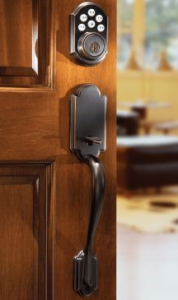
Kwikset introduced the SmartCode series to serve buyers who wanted keypad convenience without the complexity of full home-automation integration. The 909 is the purest expression of that goal. It carries a Grade 2 ANSI/BHMA security certification, which meets the second tier of residential standards — appropriate for the vast majority of single-family homes and low-rise residential entry points. The lock contains no radio module, no app pairing mechanism, and no cloud dependency, which simultaneously eliminates the category of remote-access vulnerabilities that affects connected locks.
Understanding where the 909 fits requires understanding what residential intruders actually target. Analysis highlighted in this breakdown of how burglars select their targets consistently shows that most residential break-ins are opportunistic rather than methodical. A keypad deadbolt with no visible key cylinder on the exterior signals an additional barrier. That perception effect, combined with the 909's actual physical resistance, makes it a meaningful deterrent even before a single access code is programmed.
Physical Construction and Finish Options
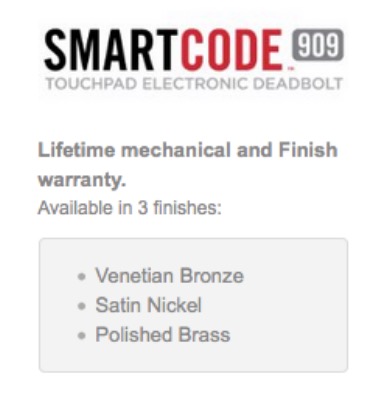
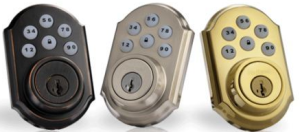
The 909 ships in a single-cylinder deadbolt configuration with a standard 2-3/8-inch or 2-3/4-inch backset, fitting most pre-drilled residential doors without modification. The exterior housing is zinc alloy with a polycarbonate keypad overlay. Three finish options cover the most common door hardware color families: Satin Nickel, Venetian Bronze, and Iron Black.
The interior thumbturn operates with firm, tactile feedback. The motorized bolt retracts with an audible mechanical click — reassuring in use but noticeable in quiet environments. Battery life runs approximately 12 months under normal residential use, with a low-battery alert delivered through a combination of flashing LEDs and an audible warning tone before the unit loses function entirely.
Strengths and Weaknesses: An Honest Assessment
What Works Well
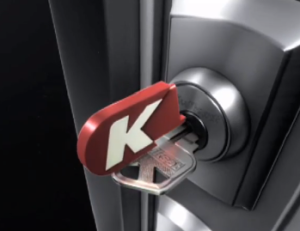
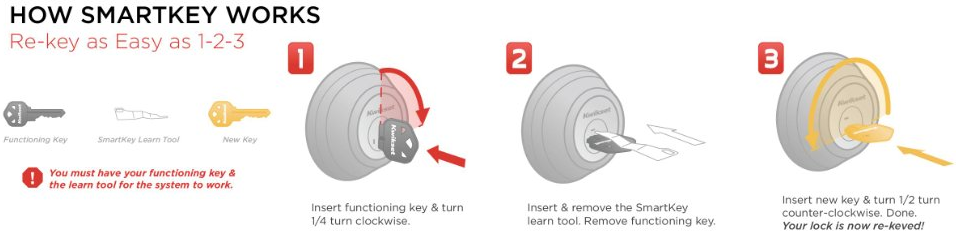
The keypad is intuitive enough that most users program a working code within minutes of installation. The illuminated buttons remain legible in complete darkness. The SmartKey re-keying system is the 909's most underappreciated engineering decision — it allows a homeowner to re-key the backup key cylinder in under 90 seconds without removing the lock from the door, using only the small tool included in the package. At move-in, this capability makes the locksmith an optional rather than essential service call.
Limitations to Know Before Buying
The Grade 2 certification is an honest limitation. Higher-grade locks incorporate hardened steel inserts, anti-drill plates, and anti-pick driver pins not present in the 909. For readers curious about that specific vulnerability category, the mechanics are examined in this guide on how residential locks are picked. The absence of an activity log is a meaningful gap for anyone who needs to verify whether a specific code was used at a specific time — a requirement common in rental and caregiver access scenarios.
| Feature | Kwikset 909 SmartCode | Typical Grade 1 Connected Lock |
|---|---|---|
| ANSI/BHMA Grade | Grade 2 | Grade 1 |
| User Access Codes | Up to 30 | 100–250 |
| Connectivity | None (standalone) | Z-Wave / Wi-Fi / Bluetooth |
| Remote Access | No | Yes |
| Activity Log | No | Yes (app-based) |
| Battery Life | ~12 months (4 AA) | 6–12 months (varies) |
| SmartKey Re-key | Yes | Varies by model |
| Average Street Price | $70–$100 | $150–$300 |
Pro insight: Homeowners who move frequently benefit most from the SmartKey cylinder — re-keying at move-in eliminates exposure from all previous key copies without a locksmith visit or cylinder replacement cost.
Where the 909 SmartCode Performs Best
Residential Front and Back Doors
The 909's primary market is single-family residential use, and it performs as designed in that environment. Households that want to eliminate physical key management — lost keys, contractor copies, children forgetting keys — find the 30-code capacity more than sufficient. Individual codes can be assigned to each household member, a recurring service provider, and a trusted neighbor. Any code can be deleted instantly if circumstances change, with no hardware modification required.
Short-Term Rentals and Managed Properties
Property managers overseeing short-term rental units favor the 909 because it removes the key handoff entirely. A unique code is issued to each guest before arrival and deleted after checkout — no locksmith or key return required. The absence of an internet connection is not a disadvantage here; code management happens directly on the interior keypad and takes under a minute per code. For landlords also evaluating perimeter egress hardware, the Dynasty Hardware panic bar addresses emergency exit requirements on secondary doors where a deadbolt alone is insufficient.
Households with Children
Families with school-age children benefit from eliminating metal keys that can be lost, forgotten, or copied without parental knowledge. Children can memorize a numeric code with minimal effort, and parents retain control by managing code assignment from the interior panel. For families thinking broadly about layered home safety, measures covered in this guide on improving child window safety complement a secured front door as part of a complete perimeter approach.
Getting the Most Out of the Kwikset 909 SmartCode
Programming and Code Management
The master programming code, printed on a factory label inside the battery compartment, must be changed immediately upon installation. All 909 units leave the factory with default codes that are publicly documented — leaving that code unchanged is a well-known and avoidable vulnerability. Setting a custom programming code takes under two minutes and is the single most important first step after mounting the lock.
Active code pruning is the owner's primary security management tool. Because the 909 produces no access log, there is no way to detect whether a code has been used without direct observation. Any code issued to a contractor, temporary guest, or service provider who no longer requires access should be deleted immediately upon departure. For supplemental physical key management, the process for securely handling backup keys stored off-site is explored in this guide on accessing a lock box without the combination.
Rekeying the Key Cylinder
The SmartKey process requires inserting the current working key, pushing the SmartKey tool into the adjacent slot, rotating the key a quarter turn, removing the tool, and inserting the new key. The cylinder accepts the new key immediately and permanently. This procedure eliminates exposure from all previously cut copies of the old key without any hardware replacement cost.
Warning: If the SmartKey sequence is interrupted mid-process, the cylinder may become temporarily inoperable — complete the entire procedure in one uninterrupted motion before releasing the key.
Common Problems and How to Fix Them
Keypad Not Responding
An unresponsive keypad almost always indicates low or depleted batteries. The 909 requires four fresh AA alkaline cells. Lithium batteries are not recommended — their flatter discharge curve can cause erratic behavior as the lock's voltage threshold sensor misreads remaining charge. If fresh alkaline batteries do not restore function, a factory reset — holding the interior program button for 30 seconds with the door open — clears all user codes and restores default state.

Codes Failing After Programming
The most common programming error is pressing the "Lock" button before completing the full code entry sequence. The 909's input buffer resets on any deviation from the prescribed sequence. Codes that fail consistently after programming typically trace to process errors rather than hardware faults. Verifying that the programming code itself has not been changed by another authorized user is the recommended first diagnostic step. The logic mirrors what readers encounter when troubleshooting other lock access issues, such as opening a padlock without a key — systematic process elimination resolves most failures.
Door Not Latching Cleanly
Motorized deadbolts are sensitive to door-frame alignment tolerances. If the bolt does not extend fully into the strike plate, a gap of as little as 1/8 inch between the door edge and the frame is often the cause. Adjusting the strike plate position or adding a shim to the door frame resolves the majority of these cases without removing the lock. Forcing the bolt repeatedly against a misaligned plate accelerates motor wear and shortens the lock's service life.
Pricing, Value, and What Buyers Actually Pay
Street Price and Finish Options
The Kwikset 909 SmartCode deadbolt retails between $70 and $100 depending on finish and retailer. Satin Nickel is the most widely stocked finish and typically carries the lowest price point. Venetian Bronze commands a modest premium of $5 to $15. Iron Black is available in select markets and frequently requires ordering online, sometimes with extended lead times. All three finishes share identical internal hardware and carry the same warranty terms.

Total Cost of Ownership
No subscription fees, no hub requirements, and no proprietary batteries position the 909 as one of the most cost-transparent smart lock options available. The primary recurring cost is four AA batteries annually, typically under $5. Professional installation adds $50 to $150 depending on the market. The SmartKey cylinder eliminates locksmith re-keying fees at move-in and after any key security incident — a savings of $40 to $100 per event compared to traditional cylinder replacement. Over a five-year ownership period, the 909's total cost of ownership is consistently lower than any connected alternative in its security class.
Frequently Asked Questions
Does the Kwikset 909 SmartCode deadbolt work without Wi-Fi?
Yes. The 909 operates entirely offline. It requires no Wi-Fi connection, Bluetooth pairing, or smart-home hub. All functions — code programming, locking, and unlocking — are performed directly on the keypad and interior panel without any network dependency.
How many user codes does the Kwikset 909 SmartCode support?
The 909 supports up to 30 unique user access codes in addition to the master programming code. Codes can be added or deleted at any time directly from the interior keypad, and no previously set codes are visible or recoverable from the keypad interface.
Is the Kwikset 909 SmartCode deadbolt resistant to picking?
The 909 carries a Grade 2 ANSI/BHMA security rating, providing standard residential pick resistance through the backup key cylinder. It does not include the hardened anti-pick driver pins found in Grade 1 deadbolts. Because the keypad bypasses the key cylinder entirely for everyday use, picking resistance is largely a secondary concern for the majority of residential applications.
Key Takeaways
- The Kwikset 909 SmartCode is a Grade 2, standalone keypad deadbolt that operates without Wi-Fi, a hub, or a subscription — making it one of the simplest smart lock options available.
- Its 30-code capacity and SmartKey re-keying system make it well suited for rental properties, families with children, and move-in security scenarios where locksmith costs are a concern.
- The absence of remote access, activity logging, and a Grade 1 security rating are meaningful limitations for buyers with higher security requirements or property management needs.
- At $70–$100 with no recurring fees and standard AA batteries, the 909 delivers consistent, predictable value for homeowners who prioritize simplicity and reliability over connectivity.


About Robert Fox
Robert Fox spent ten years teaching self-defence in Miami before transitioning into home security consulting and writing — a background that gives him an unusually practical, threat-aware perspective on residential security. His experience spans physical security assessment, lock and alarm system evaluation, and the behavioral habits that make homes harder targets. At YourHomeSecurityWatch, he covers home security product reviews, background check and criminal records resources, and practical guides on protecting your property and family.
You can Get FREE Gifts. Furthermore, Free Items here. Disable Ad Blocker to receive them all.
Once done, hit anything below