A property manager at a mid-size medical office once discovered that three former employees had duplicated master keys before their terminations — with no record of how many unauthorized copies were circulating. Replacing every cylinder across twelve suites cost more than $4,000 and disrupted operations for an entire afternoon. That scenario illustrates precisely why key control for businesses is treated by security professionals as a non-negotiable layer of physical access management rather than an optional upgrade. A well-designed program prevents unauthorized duplication, creates an auditable chain of custody, and eliminates the runaway re-keying costs that plague facilities operating without documented procedures. The Wikipedia entry on key control outlines how the practice spans mechanical restricted keyways, electronic key cabinets, and software-based audit trails.
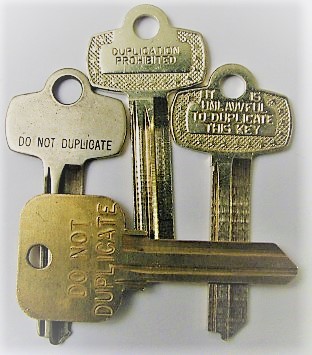
Key control refers to the systematic management of physical keys throughout their entire lifecycle — from initial issuance and duplication restrictions through return tracking and authorized destruction. Unlike a standard deadbolt that simply controls whether a door opens, a key control system treats every key as a tracked asset with a documented chain of custody, assigning accountability to every person who holds one. Facilities that operate without this documentation routinely face unauthorized access incidents that were entirely preventable given proper procedures.
For managers evaluating a layered security posture, mechanical key control works in parallel with electronic credentials. RFID lock systems allow instant credential revocation without hardware re-keying, but mechanical key control remains essential in environments where network infrastructure is unreliable or where compliance frameworks demand a physical audit trail alongside digital logs.
Contents
- Diagnosing Key Control Problems Before They Escalate
- When Key Control for Businesses Makes Sense — and When It Doesn't
- Maintaining a Key Control System Over Time
- Building a Long-Term Access Strategy
- Key Control Systems Side by Side
- Understanding Key Control Costs
- Where Key Control Delivers the Greatest Return
Diagnosing Key Control Problems Before They Escalate
Common Signs of a Failing Key System
Most facilities discover key control weaknesses after a breach rather than before one. Recognizing early warning indicators allows managers to intervene before losses occur.
- Unaccounted key copies: staff members possess keys that were never formally issued or logged in any documentation system.
- Locks that require repeated re-keying after personnel changes — a clear signal that duplication is happening outside official channels.
- No record of who holds master keys at any given point in time, which creates measurable liability exposure in any compliance audit.
- Keys stamped "Do Not Duplicate" appearing as unauthorized copies — a direct result of the absence of patented mechanical restrictions on the keyway.
- Former employees retaining physical access credentials beyond their documented termination date without any formal re-key event initiated.
Steps to Audit an Existing System
A thorough key audit transforms uncontrolled guesswork into documented fact and forms the foundation for any remediation plan.
- Inventory every key in active circulation and match each one against the original issuance log.
- Identify all lock cylinders in the facility and confirm which specific keys open which doors.
- Cross-reference current keyholders against active personnel records to surface any former employees still on the list.
- Document the gap between issued keys and formally returned keys — that number represents the facility's current uncontrolled access exposure.
- Photograph or scan every key code and bitting record, then store those records in an encrypted, off-site location separate from the physical originals.
When Key Control for Businesses Makes Sense — and When It Doesn't
Situations That Demand a Formal Program
Key control becomes essential the moment a facility reaches a threshold where informal management cannot reliably track accountability across all active access points.
- Any organization with more than five keyholders operating across multiple distinct access zones on a regular basis.
- Facilities regulated by HIPAA, PCI-DSS, or similar compliance frameworks that mandate formal access logging and periodic credential audits.
- Properties with high employee turnover where re-keying costs accumulate rapidly without a patented restricted key system limiting unauthorized duplication.
- Buildings where master keys exist: the risk multiplier effect of a single uncontrolled master key copy demands formal documentation and hardware restrictions.
- Multi-tenant commercial properties where each tenant's access zone must be cleanly separated and independently documented for liability purposes.
Pro insight: A single unaccounted master key is effectively an open invitation — re-key the affected zone immediately if one cannot be located or reconciled against the issuance log.
Scenarios Where It Adds Little Value
Not every property benefits equally from formal key control infrastructure, and over-engineering a simple access situation wastes budget that could be applied elsewhere.
- Single-family residential properties with one or two occupants rarely need anything beyond high-quality deadbolts and basic rekeying practices after move-ins.
- Small offices with two or three staff members holding equivalent access can manage accountability effectively with a simple signed issuance log.
- Facilities that have already migrated entirely to electronic access control with no physical key overrides remaining in operational service.
Maintaining a Key Control System Over Time

Routine Upkeep for Mechanical Systems
Restricted keyway systems demand disciplined physical maintenance to remain effective across years of operational use in commercial environments.
- Lubricate cylinder cores annually using a dry graphite or PTFE-based product — oil-based lubricants attract particulate debris and accelerate internal pin wear significantly faster.
- Inspect key cuts and cylinder pin stacks each year for wear patterns that could reduce pick resistance or produce false accepts under field conditions.
- Replace any cylinder that has experienced a suspected unauthorized duplication event, even when the attempt appeared unsuccessful at the time of discovery.
- Re-key after every departure of staff holding master access, regardless of whether keys were formally returned and physically inspected upon checkout.
- Maintain an encrypted digital backup of all key codes and bitting records stored at a location separate from the facility being protected.
Electronic Key Cabinet Maintenance
Electronic key management cabinets — widely deployed in fleet operations, hospitality, and healthcare settings — require their own structured maintenance schedule to remain reliable.
- Update cabinet firmware quarterly to incorporate security patches that address newly discovered software vulnerabilities before they can be exploited.
- Test backup power systems monthly to confirm that the cabinet continues operating correctly during utility power failures of extended duration.
- Export and archive access logs at minimum every thirty days before the onboard storage buffer cycles out older transaction records permanently.
- Audit all active user credentials in the cabinet software immediately following any significant personnel change at the management level.
Building a Long-Term Access Strategy
Tiered Access and Least Privilege
The most resilient key control programs are built around tiered access hierarchies that limit any single key's reach to only the doors its holder legitimately needs to open on a regular basis. This mirrors the principle of least privilege applied in cybersecurity — a concept that scales directly to physical key architecture with significant liability advantages.
- Grand master keys: reserved exclusively for ownership or the most senior facilities management personnel, with a log entry required for every use.
- Master keys: issued to department heads or security staff with documented justification that is reviewed at least annually.
- Sub-master keys: open all doors within a defined zone such as a single floor or department, limiting breach exposure when one is compromised.
- Change keys: open only a single lock, issued to individual staff members for access to their specific workspace or storage area.
The physical hardware supporting these hierarchies often involves a mortise lock cylinder, which offers deeper pin stack configurations that accommodate complex master key interchange systems with substantially stronger security margins than standard pin tumbler cylinders.
Planning for Personnel Turnover
Turnover is the single most common trigger for key control failures, and a documented off-boarding protocol eliminates the gap between someone leaving and access being formally revoked.
- Require physical key return on the final day of employment as a documented condition of payroll processing or final disbursement.
- Log returned keys back into inventory and inspect each one for wear patterns or markings that might indicate unauthorized duplication attempts.
- For departing master key holders, initiate a cylinder re-key for their full access zone within 48 hours of confirmed departure.
- Update the key control log and purge the former employee's authorization record on the same day the off-boarding is finalized in HR systems.
Key Control Systems Side by Side

Mechanical vs. Electronic vs. Hybrid
Choosing the right system architecture depends on facility size, budget constraints, compliance requirements, and tolerance for hardware and software complexity over the long term.
| System Type | Duplication Control | Audit Trail | Re-Key Cost | Best For |
|---|---|---|---|---|
| Mechanical Restricted | High — patented keyways | Manual log only | Low (no hardware swap needed) | Small to mid-size businesses, budget-constrained facilities |
| Electronic Key Cabinet | Moderate — tracks physical keys | Digital, timestamped | None (software credential update) | Fleet management, hospitality, healthcare |
| Hybrid (Restricted + RFID) | Very High — dual-layer enforcement | Full electronic log | Minimal | Enterprise facilities, regulated industries |
| Basic Master Key System | Low — standard keyways duplicable anywhere | None | High (full cylinder replacement required) | Low-risk small offices only |
Understanding Key Control Costs
Upfront Investment vs. Long-Term Savings
The upfront cost of a restricted key control system is almost always recovered within two to three avoided re-keying cycles that standard systems would have triggered without duplication protection in place.
- A patented restricted cylinder system for a 20-door commercial property typically runs $1,500 to $4,000 installed, depending on hardware grade and lock count.
- Each emergency re-key of a standard system averages $75 to $150 per cylinder, multiplied across every door in the affected access zone.
- Electronic key cabinets start at approximately $800 for small units and scale to $15,000 or more for enterprise installations managing hundreds of tracked key hooks.
- The break-even point for most mid-size businesses arrives after two avoided full re-keys, making restricted systems cost-effective within the first two years of active operation.
Hidden Costs That Catch Managers Off Guard
Several expense categories surprise first-time buyers who focus exclusively on hardware pricing during the initial planning and procurement phase.
- Patent licensing fees on restricted keys: additional copies must be ordered exclusively through authorized dealers, which carries a meaningful premium over standard key cutting at any hardware store.
- Software licensing for electronic cabinet management platforms often carries an annual subscription fee ranging from $200 to $600 depending on the vendor and feature tier.
- Staff training time to implement proper issuance, return, and audit procedures is a real operational cost that most facilities budget analyses routinely underestimate.
- Locksmith consultation fees for designing a master key hierarchy appropriate to the building's access structure typically run $150 to $400 for an initial professional assessment.
Where Key Control Delivers the Greatest Return

High-Turnover Environments
Industries with rapid staff cycling — hospitality, retail, healthcare, and food service — experience the most dramatic return on key control investment because they face re-keying triggers with the highest frequency of any commercial property type.
- Hotels deploy electronic key cabinets to manage master keys for housekeeping departments, with automatic alerts generated when a key is not returned within the assigned shift window.
- Retail chain locations using patented restricted cylinders avoid the full cylinder replacement cost after seasonal staff departures by simply confirming key return and updating the issuance log.
- Healthcare facilities subject to HIPAA compliance use hybrid systems combining restricted mechanical keys for medication rooms with electronic logging that satisfies the digital audit trail required by federal regulators.
Multi-Tenant and Shared Facilities
Office parks, co-working spaces, and mixed-use commercial buildings represent the most complex key control environments, where access boundaries must be clean, provable, and defensible in the event of an incident or insurance dispute.
- A properly designed master key hierarchy ensures that one tenant's staff physically cannot access another's suite even if keys are accidentally commingled or misplaced during normal operations.
- Property managers in multi-tenant buildings benefit from electronic key cabinets that log every transaction with a timestamp and user credential, creating a defensible record for liability or insurance purposes.
- The combination of restricted keyways and electronic logging is the recognized gold standard for shared facility management and is increasingly cited as a coverage requirement by commercial property insurers reviewing policy applications.
Final Thoughts
Key control for businesses is a discipline that pays for itself in prevented losses, avoided re-keying expenses, and defensible compliance documentation that protects both the facility and its management team. Property owners and security managers ready to move beyond informal key management should begin with a professional locksmith consultation to assess current exposure and design a restricted key hierarchy appropriate to the building's specific access structure — the key control resource hub on this site provides a curated directory of certified specialists, system comparisons, and implementation checklists to support that first concrete step toward a more accountable and auditable access program.


About Robert Fox
Robert Fox spent ten years teaching self-defence in Miami before transitioning into home security consulting and writing — a background that gives him an unusually practical, threat-aware perspective on residential security. His experience spans physical security assessment, lock and alarm system evaluation, and the behavioral habits that make homes harder targets. At YourHomeSecurityWatch, he covers home security product reviews, background check and criminal records resources, and practical guides on protecting your property and family.
You can Get FREE Gifts. Furthermore, Free Items here. Disable Ad Blocker to receive them all.
Once done, hit anything below