Best Electronic Safe Lock: Reviews, Buying Guide, and FAQs 2026
by Robert Fox
Picture this: a locksmith finishes installing a new safe in a home office, hands over the combination dial, and the homeowner immediately asks — "Can I get one with a keypad instead?" That question drives more safe lock upgrades in 2026 than any other single factor. Electronic safe locks have moved well beyond novelty status; they are now the standard choice for residential gun safes, commercial vaults, and everything in between.
Our team has spent considerable time evaluating electronic safe locks across every major category — keypad solenoid locks, biometric readers, RFID systems, and high-security UL-listed units. The market spans a wide range, from sub-$50 DIY replacement kits to professional-grade locks used in bank-level applications. Knowing which tier actually fits a given situation is the difference between a smart purchase and an expensive mistake. For anyone building out a broader security setup, our full security product reviews section covers complementary gear worth pairing with a new lock.
Whether the goal is replacing a worn-out mechanical dial, upgrading a gun safe with biometric access, or specifying locks for a commercial installation, the seven picks below represent the best options available in 2026. We evaluated each one on build quality, access reliability, ease of programming, and long-term durability — here is what our team found.

Contents
Best Choices for 2026
- #PreviewProductRating
- Bestseller No. 1
 Rating:

- Bestseller No. 2
 Rating:
- Bestseller No. 3
 Rating:
 - Bestseller No. 4
 Rating:
 - Bestseller No. 5
 Rating:
 - Bestseller No. 6
 Rating:
 - Bestseller No. 7
 Rating:


Our Hands-On Reviews
1. Sargent & Greenleaf 6120-305 Kit — Best Professional-Grade Keypad Lock
Sargent & Greenleaf has been the benchmark for high-security locking mechanisms for well over a century, and the 6120-305 Kit demonstrates exactly why that reputation holds in 2026. The square nose lock design is a deliberate engineering choice — it provides a clean, rigid interface with the safe's locking bolt that resists tampering and lateral stress far better than round-nose alternatives. The keypad included in this kit pairs directly with the lock body and delivers crisp, tactile button feedback that holds up after thousands of entry cycles.
What separates this kit from consumer-grade options is the build philosophy behind it. The internal electronics are designed around the assumption that this lock will be used in demanding environments — commercial safes, gun vaults, and professional installations where a malfunction is simply not an option. Programming is straightforward for any installer familiar with S&G products, though first-time buyers will want to consult the included manual carefully before making changes to the factory code. The lock body itself is compact enough to retrofit into most standard safe cutouts without modification.
For anyone managing a safe installation that needs to meet professional or insurance-grade standards, the 6120-305 Kit is a serious contender. It is priced accordingly, sitting above entry-level replacements, but the build quality justifies every dollar. Our team considers this the default recommendation for anyone who values long-term reliability over upfront savings.
Pros:
- Professional-grade S&G engineering with a proven track record
- Square nose lock body resists tampering and lateral stress effectively
- Crisp keypad tactile feedback that holds up over years of daily use
- Clean retrofit fit for most standard safe cutouts
Cons:
- Higher price point than most consumer replacement locks
- Setup requires familiarity with professional lock programming procedures

2. Gun Safe Lock Replacement Solenoid Lock — Best Budget DIY Replacement
For gun safe owners looking to replace a failed electronic lock without calling a locksmith, this solenoid lock kit delivers a complete solution at a price that makes the decision easy. The package includes the electronic panel, solenoid lock body, two emergency override keys, a motherboard, a reset cable, and a user manual — essentially everything needed for a full swap. The zinc alloy keypad construction feels solid, and the chrome finish gives it a professional appearance that holds up well in daily use.
The security feature set is more robust than the price suggests. The lock supports one management password plus up to two user passwords, which covers the vast majority of home and small business use cases. There is also an interference code system that allows users to add decoy numbers before and after the real PIN — a meaningful defense against shoulder-surfing or pattern observation. Fire resistance and corrosion resistance are built into the enclosure, which matters for anyone storing this lock in a garage or workshop environment where temperature and humidity fluctuate.
The key caveat here is compatibility. This kit requires a full replacement of all existing components — the manufacturer explicitly states that mixing old and new parts causes problems. Home users comfortable with basic tool work and following instructions will find the installation manageable. Those unfamiliar with safe internals may want professional help for the swap. One consistent note: always use a 9V alkaline battery, not a rechargeable. This lock is also a natural companion for anyone already researching options in our best budget gun safe under $500 guide, since these replacement locks pair well with mid-range safe bodies.
Pros:
- Complete replacement kit — no additional parts needed
- Dual-user password support plus interference code protection
- Fire and corrosion resistant construction
- Two emergency override keys included
Cons:
- Requires full component replacement — not compatible with partial upgrades
- 9V alkaline battery not included, and rechargeable batteries cause issues
3. Securam BSL-0601 Biometric Safe Lock — Best for Fingerprint Access
Securam built its reputation supplying locks to commercial safe manufacturers, and the BSL-0601 brings that pedigree to the biometric segment. The fingerprint recognition system handles enrollment and identification reliably, which is where many budget biometric locks fall apart. Our team found that the scanner reads fingers consistently — including slightly dry or calloused fingers — without the frustrating rejection rates that plague lower-cost alternatives. The mechanical knob provides manual bolt retraction once the fingerprint is verified, giving users direct tactile confirmation that the lock has released.
The chrome finish is not just cosmetic. It signals the same material standards used across Securam's professional line — a machined, durable surface that resists wear over years of handling. Keyless access via fingerprint is the primary selling point here, and it delivers on that promise without sacrificing the backup access options that responsible safe design demands. For households where multiple family members need access, biometric enrollment covers all users without distributing codes that could be forgotten or shared carelessly.
The BSL-0601 is the right choice for home users who want the fastest possible access in a high-stress moment — a scenario where fumbling with a PIN pad is not acceptable. It sits at a higher price than keypad-only alternatives, but for those who prioritize speed and convenience, the premium is well justified. Anyone comparing biometric options more broadly should also check our dedicated best biometric gun safe review for a full picture of how locks and safe bodies work together.
Pros:
- Reliable fingerprint recognition even with dry or calloused fingers
- Mechanical knob gives tactile confirmation of bolt retraction
- Chrome finish matches professional safe aesthetics
- Keyless operation eliminates code-sharing and forgotten PIN issues
Cons:
- Premium price point over standard keypad alternatives
- Biometric systems require initial enrollment time for all users
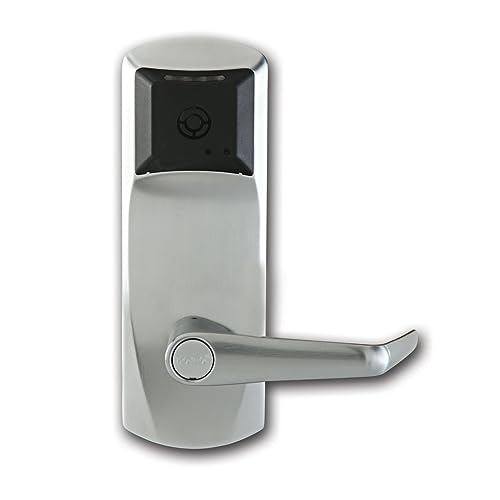
4. Dormakaba 790 RFID Lock — Best for Integrated Hotel and Commercial Systems
The Dormakaba 790 RFID Lock occupies a very specific niche, and within that niche it performs exactly as designed. This is a system-integrated commercial lock, built to operate within the Dormakaba RFID Atlas and Front Desk Unit ecosystem. Hotels, serviced apartments, and commercial facilities that already run Dormakaba infrastructure will find this lock provides seamless integration with their existing management platform — guests can open room safes using the same RFID credentials assigned at check-in, and front desk staff can manage access centrally.
The lock itself reflects commercial-grade construction standards. Dormakaba has decades of experience in hospitality security hardware, and the 790 shows it — the finish, tolerances, and internal mechanism all meet the demands of high-turnover environments where a lock may be operated dozens of times daily by unfamiliar users. The RFID system eliminates PIN management entirely, which reduces friction in environments where guests change frequently.
The critical limitation is compatibility. This lock will not function with Dormakaba Ambiance, Community, or System 6000 operating systems — a fact the manufacturer states plainly. Purchasing this lock outside of an Atlas or Front Desk Unit deployment is a mistake. For the right installation, however, the 790 is essentially the only choice — no competing product integrates as cleanly with Dormakaba's commercial platform. Our recommendation is straightforward: verify system compatibility before ordering.
Pros:
- Seamless integration with Dormakaba RFID Atlas and Front Desk Unit systems
- Commercial-grade construction handles high daily use volumes
- Eliminates PIN management in high-turnover environments
- Centralized access management via existing Dormakaba infrastructure
Cons:
- Strictly incompatible with Dormakaba Ambiance, Community, and System 6000
- No standalone functionality — requires full Dormakaba system deployment
5. Sargent & Greenleaf Titan D-Drive Electronic Lock — Best for Multi-User Access Management
The Titan D-Drive represents S&G's answer to facilities and businesses that need to manage safe access across multiple people without resorting to shared PIN codes. Supporting up to nine individual users, the 2007-102 allows each authorized person to have a unique credential — a security practice that would make any compliance officer considerably happier. The D-Drive bolt mechanism is a Sargent & Greenleaf proprietary design that provides exceptionally smooth bolt retraction while maintaining the resistance to forced entry that defines this brand's commercial products.
Keyless access across nine users is the headline specification, but the operational day-to-day experience is equally important. The Titan D-Drive manages enrollment and deletion cleanly, so when an employee leaves or access needs to be revoked, the process is quick and does not require factory resetting the entire lock. At 3.5 lbs, the lock assembly is substantial — a direct reflection of the internal component quality rather than unnecessary bulk. The one-year manufacturer warranty backs up the build confidence S&G puts into this product.
Small business owners, property managers, and anyone running a shared workspace with a central safe will find the Titan D-Drive solves their access management problem definitively. It is not the cheapest option on this list, but the nine-user capacity and S&G's reputation for durability make it the most cost-effective choice per user over a multi-year horizon. This lock pairs naturally with broader access control strategies — our best access control keypads review covers the wider ecosystem worth considering alongside it.
Pros:
- Supports up to 9 individual users with unique credentials
- D-Drive bolt mechanism delivers smooth retraction with strong forced-entry resistance
- Clean user enrollment and deletion without full factory reset
- One-year manufacturer warranty on a professional-grade product
Cons:
- Price reflects professional tier — above average for residential buyers
- 3.5 lb assembly requires solid mounting and correct safe door preparation
6. YOSEC Gun Safe Replacement Lock Electronic Black Keypad — Best Matte Black Upgrade
YOSEC's black keypad replacement lock fills a gap in the market that more established brands have largely ignored: a quality electronic replacement lock with a matte black finish. Most replacement locks ship in chrome or silver, which clashes with the black powder-coat finish that defines the majority of residential gun safes. The YOSEC unit matches that aesthetic cleanly. The 95mm diameter keypad and 29mm depth fit the standard cutout found on most mid-range safes without modification, making installation straightforward for anyone with basic mechanical confidence.
Beyond aesthetics, the technical specifications hold up. Two programmable code groups of 1-8 digits each give home users meaningful flexibility — one code for primary access, one for a trusted family member or backup. The anti-shake solenoid design addresses a common complaint about budget electronic locks: the bolt hesitation or vibration sensitivity that causes false unlocks or requires multiple attempts. Three LED indicator colors provide clear status feedback — lock status, low battery warning, and error states are all visually distinct.
This is a gun safe replacement lock built for the residential market, and it performs reliably within that scope. Anyone upgrading from a failed OEM lock on a standard pistol or rifle safe will find the YOSEC delivers genuine improvements over many factory-installed units. The matte black finish alone is worth the consideration for safe owners who have been living with a chrome keypad on a black safe body for years.
Pros:
- Matte black zinc alloy finish matches standard gun safe aesthetics
- Anti-shake solenoid eliminates bolt hesitation and vibration sensitivity
- Three-color LED status indicators for clear operational feedback
- Standard 95mm diameter fits most common safe cutouts without modification
Cons:
- Two code groups may be insufficient for households with multiple distinct access needs
- Designed for residential use — not rated for commercial or professional-grade applications
7. Amsec ESL10XL Series Electronic Safe Lock — Best UL-Listed Replacement
Amsec is a name that appears on safes sold through major retailers and locksmiths alike, and the ESL10XL is the company's answer to the replacement lock market. The defining feature of this lock is its UL listing — a certification that electronic locks earn by passing rigorous independent testing for manipulation resistance, construction quality, and consistent operation. For insurance purposes or simply for peace of mind, a UL-listed lock is the definitive standard.
The ESL10XL replaces most mechanical combination locks, which makes it one of the broadest-compatibility options on this list. Installation is designed to be straightforward, and the operational learning curve is minimal — most safe owners program and use the lock without needing professional assistance. The 15-minute penalty lockout after four incorrect entries is a meaningful security feature that distinguishes this lock from many cheaper alternatives. Four wrong attempts triggers a mandatory waiting period, effectively neutralizing brute-force PIN attacks without permanently locking out authorized users.
For anyone replacing a mechanical dial on an older safe and wanting a replacement that meets an established industry standard, the ESL10XL is the clear answer. It combines broad compatibility, UL certification, and straightforward operation into a package that works for residential users and small businesses alike. The penalty lockout feature also makes this the preferred recommendation for safes that sit in less-monitored locations — a vacation home, a storage unit, or a business back office.

Pros:
- UL Listed — independently certified for manipulation resistance and construction quality
- Broad compatibility — replaces most mechanical combination locks
- 15-minute penalty lockout after four incorrect entries deters brute-force attacks
- Easy installation and straightforward programming for non-professionals
Cons:
- Penalty lockout can be inconvenient in genuine emergency access situations
- Does not offer biometric or RFID options — PIN-only access
Choosing the Right Electronic Safe Lock: A Buying Guide
Access Technology: Keypad, Biometric, or RFID?
The access method is the first decision, and it shapes everything else. Keypad locks are the most universal — they work without batteries beyond the standard 9V, require no enrollment process, and deliver reliable performance across temperature extremes. They are the right choice for most residential and small business applications in 2026. Biometric locks, represented here by the Securam BSL-0601, add speed and eliminate code memorization — genuinely valuable in scenarios where fast access under stress matters, such as a home defense gun safe. RFID locks like the Dormakaba 790 belong in commercial ecosystems where credential management happens at the system level, not the individual lock level. Matching the access technology to the actual use case prevents expensive over-specification — most home users do not need RFID, and most commercial installers should not be using a residential keypad lock.
UL Listing and Security Certifications
A UL listing on an electronic safe lock is not marketing — it is an independent third-party verification that the product has passed specific tests for manipulation resistance, environmental performance, and mechanical construction. Insurance underwriters for commercial vault installations often require UL-listed hardware as a condition of coverage. For residential buyers, a UL listing provides concrete assurance that the lock was designed and manufactured to a documented standard rather than an internal quality benchmark. The Amsec ESL10XL carries this certification. When comparing unlisted locks, buyers should look for penalty lockout systems, interference code support, and corrosion-resistant construction as indicators of serious security intent even without formal certification.
User Capacity and Code Management
Single-user safes with one household administrator need nothing more than a standard two-code keypad system. But the moment multiple people need independent access — family members, employees, or short-term guests — user capacity becomes a critical specification. The Sargent & Greenleaf Titan D-Drive supports nine users, which covers nearly every small business scenario without requiring enterprise-level hardware. Anyone managing a rental property or shared workspace should also consider how easy the lock makes credential revocation — a clean deletion process for departed users is as important as enrollment capacity. For context on how these decisions intersect with broader property security, our best biometric door lock guide covers credential management in residential entry applications.
Installation Compatibility and Battery Requirements
Electronic safe locks are not universally interchangeable. The lock body diameter, nose type (square vs. round), mounting hole pattern, and wiring harness connector all vary between manufacturers and safe models. Before purchasing any replacement lock in 2026, the correct approach is to measure the existing lock cutout and confirm the replacement's specifications match. Most consumer replacement locks — including the YOSEC and the solenoid kit reviewed here — are designed around standard residential safe dimensions, but professional-grade units like the S&G 6120-305 and Titan D-Drive may require measurement verification. Battery type is also non-trivial: several locks on this list require 9V alkaline batteries specifically, and rechargeable batteries deliver inconsistent voltage that causes operational errors and unexpected lockouts.
Questions Answered
What is the most reliable type of electronic safe lock in 2026?
Keypad solenoid locks from established manufacturers like Sargent & Greenleaf and Amsec consistently deliver the highest long-term reliability. UL-listed models offer independent certification of their performance standards. Biometric locks have improved significantly but remain more sensitive to environmental factors like extreme cold and moisture compared to keypad alternatives. For most home and small business applications, a quality keypad lock with a penalty lockout system and backup override key represents the best reliability-to-cost ratio available in 2026.
Can an electronic safe lock be bypassed if the battery dies?
All quality electronic safe locks include a battery low-warning system that alerts users well before complete power loss — typically through an audible beep or LED indicator. In the event of a complete battery failure, most locks provide either a 9V battery contact point accessible from outside the safe (allowing a temporary external power source to open the lock) or a mechanical key override. The solenoid replacement kit reviewed here includes two emergency override keys for exactly this reason. Never store a safe lock without confirming the override method before the first use.
How many incorrect attempts trigger a lockout on most electronic safe locks?
The industry standard for quality electronic safe locks is a penalty lockout after three to five incorrect entries. The Amsec ESL10XL specifically locks out for 15 minutes after four incorrect attempts — a duration that makes sustained brute-force attacks impractical without eliminating the lock's usefulness for authorized users who make an honest mistake. Some commercial-grade locks escalate the lockout duration with each subsequent failed attempt sequence, providing additional protection against persistent unauthorized access attempts.
Is a UL-listed electronic safe lock necessary for home use?
UL listing is required for insurance-covered commercial vault installations and is strongly recommended for any safe storing significant valuables or firearms. For basic residential use — a small gun safe storing a single handgun, for example — a UL listing is a quality indicator but not an absolute necessity. The more important criteria for home buyers are penalty lockout protection, backup access options, and reputable manufacturer construction standards. That said, the price premium for UL-listed locks like the Amsec ESL10XL over comparable unlisted models is modest enough that the certification is worth prioritizing when available.
What battery type do electronic safe locks require?
The overwhelming majority of electronic safe locks require a standard 9V alkaline battery. This is not an arbitrary preference — rechargeable 9V batteries deliver nominally lower and less consistent voltage than alkaline cells, which causes performance variability and unexpected lockouts in locks designed around alkaline power curves. Several products reviewed here explicitly specify alkaline-only operation. Our team recommends keeping a spare 9V alkaline battery stored outside the safe — taped to the back or stored in a nearby drawer — to ensure access is never interrupted by an unexpected power issue.
Can electronic safe locks replace existing mechanical combination locks?
In most cases, yes — but compatibility verification is essential before purchasing. Electronic locks designed as mechanical replacements, like the Amsec ESL10XL, are engineered to fit standard lock cutout dimensions used across the residential safe industry. The bolt nose type (round vs. square), mounting hole pattern, and cable routing all need to match the existing safe door configuration. Professional-grade locks from Sargent & Greenleaf may require specific nose adapters or mounting plates for older safe bodies. When in doubt, contacting the safe manufacturer with the model number before ordering a replacement lock saves significant time and potential return shipping costs.
Buy on Walmart
- Sargent & Greenleaf 6120-305 Kit — Walmart Link
- Gun Safe Lock Replacement Solenoid Lock with 2 Override Keys — Walmart Link
- Securam BSL-0601 Biometric Safe Lock — Walmart Link
- Dormakaba 790 RFID Lock — Walmart Link
- Sargent & Greenleaf Titan D-Drive Electronic Lock, Keyless A — Walmart Link
- YOSEC Gun Safe Replacement Lock Electronic Black keypad Safe — Walmart Link
- Amsec ESL10XL Series Electronic Safe Lock — Walmart Link
Buy on eBay
- Sargent & Greenleaf 6120-305 Kit — eBay Link
- Gun Safe Lock Replacement Solenoid Lock with 2 Override Keys — eBay Link
- Securam BSL-0601 Biometric Safe Lock — eBay Link
- Dormakaba 790 RFID Lock — eBay Link
- Sargent & Greenleaf Titan D-Drive Electronic Lock, Keyless A — eBay Link
- YOSEC Gun Safe Replacement Lock Electronic Black keypad Safe — eBay Link
- Amsec ESL10XL Series Electronic Safe Lock — eBay Link
The best electronic safe lock is the one that matches the threat level, the user count, and the installation reality — not the one with the most features on the spec sheet.


About Robert Fox
Robert Fox spent ten years teaching self-defence in Miami before transitioning into home security consulting and writing — a background that gives him an unusually practical, threat-aware perspective on residential security. His experience spans physical security assessment, lock and alarm system evaluation, and the behavioral habits that make homes harder targets. At YourHomeSecurityWatch, he covers home security product reviews, background check and criminal records resources, and practical guides on protecting your property and family.
You can Get FREE Gifts. Furthermore, Free Items here. Disable Ad Blocker to receive them all.
Once done, hit anything below