Ever stared at a combination lock, digits slipping from memory right when you need them most? Learning exactly how to open a combination lock eliminates that anxiety permanently. Four-digit combination locks are the workhorses of everyday security — found on luggage, school lockers, storage sheds, and personal safes alike. This guide delivers the complete picture: how the mechanism actually works, what to do when you have the code in hand, and what separates a clean entry from a fumbled attempt. Explore more lock fundamentals in our comprehensive lock guides section before diving into the specifics below.

The four-digit combination lock seems simple on the surface — four rotating wheels, each numbered 0 through 9, giving you 10,000 possible combinations. But the mechanics underneath matter, because even a correct code entered sloppily won't open the lock. Precision and methodology are what separate someone who gets it right the first time from someone who spins through the sequence three times without result. Understanding the lock helps you use it correctly and recognize when something is mechanically wrong.
This walkthrough covers the complete process from mechanism basics through expert-level execution, plus a section on what burglars look for in poorly maintained combination locks — because knowing your vulnerabilities is half the security battle. Whether you're a first-time user or someone who's lost the nuances after years of muscle memory, there's actionable detail in every section.
Contents
What Makes a 4-Digit Combination Lock Tick
The Mechanism Behind the Numbers
A 4-digit combination lock operates on a simple but elegant principle. Inside the lock body, four rotating discs — called cams or wheels — each contain a notch cut into their circumference. When all four notches align simultaneously, a locking bar drops into position and the shackle or bolt releases. Each wheel corresponds to one digit of your combination. Rotate a wheel to the correct number and its notch lines up. Get all four aligned and the lock opens.
This is fundamentally different from a traditional single-dial combination lock, which uses one dial and internal cams that must be engaged in precise sequence. With a 4-digit wheel-based padlock, you're setting all four digits and engaging them simultaneously. The result is a more intuitive user experience — but the tradeoff is a mechanism that's easier to manipulate if the lock is low quality.
According to Wikipedia's overview of combination locks, the basic wheel-and-notch design dates back centuries and remains dominant in consumer padlocks because of its simplicity and low manufacturing cost. That simplicity is both a feature and a vulnerability — the quality of materials and tolerances determines how exploitable the mechanism is.

Types of 4-Digit Combination Locks
Not all 4-digit combination locks work identically. The entry mechanism varies by design, and knowing which type you're dealing with changes how you approach the opening process.
| Lock Type | Entry Method | Common Uses | User-Resettable |
|---|---|---|---|
| Wheel Padlock | Rotate individual digit wheels | Lockers, storage units, sheds | Yes (most models) |
| Luggage Lock | Slide or rotate digit wheels | Suitcases, travel bags | Yes, via reset button |
| Cable Combination Lock | Rotate digit wheels | Bikes, gate chains, tool storage | Yes (most models) |
| Resettable Safe Dial | Spin dial through sequence | Home safes, gun cabinets | Varies by manufacturer |
The wheel-style padlock is the most common and the primary focus of this guide. For battery-free electronic alternatives that eliminate wheel entry entirely, our review of the best electronic keyless deadbolts covers a range of options — though for portability and pure mechanical reliability, the combination padlock remains hard to beat in the right application.
Everything You Need Before You Begin
Tools and Setup
One of the biggest advantages of the 4-digit combination lock is its operational simplicity: you need nothing but your hands and your combination. There's no key to lose, no battery to fail, no app to pair. That said, setting yourself up for a clean first-attempt entry requires a few deliberate steps before you start turning wheels.
- Your combination code — confirmed and accessible, ideally written down and stored separately from the lock itself
- Good lighting — misreading a 6 for an 8 in dim light is a genuine failure mode, not a hypothetical one
- Clean, dry hands — moisture or grease causes fingers to slip off wheels mid-entry
- A stable grip on the lock body — the lock must not shift while you're rotating individual digits
For outdoor locks exposed to weather, apply a dry PTFE-based lubricant to the wheels and shackle channel once or twice a year. Avoid WD-40 — it attracts grit and accelerates corrosion inside the mechanism. A sticky wheel is one you'll misalign without realizing it, and that misalignment is the top reason correct combinations fail to open locks.
Locating Your Combination
If you've forgotten your combination, your recovery options depend on whether you set a custom code or left the factory default. Many low-cost locks ship with a default combination of 0000 and rely on buyers to reset them — which the majority never do. Check your lock's documentation or the manufacturer's website for the factory default before assuming the code is lost.
If you set a custom code and genuinely cannot recover it, the path is narrow. Some manufacturers offer a combination retrieval service with proof of purchase. Others require a licensed locksmith. For mechanical safes, the recovery process is more involved — our breakdown of what makes a high-quality mechanical deadbolt reliable explains why quality mechanical locks require professional intervention when access is truly lost, rather than a simple workaround.
How to Open a Combination Lock: The Complete Step-by-Step Guide
This is the core of everything. Executing the sequence correctly — every single time — requires understanding not just what to do, but why each step matters. The following process applies to the standard 4-wheel rotating padlock. Luggage locks follow the same logic but may require holding light upward tension on the shackle while setting the final digit.
Step 1: Reset and Locate Your Code
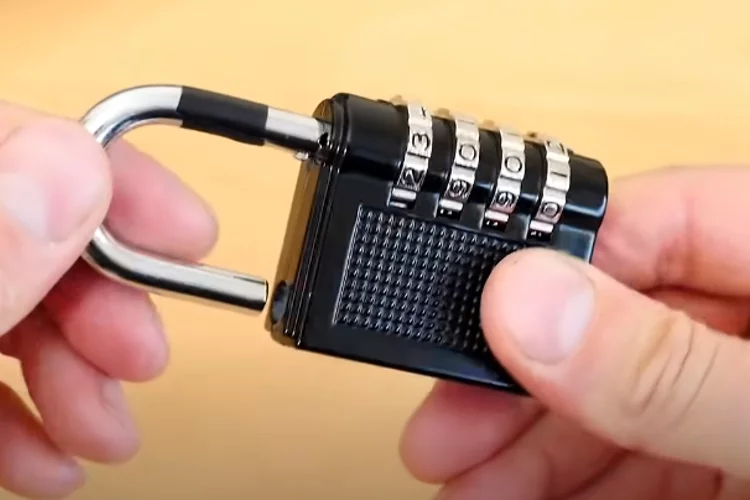
Before entering your combination, reset all four wheels to zero. This clears any partial entry from a previous attempt and gives you a clean, confirmed starting position. Hold the lock body firmly in your non-dominant hand and use your thumb and forefinger to rotate each wheel back to 0. Confirm alignment visually — each digit must be centered in its display window, not sitting between two numbers.
Have your combination in front of you, or commit it fully to memory before you start. Interruptions mid-sequence — a phone call, a distraction — mean you need to return to zero and begin again. The lock retains no partial memory of where you left off.
Steps 2–5: Entering Each Digit
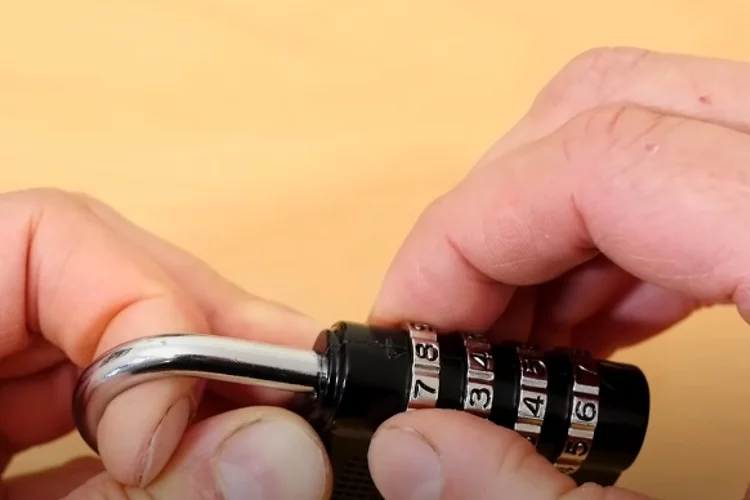
Step 2 is entering the first digit. Rotate the leftmost wheel until your target number sits perfectly centered in the window. Move deliberately — don't rush past the number. If the wheel feels notchy or stiff, apply gentle, even pressure. Forcing it creates misalignment you won't see until the lock refuses to open.
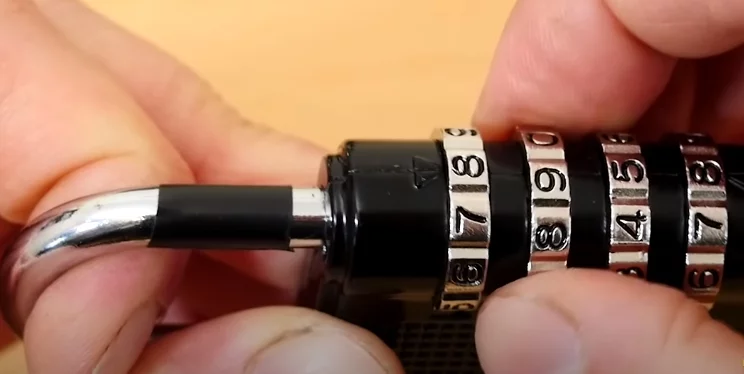
Step 3 is entering the second digit. Move to the second wheel while keeping your grip stable on the lock body. On most designs the wheels are mechanically independent, but vibration or an unsteady grip can nudge an already-set wheel slightly off position. Take a half-second to visually confirm the first wheel hasn't shifted before centering the second digit.

Step 4 follows the identical pattern for the third digit. By now you're in the rhythm of the process. Pause briefly after each wheel to visually confirm alignment before advancing. This two-second verification habit eliminates the most common failure mode: an off-by-one misalignment that's invisible at a glance but enough to keep the lock closed.

Step 5 is setting the final digit. Center the fourth number in its window, then pause. Scan all four wheels left to right one more time before touching the shackle. One accidental nudge of a previously set wheel while reaching for the release means a full reset and re-entry.
Opening the Lock
With all four digits confirmed, pull the shackle upward or press the release button — depending on your lock's design. The shackle releases with minimal resistance when all four cams are aligned. If it doesn't open, don't force it. Return all wheels to zero and re-enter the combination slowly, double-checking each digit before proceeding to the next. Forcing a stuck shackle can damage the internal catch mechanism, compounding the problem.
Pro tip: If the lock refuses to open after two careful attempts with the correct code, verify your combination source — not from memory, but from your written record. Many users discover they stored the wrong code, or the factory default was never changed and has since been reset by someone else.
Beginner Errors vs. What the Pros Do Differently
Common Beginner Mistakes
Most failed opening attempts trace back to a handful of repeating errors. Recognizing them upfront saves time and prevents the spiral of frustrated force that damages locks:
- Misreading centered alignment — a number that looks correct from a slight angle may be one digit off when viewed straight-on; always look at the window head-on
- Entering a sequence without resetting first — starting from a partial previous entry almost always fails
- Rotating too fast — momentum carries wheels past the target number, especially on newer locks with looser manufacturing tolerances
- Applying upward pressure on the shackle while setting the last digit — on some designs this misaligns the internal catch just enough to prevent release
- Using the wrong record — relying on memory rather than the written combination when the digits genuinely won't open the lock
These aren't exotic scenarios. They're what locksmiths encounter routinely when called to open a combination lock that was actually entered incorrectly. Understanding how burglars think and exploit predictable vulnerabilities — including factory-default codes that owners never change — puts the stakes of poor combination lock practice in direct context.
Advanced Entry Techniques
Experienced users develop habits that make the process nearly automatic and near-perfect in accuracy. Here's what that looks like in practice:
- Tactile confirmation — quality locks produce a subtle resistance change or click when a wheel aligns; train yourself to feel this, not just see it
- Consistent rotation direction — always approach the target number by rotating upward (from below) to reduce overshoot errors caused by momentum
- Sequential visual scan — after setting all four digits, scan left to right before touching the shackle, every single time
- Environmental compensation — cold contracts metal and stiffens wheels; allow extra care and deliberate pressure in winter conditions
If you're evaluating whether to move from a combination padlock to a dedicated keypad lock for higher-use applications, our roundup of the best bump-proof locks covers security ratings and real-world entry speed comparisons side by side.
For users securing firearms with combination-locked storage, the security calculus differs significantly by container type. A combination padlock on a steel cabinet carries different implications than one integrated into a rated safe — our in-depth comparison of gun safe vs. gun cabinet differences breaks down what each offers and where combination locks fit into each scenario.
Keeping Your Lock Reliable and Secure
Lock Maintenance Basics
A combination lock that's never maintained will fail — not always dramatically, but gradually. Wheels become stiff, internal components corrode, and alignment tolerance degrades. The result is a lock that's increasingly difficult to open correctly even with the right combination, and increasingly easy to manipulate by someone who knows what they're doing.
Basic maintenance requires almost no time or tools:
- Apply dry PTFE lubricant to the wheels and shackle channel every 6–12 months — more frequently in coastal or high-humidity environments
- Inspect the shackle for corrosion, scoring, or fresh scratches — these indicate stress, tampering, or cut attempts
- Check wheel action monthly for outdoor locks; loose wheels are a red flag indicating wear or manipulation
- Replace the lock entirely if wheels become noticeably loose — loose tolerances make the mechanism susceptible to feel-manipulation
Security-conscious users also change their combination periodically, especially on locks securing shared facilities. The reset process varies by manufacturer but typically requires the shackle to be open and depressed while a reset pin is engaged. Consult your model's documentation — or search the manufacturer's site by model number if you've lost the manual.
No combination lock works in isolation. Our guide to the best ways to burglar-proof your home puts portable lock security in context alongside window barriers, door reinforcement, and alarm systems — layered physical security is always more effective than any single measure.
When to Upgrade Your Lock
Combination locks are well-suited to low-to-medium security applications. But they have real limits, and recognizing when you've exceeded those limits matters.
Signs it's time to consider an upgrade:
- The lock has been installed outdoors for more than three years without replacement
- You've noticed the shackle showing scoring consistent with bolt-cutter or angle-grinder attempts
- The value or sensitivity of what's being secured has increased beyond the lock's design intent
- You need an audit trail, remote access capability, or multi-user management — combination locks offer none of these
For exterior door applications where a keyless entry solution makes sense, the Code-A-Key mechanical keyless lock offers a weather-resistant alternative worth evaluating. And if you're assessing any lock's quality at the component level, the framework in our breakdown of characteristics of a high-quality mechanical deadbolt applies directly — understanding what makes a mechanical lock reliable helps you evaluate any lock against your actual threat model.

A 4-digit combination lock rewards a methodical approach and punishes carelessness. Understand the mechanism, reset before every entry, confirm each digit visually before advancing, and maintain the hardware. When the lock won't cooperate, the answer is almost always a clean reset and slower re-entry — not force. Treat it as a precision mechanical device with genuine tolerances, maintain it accordingly, and it will perform reliably for years.
Frequently Asked Questions
What should I do if my 4-digit combination lock won't open with the correct code?
Reset all four wheels to zero and re-enter the combination slowly, confirming each digit is perfectly centered in its window before moving to the next wheel. If it still won't open, verify your combination from a written record rather than memory. If the lock is old or has been exposed to moisture, internal corrosion may be causing subtle wheel misalignment. Apply dry PTFE lubricant to the wheels and try again. If none of this resolves it, contact a licensed locksmith rather than forcing the shackle — forced entry damages the internal mechanism and makes professional recovery harder.
Can a 4-digit combination lock be opened without knowing the combination?
Low-quality combination locks can sometimes be opened by applying slight tension to the shackle while rotating each wheel slowly — a technique that detects the point of resistance where the cam notch begins to align. Higher-quality locks with tighter manufacturing tolerances resist this significantly. If you own the lock and are genuinely locked out, contact the manufacturer with proof of purchase or consult a licensed locksmith. Attempting to open a lock you do not own is illegal.
How many possible combinations does a 4-digit combination lock have?
With four wheels each offering 10 positions (0–9), a 4-digit combination lock has exactly 10,000 possible combinations (10⁴). This is adequate for low-to-medium security applications, but should not be considered high security. A determined attacker with physical access and enough time can systematically test all combinations. The deterrent value of a combination padlock comes primarily from physical access difficulty — the lock's body strength and shackle hardness — not from combination complexity alone.
How do I reset my 4-digit combination lock to a new code?
Most 4-digit wheel padlocks follow a similar reset process: open the lock using the current combination, locate the reset button (typically a small pinhole on the side or bottom of the lock body), press and hold it with a straightened paperclip or pen tip, set your new combination on the wheels, then release the reset button. Close and test the new combination before trusting it. The exact sequence varies by manufacturer, so consult your model's documentation. Never reset to an obvious default like 0000 or 1234 — these are the first codes any opportunist will try.
Are 4-digit combination locks suitable for outdoor use?
It depends entirely on the specific lock's construction. Budget combination locks typically use zinc alloy bodies that corrode quickly in wet or salty environments, causing stiff wheels and premature failure. For outdoor applications, look for locks with stainless steel or hardened steel shackles, a solid brass or stainless body, and an explicit weatherproof rating. Applying dry PTFE lubricant to the wheels and shackle channel extends service life significantly, even for locks without a formal weather rating. Inspect outdoor locks every few months for early signs of corrosion.
What's the practical security difference between a combination padlock and a keyed padlock?
Both types offer similar physical resistance to cutting or prying when built from equivalent materials at equivalent quality levels. The meaningful difference is in the entry mechanism. Combination locks eliminate key duplication risk and the possibility of losing a key, but low-quality models are vulnerable to feel-manipulation. Keyed padlocks with high-security cylinders and anti-pick pins resist manipulation better than budget combination locks. For shared access where multiple people need entry without key distribution, combination locks have a clear operational advantage. For securing high-value assets where security rating matters more than convenience, a high-security keyed padlock typically performs better.
How can I tell if someone has attempted to tamper with my combination lock?
Inspect the shackle for fresh scoring, bright metal scratches, or deformation — these indicate bolt-cutter or angle-grinder attempts. Check the wheel faces for scratches along their edges, which can indicate shimming or systematic feel-manipulation attempts. If the wheels feel looser than usual or the shackle releases with less resistance than normal, the internal mechanism may have been compromised. Any credible sign of tampering warrants immediate lock replacement and a broader review of your physical security setup — because a tampered lock means someone has been physically accessing your secured location.
Next Steps
- Locate your combination lock's documentation right now and confirm you have the correct code stored in a physical written record — separate from the lock, accessible only to you.
- Test your lock immediately using the step-by-step method in this guide: reset to zero, enter each digit with a visual confirmation pause, and open it cleanly on the first attempt.
- Apply dry PTFE lubricant to every combination lock in your home or facility that is more than a year old or shows any stiffness in the wheels or shackle channel.
- Change the combination on any lock that uses the factory default or a code known to multiple people — prioritizing locks on storage areas, gates, and anything securing valuables.
- Inspect all your combination locks for signs of wear or tampering, and replace any that show loose wheels, shackle scoring, or mechanical irregularities before they fail at the wrong moment.


About Robert Fox
Robert Fox spent ten years teaching self-defence in Miami before transitioning into home security consulting and writing — a background that gives him an unusually practical, threat-aware perspective on residential security. His experience spans physical security assessment, lock and alarm system evaluation, and the behavioral habits that make homes harder targets. At YourHomeSecurityWatch, he covers home security product reviews, background check and criminal records resources, and practical guides on protecting your property and family.
You can Get FREE Gifts. Furthermore, Free Items here. Disable Ad Blocker to receive them all.
Once done, hit anything below