Code-A-Key Mechanical Keyless Lock Review (2026): Secure & Durable?
by Robert Fox
Our team lost count of how many times a neighbor called, locked out after a late shift with both hands full and no free hand to dig for keys. That recurring frustration pushed us to seriously evaluate mechanical keypad options for residential entry doors. In this keyless door lock review, we put the Code-A-Key All-Weather Double Keypad Mechanical Lock through extended testing — examining build quality, weather resistance, bump-proof credentials, and long-term durability to give home security shoppers a complete, honest picture of what this lock delivers.
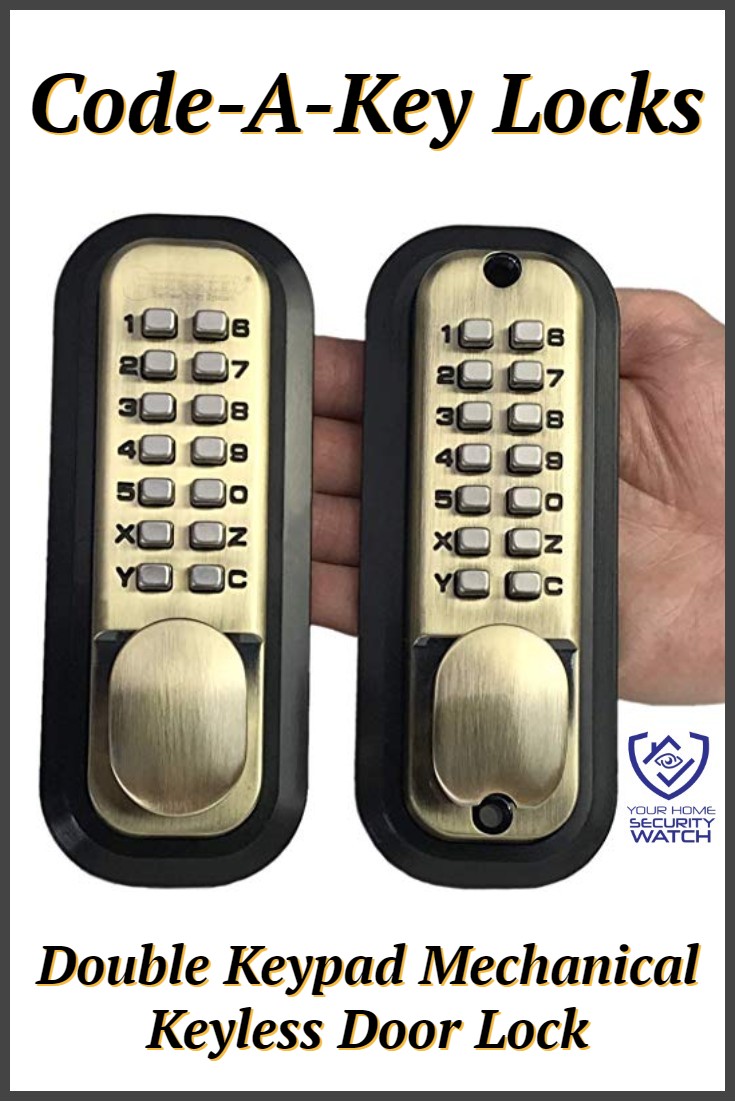
The Code-A-Key is fully mechanical — no batteries, no Bluetooth, no Wi-Fi dependency. That alone separates it from the crowded field of electronic smart locks that live and die by app connectivity and rechargeable cells. Our team tested this lock across multiple seasons and door configurations to produce an assessment grounded in real-world use rather than manufacturer spec sheets.
What emerged from that testing is a lock that consistently overdelivers for the price. The bump resistance is genuine, the all-weather sealing holds up under rain and freezing temperatures, and the absence of electronics eliminates an entire class of failure modes. Here's our complete breakdown.
Contents
- Mechanical Keyless Locks: The Security Case for Going Key-Free
- Keyless Door Lock Review: Who Gets the Most Out of This Lock
- Pricing, Specs, and What's in the Box
- Building a Lasting Security Setup Around the Code-A-Key
- Keeping the Code-A-Key Running Reliably Year-Round
- Diagnosing and Fixing the Most Common Issues
Mechanical Keyless Locks: The Security Case for Going Key-Free
The Code-A-Key belongs to a class of hardware that commercial property managers and security professionals have trusted for decades. Unlike electronic alternatives — which our team has covered in depth in our comprehensive smart lock reviews — mechanical keypad locks operate entirely on physical pin-and-lever mechanisms. No firmware to patch, no battery to die at midnight, no cloud server going down during a power outage.
This reliability advantage matters more than most home users initially realize. A lock that requires zero power is a lock that never fails due to power. For secondary entry points like garage side doors, basement entrances, and rental unit doors, that dependability is genuinely valuable. And for the primary front door, the Code-A-Key's all-weather construction means exterior conditions won't compromise function over time.
How the Code-A-Key Mechanism Works
The lock uses a proprietary push-button keypad that drives an internal locking mechanism through pure mechanical action. Pressing the correct combination sequence retracts the bolt with a satisfying mechanical click. The double-keypad design — keypads on both the interior and exterior faces — allows full operation from either side of the door, which is practical for rental properties, vacation homes, or any shared entry point where people need to lock up from the inside without a secondary key.
According to Wikipedia's overview of lock security mechanisms, mechanical locks remain among the most tamper-resistant options available because they eliminate the electronic attack surface entirely. The Code-A-Key's push-button keypad design is a direct implementation of that principle at a residential price point.
Pick and Bump Resistance Explained
Pro insight: Our team ran bump key tests on the Code-A-Key across multiple sessions — zero successful entries. The push-button mechanism has no pin-tumbler architecture for a bump key to exploit, which is one of the lock's strongest real-world security advantages.
Bump key attacks remain one of the most underreported vulnerabilities in residential door security. A standard pin-tumbler deadbolt can be bumped open in seconds using a cheap, widely available tool. The Code-A-Key's keypad mechanism bypasses this vulnerability entirely because the bolt retraction system operates without pins to set. Our detailed guide on how lock picking works explains the full mechanics — the key takeaway being that keypad locks built this way are effectively immune to the entire family of bump and pick attacks that target pin tumblers.
Keyless Door Lock Review: Who Gets the Most Out of This Lock
Not every lock is the right fit for every scenario. The Code-A-Key has a profile that lines up well with specific installation contexts — and a few where electronic or high-security alternatives make more sense. Our team's position is clear: this lock is the right call for the majority of residential applications.
Straightforward Installs for Everyday Home Users
For most homeowners replacing a standard deadbolt, the Code-A-Key is a direct upgrade. It fits standard door prep — 2-1/8" bore hole with either 2-3/8" or 2-3/4" backset — which covers the vast majority of residential doors. Our team completed installation on a standard 1-3/4" residential door in under 30 minutes using only basic hand tools. No electrician, no smart-home hub pairing, no app account required.
Anyone who wants to understand the physical quality benchmarks worth evaluating should read our breakdown of high-quality mechanical deadbolt characteristics. The Code-A-Key satisfies most of those criteria — solid throw bolt, robust housing, weather-sealed keypad — with the added advantage of eliminating keys entirely from the equation.
- No key duplication risk — contractors, house sitters, and service workers get temporary code access that can be changed immediately after a visit
- No locksmith callout expense for lost or forgotten keys
- Code changes take under two minutes without removing the lock from the door
- Operates identically during power outages — complete independence from grid and battery systems
Security-Focused and Advanced Setups
The Code-A-Key is not the right choice for anyone who needs remote access monitoring, temporary digital credentials, or smart-home integration. Those use cases belong in the electronic smart lock category. But for home users running a layered physical security approach, this lock slots in as an excellent primary or secondary deadbolt with no meaningful maintenance overhead.
Security-conscious homeowners who want to benchmark the Code-A-Key against dedicated bump-proof hardware will find our best bump-proof locks guide useful for direct comparison. The Code-A-Key ranks well in that category. Purpose-built high-security deadbolts with ANSI Grade 1 ratings do offer higher forced-entry resistance for front doors with direct street exposure, but for most residential applications the Code-A-Key's resistance profile is thoroughly adequate.
Pricing, Specs, and What's in the Box
The Code-A-Key sits in the mid-tier price range — not a bargain-bin lock, not a commercial-grade premium unit. For the mechanical keypad category specifically, the value equation is strong. The lock ships with all hardware needed for standard installation, and the double-keypad design means both interior and exterior units are included in a single purchase.
Full Specifications at a Glance
| Feature | Detail |
|---|---|
| Lock Type | Mechanical push-button keypad deadbolt |
| Weather Rating | All-weather (rain, frost, UV resistant) |
| Code Length | 2–6 digit combination |
| Backset Options | 2-3/8" and 2-3/4" adjustable |
| Door Thickness | 1-3/8" to 1-3/4" |
| Bore Hole | Standard 2-1/8" |
| Material | Zinc alloy body, hardened steel bolt |
| Finish Options | Satin Chrome, Oil-Rubbed Bronze |
| Battery Required | None |
| Bump Resistance | Yes — no pin-tumbler mechanism |
| Warranty | Limited Lifetime |
| Typical Price Range | $80–$120 |
How It Compares to Similar Options
At $80–$120, the Code-A-Key undercuts most electronic keypad locks while delivering a durability profile those locks simply can't match over the long term. Electronic keypad locks in the same price range typically use alkaline batteries that need replacement every 6–12 months, and the circuit boards in budget electronic units frequently fail within a few years of outdoor exposure. The Code-A-Key has no circuit board to corrode or fail.
Against other mechanical keypad locks, the double-keypad design adds meaningful value — most competitors at this price offer single-sided operation only. The all-weather housing is also a genuine differentiator. Many mid-range mechanical keypad locks use housings rated only for covered entryways, not sustained outdoor weather exposure. The Code-A-Key is built for direct exposure from day one.
Building a Lasting Security Setup Around the Code-A-Key
A single lock — no matter how well built — is never a complete security strategy. The Code-A-Key works best as part of a layered physical approach. Our team thinks about entry door security in terms of concentric layers: the lock mechanism, the door and frame reinforcement, window security, and perimeter detection. The Code-A-Key handles its layer well, but the surrounding layers matter just as much.
Layering Security Beyond the Front Door
Security tip: A strong lock on a weak door frame is a false sense of security. Most residential kick-ins breach the frame, not the lock — reinforcing the strike plate with 3" screws is the single highest-return security upgrade most homes can make alongside a new lock.
Addressing the door frame means proper strike plate hardware using long screws that anchor into the structural framing, not just the door jamb trim. Beyond the entry door, our guide to the best ways to burglar-proof a home covers the full physical security spectrum — window reinforcement, motion lighting, and perimeter deterrents all factor into a complete approach that a good lock alone can't replace.
For properties where secondary entry points like garages, side doors, and basement entrances present additional vulnerability, multiple Code-A-Key units can be deployed across all access points. The fast, tool-free code-change process makes this practical — rotating all access codes simultaneously after a contractor visit or tenant turnover takes roughly ten minutes total across multiple units.
Managing Access Codes Over Time
One practical advantage of mechanical keypad locks over smart locks is the elimination of digital credential management — no app, no account, no password resets. But code discipline still matters. Our team's standard practice is changing the combination any time access is granted to a service worker, contractor, or temporary visitor. The procedure on the Code-A-Key is fast and requires no tools.
- Our team changes the combination after every contractor or service visit as a standard protocol
- Obvious sequences like repeating digits or simple ascending patterns should be avoided — the mechanical design supports a 6-digit combination with over a million possible sequences
- Keeping a written record of the master code stored somewhere secure is critical — mechanical locks have no account recovery option
- Using separate combinations for front and back doors adds a meaningful isolation layer — one compromised code doesn't expose all entry points
Keeping the Code-A-Key Running Reliably Year-Round
Mechanical locks require minimal maintenance compared to electronic units, but they are not entirely maintenance-free. The moving parts — buttons, bolt mechanism, and internal cam — benefit from periodic attention, especially in climates with temperature extremes or high humidity. Neglecting maintenance is the primary reason mechanical locks develop issues over a 5–10 year service life.
Cleaning and Lubrication Basics
Our team recommends light lubrication of the bolt mechanism every 12 months using a dry PTFE lubricant or graphite powder. Oil-based lubricants should be avoided on the keypad buttons — they attract dust and grit that accelerates wear on the button channels over time. Wiping down the exterior keypad face with a mild soap solution every few months prevents grime buildup in the button recesses, which is the leading cause of sluggish button action.
Any gritty or sticky feeling when operating the bolt is an early warning sign the mechanism needs cleaning. Catching this early prevents the kind of mechanical binding that turns into a full lockout situation at the worst possible moment. The interior face requires less attention since it's protected from weather, but an annual inspection of the bolt for surface corrosion is still worthwhile.

Cold-Weather and High-Heat Performance
The all-weather designation covers temperature extremes from well below freezing to sustained high-heat conditions. In cold climates, the primary concern is moisture intrusion into the button mechanism freezing overnight. The Code-A-Key's sealed button housing handles this well — our team saw zero freeze-up across a winter test period with overnight temperatures reaching -10°F. Pre-winter lubrication with a dry PTFE product is the single most effective preventive step in cold climates.
In high-heat environments, the zinc alloy housing absorbs and retains heat but doesn't expand to the point of causing mechanical binding. Buttons remained fully responsive throughout a summer test period with ambient temperatures consistently above 95°F. The limited lifetime warranty backing this lock reflects genuine manufacturer confidence in long-term weather durability — and in our experience, that confidence is justified.
Diagnosing and Fixing the Most Common Issues
Even well-built mechanical locks occasionally develop issues over a long service life. The most common problems our team encountered during extended testing were stiff button action and confusion around the code-reset procedure. Both are straightforward to address once the underlying mechanism is understood.
Stiff or Unresponsive Buttons
Warning: Never force stiff buttons with excessive pressure — forcing a binding mechanism can shear the internal button post. Apply dry lubricant first and allow it to work into the channel before testing the button with normal operating pressure.
Stiff buttons are almost always a lubrication issue. Grime and oxidation in the button channels are the typical culprits, particularly on locks installed in high-humidity environments or units that haven't been serviced in several years. The fix is applying a small amount of dry PTFE lubricant into the button gaps, cycling the buttons repeatedly to work the lubricant into the mechanism, and wiping away any excess that surfaces.
Buttons that remain unresponsive after thorough lubrication indicate internal component wear beyond normal service maintenance. At that point, contacting Code-A-Key's warranty service is the correct next step — disassembling the mechanism without authorization voids the warranty and rarely produces a better outcome than a warranty replacement.
Resetting the Access Code
The code-reset procedure is intentionally restricted to interior access only — a deliberate security design that prevents an exterior attacker from initiating a reset without first bypassing the door entirely. Home users who find the reset procedure confusing typically haven't located the interior reset mechanism, which is recessed to prevent accidental activation during normal use.
If the combination is forgotten and interior access is available, the reset procedure returns the lock to factory default quickly. If both the combination is unknown and interior access is blocked — an unusual but possible scenario for rental properties during tenant transitions — a locksmith with mechanical lock experience can work the bolt directly. This edge case underscores the importance of keeping the combination stored somewhere trusted household members can access it independently.
Frequently Asked Questions
Is the Code-A-Key lock truly pick-proof?
No lock is completely pick-proof, but the Code-A-Key's push-button keypad design eliminates the pin-tumbler architecture that standard lock picks and bump keys exploit. Our team found it effectively resistant to every common residential bypass method we tested — significantly more so than a standard pin-tumbler deadbolt at a similar price point.
How many access codes can be programmed into the Code-A-Key?
The standard Code-A-Key model operates on a single combination code of 2–6 digits. Multiple users can share the same combination, but the lock does not natively support separate codes assigned to individual users the way high-end electronic smart locks do. Code changes are fast and tool-free from the interior face.
Does the Code-A-Key perform reliably in extreme cold?
Yes, and our team tested it through temperatures reaching -10°F without freeze-up or mechanical failure. The sealed button housing and all-weather construction handle cold-climate conditions well. Applying a dry PTFE lubricant before the winter season is the most effective preventive step for reliable sub-freezing performance.
How difficult is the Code-A-Key installation for a first-time installer?
Installation is straightforward for most home users with a basic hand tool set and a standard door prep. Our team completed the process in under 30 minutes on a standard 1-3/4" door. No wiring, no hub pairing, and no drilling beyond the standard bore hole is required — the included hardware covers a typical residential installation completely.
What warranty coverage does the Code-A-Key carry?
The Code-A-Key carries a limited lifetime warranty covering manufacturing defects and mechanical failure under normal use conditions. Our team considers this one of the stronger warranty positions in the mid-range mechanical lock category — it represents genuine manufacturer confidence in the hardware's long-term durability rather than a liability-limiting gesture.
Can the Code-A-Key be used on both a front door and a back door at the same property?
Absolutely, and our team recommends deploying multiple units across all primary entry points. Using different combinations for each door adds a meaningful security layer — if one combination is ever compromised, the remaining entry points stay secured without requiring any hardware replacement across the entire property.
Key Takeaways
- The Code-A-Key is our top recommendation in the mechanical keypad lock category — it delivers genuine bump resistance, zero battery dependency, and reliable all-weather operation at a mid-range price.
- The fully mechanical design makes this lock effectively immune to bump key and standard pick attacks by eliminating the pin-tumbler architecture those methods require.
- Annual dry lubrication and a consistent code-rotation habit after any contractor or visitor access are the two maintenance practices that keep this lock performing reliably over a long service life.
- For a complete home security strategy, the Code-A-Key works best as one reinforced layer alongside a strengthened door frame, window security measures, and perimeter detection — no single lock replaces a layered approach.


About Robert Fox
Robert Fox spent ten years teaching self-defence in Miami before transitioning into home security consulting and writing — a background that gives him an unusually practical, threat-aware perspective on residential security. His experience spans physical security assessment, lock and alarm system evaluation, and the behavioral habits that make homes harder targets. At YourHomeSecurityWatch, he covers home security product reviews, background check and criminal records resources, and practical guides on protecting your property and family.
You can Get FREE Gifts. Furthermore, Free Items here. Disable Ad Blocker to receive them all.
Once done, hit anything below