A deadbolt is a locking mechanism driven entirely by rotational force — no spring, no passive retraction. That's the core of how deadbolt locks work, and it's exactly why deadbolts are the residential security standard that everything else gets measured against. Unlike a spring latch, the bolt stays extended until you deliberately turn a key or thumb turn. If you're serious about protecting your home, start with our comprehensive deadbolt locks guide for a full breakdown of models and installation tips.

Most home break-ins happen at the front door. Burglars count on speed — a weak lock means less time, less noise, less risk. A quality deadbolt changes that equation. It introduces mechanical resistance that a knob lock or a spring latch simply cannot match, and for most intruders, that resistance alone is enough to make them move on.
This guide walks you through the history of the deadbolt, exactly how the mechanism operates, what types are available, where they fall short, and what you can do today to get the most protection out of yours.
Contents
The Origins of the Deadbolt Lock
Early Lock Technology
Locks have existed for thousands of years. The earliest known wooden pin tumbler locks appeared in ancient Egypt and Mesopotamia roughly 4,000 years ago, operating on the same basic pin-alignment principle as modern cylinders. According to Wikipedia's overview of security locks, meaningful advances in lock engineering didn't arrive until the 18th and 19th centuries, when precision metalworking made complex internal mechanisms practical and affordable.
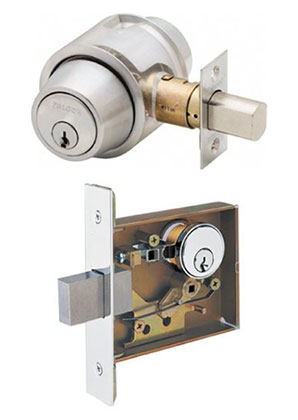
The deadbolt emerged specifically as a response to the spring latch's most glaring vulnerability: a thin card or tool slipped between a door and its frame could retract a spring latch in seconds. The deadbolt eliminated that flaw entirely by removing the spring from the equation. With no spring to overcome, there's nothing to shim or lop back — the bolt stays put.
How Standards Evolved
Today, deadbolts are graded by the American National Standards Institute (ANSI) and the Builders Hardware Manufacturers Association (BHMA). These grades — 1, 2, and 3 — quantify how much physical abuse a lock can absorb before failing. Grade 1 is the highest residential rating. Any exterior door lock should meet at least Grade 2; Grade 1 is the call for front doors and high-traffic entry points.

Understanding grade ratings matters before you buy. A Grade 3 lock can look identical to a Grade 1 on the shelf, but it won't survive the same number of kick attempts or impact forces. The same logic applies to safes — our article on safe burglary ratings shows how standardized resistance levels work across security hardware categories.
How Deadbolt Locks Work: Inside the Mechanism
The Core Components
To understand how deadbolt locks work at a mechanical level, you need to know what's inside the assembly. A standard deadbolt has five essential parts:
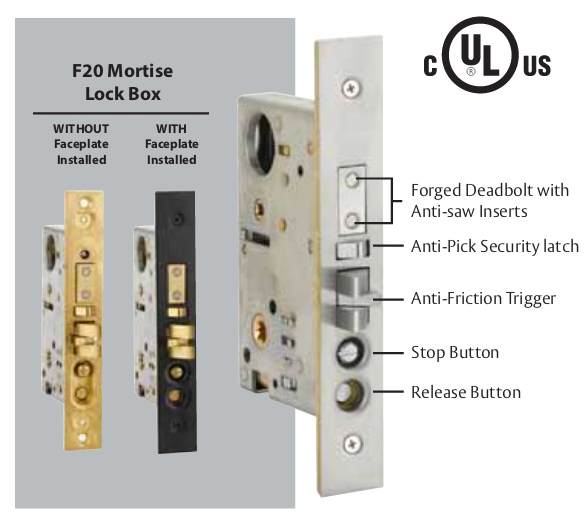
- The bolt — a hardened steel bar that extends into the door frame's strike plate when locked
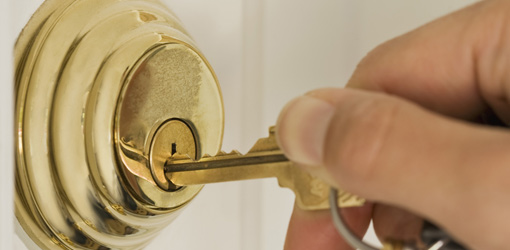
- The cylinder — the keyed plug on the exterior face where you insert your key
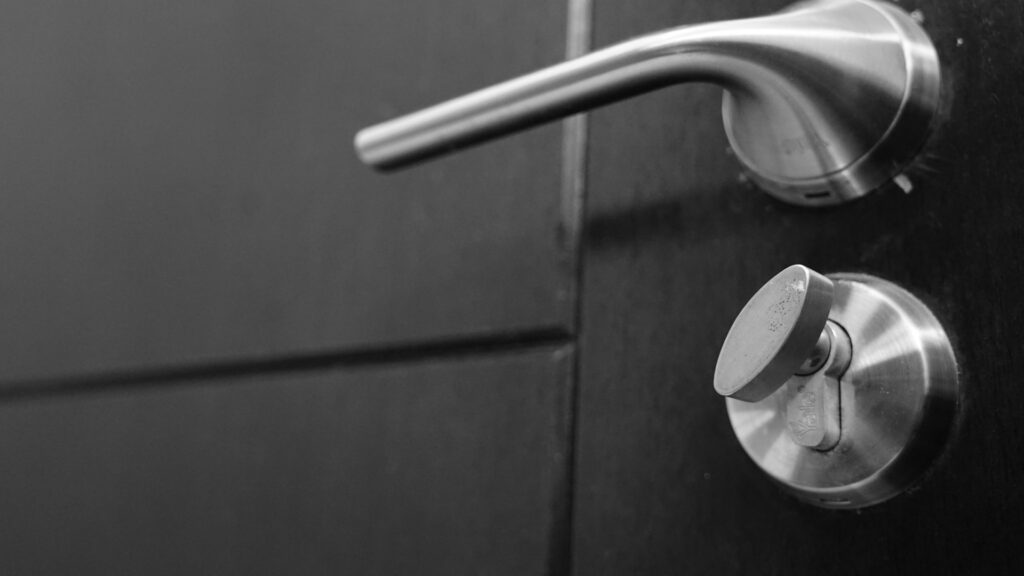
- The thumb turn — the interior rotating knob that locks and unlocks the bolt without a key
- The strike plate — the metal plate mounted to the door frame that the bolt slides into
- Pin tumblers — spring-loaded pins inside the cylinder that align at the shear line only when the correct key is inserted
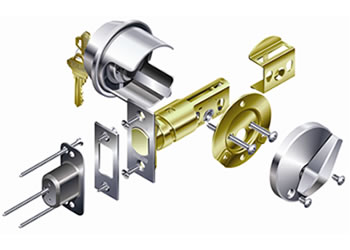
The bolt throw length matters. A standard deadbolt extends one inch into the strike plate. High-security models can reach 1.5 inches. The longer the throw, the harder the door is to force open — an extra half inch of steel in a reinforced strike plate changes the math on a kick-in attempt significantly.
The Locking Action Step by Step
Here's exactly what happens when you lock a deadbolt with a key:
- You insert the correct key, which lifts each pin tumbler to the precise shear line
- The cylinder rotates freely inside the housing
- The rotating cylinder drives a cam or connecting bar that pushes the bolt forward
- The bolt slides fully into the strike plate cavity on the door frame
- With no spring mechanism to retract it, the bolt holds position until you rotate the key or thumb turn in reverse
That last point is the defining feature. There is no passive mechanism to retract the bolt — it takes deliberate, rotational input. No credit card, no shimming, no bypassing through frame flex. The bolt is mechanically committed to its position.
Pro tip: The strike plate and its mounting screws are almost always the weakest link in a deadbolt installation — use 3-inch screws that anchor directly into the wall stud, not just the door frame trim.
Types of Deadbolts Compared
Single vs. Double Cylinder
The two most common configurations are single cylinder and double cylinder. The difference has real implications for both security and safety.
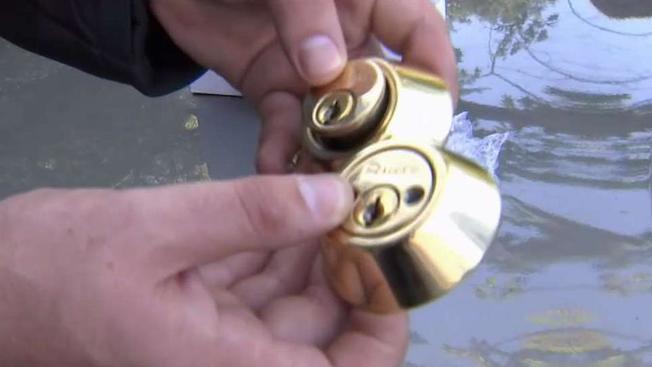
A single cylinder deadbolt uses a key on the exterior and a thumb turn on the interior — the standard for most residential exterior doors. A double cylinder requires a key on both sides, eliminating the interior thumb turn. That design resists break-ins where an intruder might break a glass panel to reach inside, but it also prevents quick egress during a fire. Most building codes and fire safety experts recommend single cylinder deadbolts on primary exit doors for exactly that reason.
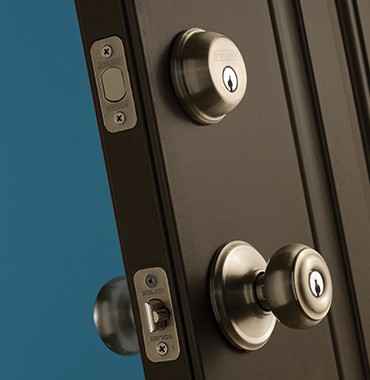
| Type | Exterior Access | Interior Access | Best For | Main Drawback |
|---|---|---|---|---|
| Single Cylinder | Key | Thumb turn | Standard exterior doors | Vulnerable near glass panels |
| Double Cylinder | Key | Key required | Doors with sidelights | Fire egress risk |
| Keypad / Smart | Keypad or app | Thumb turn or app | Keyless convenience | Battery dependency |
| Jimmy-Proof | Key | Thumb turn | Apartment and rental doors | More complex installation |
Smart Deadbolts and Keypad Options
Smart deadbolts use the same bolt mechanism as traditional models — the physical security level is equivalent. What changes is access method: keypad codes, smartphone apps, or biometric input replace the physical key. The Schlage Link Wireless Keypad Add-on Deadbolt is a strong example of how smart home integration works alongside a conventional deadbolt body.
Brand quality varies considerably across the deadbolt market. For a detailed side-by-side breakdown, our Schlage vs. Weiser comparison covers cylinder quality, bolt length, and price differences between two of the most recognizable names in residential hardware.
Deadbolt Strengths and Limitations
Where Deadbolts Excel
Deadbolts provide measurable, tested resistance against the most common forms of forced entry. Their core advantages are well established:
- Resist kick-in attacks when paired with a reinforced strike plate and long mounting screws
- Cannot be shimmed, lopped, or retracted by manipulating the door gap
- Grade 1 models are tested to withstand 10 strikes of 75 foot-pounds of force and 250,000 open/close cycles
- Compatible with door reinforcement kits that significantly increase door frame integrity
- High-security cylinders add anti-pick, anti-bump, and anti-drill protection on top of the baseline bolt strength
Real Limitations to Know

No lock is a complete security solution on its own. Deadbolts have real vulnerabilities you need to account for:
- Lock picking — Standard pin tumbler cylinders can be picked by a skilled person. Security pins (spool or serrated) make this significantly harder.
- Bump keys — A bump key opens most standard pin tumbler deadbolts in seconds. Anti-bump cylinders are a direct, affordable countermeasure.
- Door frame failure — Even a perfect deadbolt fails if the door frame splinters on the first kick. The frame is usually the first thing to give, not the lock body.
- Bypassing the door entirely — Windows, garage doors, and sliding glass doors are often softer targets. Our guide on home security essentials covers a full-perimeter approach.
Knowing these weaknesses doesn't diminish the value of a deadbolt — it means you pair it with other measures. For a look at how burglars actually assess entry points, read our piece on whether fake security cameras deter burglars.
How to Get the Most From Your Deadbolt
Installation Essentials
A Grade 1 deadbolt installed poorly is worth far less than a Grade 2 installed correctly. These installation steps are non-negotiable:
- Use 3-inch screws on both the strike plate and the door hinges — they must reach the wall stud behind the frame
- Confirm the bolt extends a full inch into the strike plate cavity, not just making contact with the plate surface
- Check that the door sits square in the frame — gaps allow the frame to flex under impact pressure
- Install a door reinforcement plate around the lock area if you have a hollow-core door; hollow-core wood fails quickly under force
For everything from door material selection to hinge reinforcement, our comprehensive guide on making your doors more burglar-proof covers every layer of entry point hardening.
Ongoing Maintenance and Smart Habits
Once installed, your deadbolt needs routine attention to keep performing at full capacity:
- Lubricate the cylinder once a year with graphite powder or a Teflon-based spray — never WD-40, which attracts dust and degrades the mechanism over time
- Always engage the deadbolt when you leave, not just the knob lock — knob locks alone offer minimal forced-entry resistance
- Replace a sticking or worn cylinder immediately; a lock that operates stiffly under normal conditions will fail under stress
- Rekey any deadbolt when you move into a new home — you cannot know how many copies of the existing key are in circulation
Fixing Common Deadbolt Problems and Planning Long-Term
Diagnosing Common Issues
Deadbolts are durable, but specific failure patterns appear over time. Here's what to look for and what to do:
- Stiff or sticky bolt — usually a misaligned door or dry cylinder. Lubricate first; if it persists, loosen the strike plate and reposition it slightly.
- Key turns but bolt doesn't move — the connecting mechanism between cylinder and bolt is likely stripped or broken. Replace the entire lock body.
- Bolt won't fully extend — the strike plate hole is probably misaligned. Loosen the plate, shift it to align with the bolt path, and re-tighten.
- Lock freezes in cold weather — apply silicone-based lubricant before the cold season, and keep a lock de-icer accessible.
Long-Term Security Planning
Your deadbolt is one component in a layered strategy — a strong mechanical line of defense, but not the whole picture. Over time, consider upgrading to a high-security cylinder with anti-pick, anti-bump, and anti-drill protection. Brands like Medeco, Abloy, and Mul-T-Lock manufacture aftermarket cylinders that fit most standard deadbolt housings without replacing the entire lock body. It's a cost-effective upgrade with a real security return.
The door itself needs to match the lock's capability. Solid-core wood and steel exterior doors absorb significantly more force than hollow-core alternatives. If you want a complete picture of top residential deadbolt options from a trusted manufacturer, the Schlage locks and door hardware overview is a thorough starting point for both new installations and upgrades.

Frequently Asked Questions
What is the difference between a deadbolt and a regular door lock?
A regular door lock uses a spring-loaded latch that retracts when the door closes and can often be bypassed by slipping a card or thin tool between the door and frame. A deadbolt uses a solid bolt with no spring — it moves only when you deliberately rotate a key or thumb turn. That single mechanical difference makes deadbolts dramatically more resistant to forced entry.
Can a deadbolt be kicked in?
Yes — but the deadbolt itself rarely fails first. It's almost always the door frame that splinters. A reinforced strike plate secured with 3-inch screws anchored into the wall stud changes the outcome significantly. Door frame reinforcement kits add another layer of resistance that makes a kick-in far more difficult to execute quickly.
What does ANSI Grade 1 mean for a deadbolt?
ANSI Grade 1 is the highest residential security rating issued by the American National Standards Institute. A Grade 1 deadbolt must pass 250,000 open/close cycles and withstand 10 strikes of 75 foot-pounds of force without failure. For any exterior door, Grade 1 is the standard you should aim for — Grade 2 is the absolute minimum.
Is a double cylinder deadbolt safer than a single cylinder?
A double cylinder deadbolt adds resistance in situations where a burglar might break a glass panel and reach inside to operate a thumb turn. However, it requires a key to exit from inside, which creates a serious egress risk in a fire. Most fire safety codes and security professionals recommend single cylinder deadbolts for any door that serves as a primary exit route.
How do smart deadbolts compare to traditional ones for security?
Smart deadbolts use the same bolt mechanism as traditional models, so the physical resistance level is equivalent. The difference is access method — keypad, app, or biometric instead of a physical key. The main risks with smart locks are battery failure and software vulnerabilities, but reputable brands include a mechanical key override as a failsafe. A smart lock is only as strong as its underlying bolt and cylinder quality.
How often should I rekey or replace my deadbolt?
Rekey whenever you move into a new home, lose a key, or end a relationship with someone who had access. Replace the full lock every seven to ten years, or immediately if it sticks, operates roughly, or shows visible wear. If the lock body is still sound, upgrading just the cylinder to a high-security replacement is a cost-effective alternative to full replacement.
Final Thoughts
Understanding how deadbolt locks work gives you a clear framework for making smarter security decisions — not just picking a lock off the shelf, but installing it correctly, maintaining it, and layering it within a broader home security strategy. Start by auditing what's on your doors right now: check the ANSI grade, test the bolt throw, and inspect those strike plate screws. If anything falls short, fix it before a problem forces your hand. Visit our full deadbolt locks resource hub to compare top-rated models, read hands-on reviews, and find the right option for your specific door setup.


About Robert Fox
Robert Fox spent ten years teaching self-defence in Miami before transitioning into home security consulting and writing — a background that gives him an unusually practical, threat-aware perspective on residential security. His experience spans physical security assessment, lock and alarm system evaluation, and the behavioral habits that make homes harder targets. At YourHomeSecurityWatch, he covers home security product reviews, background check and criminal records resources, and practical guides on protecting your property and family.
You can Get FREE Gifts. Furthermore, Free Items here. Disable Ad Blocker to receive them all.
Once done, hit anything below