Approximately 30 percent of lockbox owners forget their combination at least once, according to locksmith industry data. If you need to open a lockbox without code access, the situation feels urgent — but it is rarely permanent. Several legitimate methods exist, from manufacturer-assisted resets to careful mechanical techniques. This guide walks you through each approach in order of difficulty. For a broader overview of lockbox types and buying guidance, visit our lockbox guides page.
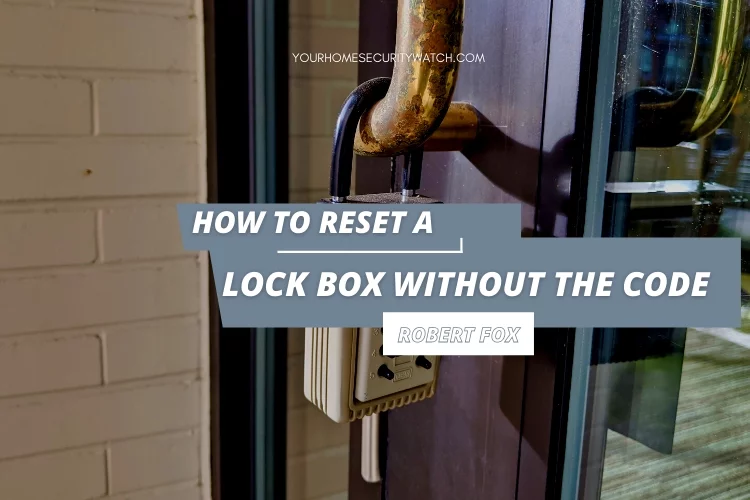
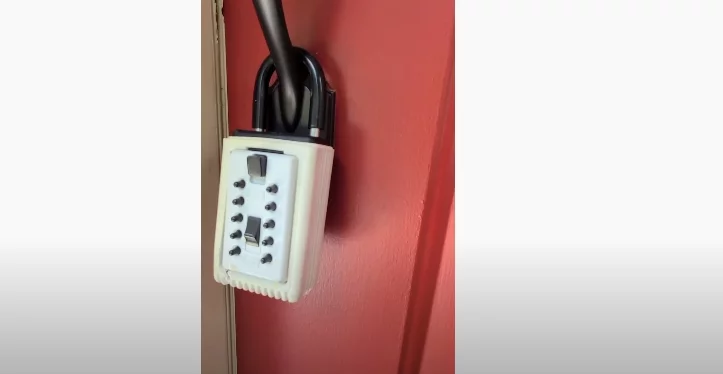
A lockbox (a compact, portable container secured by a combination dial or key mechanism) stores keys, medications, or small valuables. Real estate agents, caregivers, property managers, and homeowners all rely on them. Before attempting any entry method, confirm that you are the lawful owner. Attempting to open a lockbox without code authorization on another person's property is a criminal offense in most jurisdictions.
This guide focuses on mechanical combination lockboxes — the most widely used consumer type. Electronic lockboxes follow different recovery procedures. Work through the methods below in sequence. Start with the simplest approach before escalating to more technical techniques.
Contents
- Common Situations That Require Opening a Lockbox Without the Code
- Tools That Help You Open a Lockbox Without the Code
- Step-by-Step Methods to Open a Lockbox Without the Code
- What to Do When Standard Methods Fail
- Lockbox Security Myths You Should Stop Believing
- Mistakes That Damage Your Lockbox or Delay Access
- Frequently Asked Questions
- Next Steps
Common Situations That Require Opening a Lockbox Without the Code
Most people assume they will never forget a combination. In practice, lockouts occur regularly across several high-stakes settings. Understanding these scenarios helps you respond quickly and avoid making the situation worse.
Real Estate and Property Access
Real estate agents depend on lockboxes to store property keys for client showings. A forgotten or recently changed code halts a scheduled showing entirely. This disrupts appointments and can directly affect sales timelines.
- Always store combination codes in a secure, encrypted password manager.
- Listing brokers should maintain a secondary code record with the main office.
- Many MLS-approved lockboxes (MLS stands for Multiple Listing Service — a shared database of property listings for agents) offer administrative override access through the association's support team.
If you are a real estate professional in this situation, contact your MLS office before attempting any manual method. Administrative override is faster and carries no risk of damaging the device.
Caregiver and Medical Settings
Home caregivers often use lockboxes to secure medication keys or emergency access keys at a client's residence. A forgotten code in this context is a safety issue — not merely an inconvenience.
- Leave a secondary code on file with your supervising agency.
- Store codes in an encrypted file — not on a sticky note near the lockbox.
- If medication or emergency equipment is involved, contact the manufacturer's support line immediately after verifying ownership.
Most reputable lockbox brands offer emergency support by phone after verifying ownership through purchase documentation or device registration records.
Tools That Help You Open a Lockbox Without the Code
The tools you need depend entirely on the method you choose. Never use destructive tools as a first resort. In most cases, a basic household item is sufficient to regain access.
Basic Household Items
- A thin metal shim — cut from an aluminum can and folded into a U-shape
- A bobby pin or straightened paper clip for feel-based decoding
- A tension wrench improvised from a second bobby pin
- A flashlight for better visibility of the dial and shackle gap
- Lubricant spray (WD-40 or a dry graphite lubricant) for corroded or stiff dials
These items are effective on low-security combination lockboxes. If your lockbox uses a padlock-style shackle, our guide on how to open a padlock without a key covers the shackle release process in additional detail. For improvised picking tools and the underlying principles of tension manipulation, our article on how to pick a lock with a paper clip provides a useful beginner introduction.
Professional-Grade Tools
- A lock pick set — includes tension wrenches, hook picks, and rake picks
- A combination decoding device — used by professional locksmiths to read disc positions
- A borescope camera — allows visual inspection of the internal cam and disc mechanism
Professional tools require practice. Misuse can permanently damage the lock. If you have never used lock picks before, practice on a dedicated training lock before attempting entry on a real device.
| Method | Tools Required | Skill Level | Risk of Damage | Avg. Time |
|---|---|---|---|---|
| Manufacturer Reset | Phone, serial number | Beginner | None | 15–60 min |
| Shim Method | Aluminum shim | Beginner | Low | 5–15 min |
| Feel Method | Bobby pin or pick | Intermediate | Low | 10–30 min |
| Professional Pick Set | Lock pick set | Advanced | Medium | 15–45 min |
| Licensed Locksmith | None required from you | None required | Minimal | 30–90 min |
Step-by-Step Methods to Open a Lockbox Without the Code
Work through these methods in the order they appear. Begin with the simplest. Only escalate if the previous method has genuinely failed after a full attempt.
Manufacturer Reset
This is always the correct first step. Most combination lockboxes have a reset procedure that the manufacturer supports by phone or through an online portal. Locate the serial number — it is typically stamped on the bottom or back of the device. Contact customer support with the serial number and proof of purchase. Ownership verification is required.
- Master Lock: 1-800-308-9244
- Kidde: 1-800-880-6788
- Supra and SentriLock: contact through your MLS association
This method carries no risk of damage and should never be skipped. If your device is a combination-secured gun safe rather than a standard lockbox, the process is comparable. Our guide on how to open a Stack-On gun safe combination lock documents a similar manufacturer-supported reset in detail.
The Shim Method
The shim method targets the shackle latch directly. It is most effective on single-locking shackle mechanisms. A shim (a thin, folded strip of metal) bypasses the latch without interacting with the combination discs.
- Cut a strip from an aluminum soda can — approximately 2 cm wide and 5 cm long.
- Fold the strip into a U-shape so both ends are parallel.
- Insert both ends of the U into the shackle hole on the latch side of the device.
- Push the shim down firmly while applying upward pressure on the shackle.
- The latch should disengage if the lockbox uses a single-locking mechanism.
Double-locking shackles have latches on both sides and require two shims applied simultaneously. This method bypasses the latch — it does not recover your code. After gaining entry, reset the combination immediately. For non-combination devices, our guide on how to open a safe without a key covers related bypass techniques for key-operated storage.
The Feel Method (Combination Decoding)
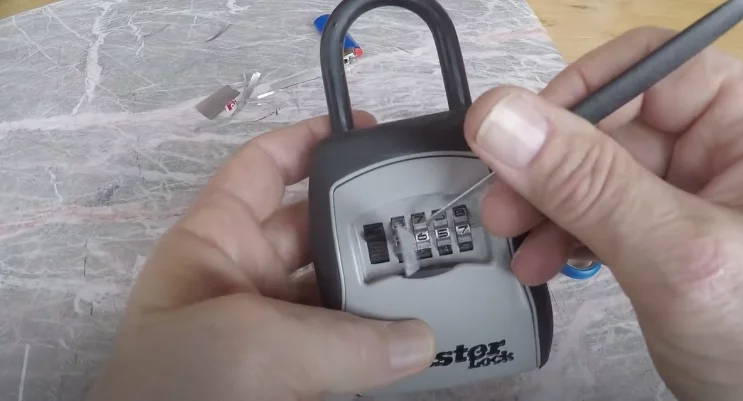
The feel method exploits small manufacturing tolerances in combination dials. It requires patience and a sensitive touch. It works best on inexpensive lockboxes with loose internal tolerances.
Step 1: Insert a thin pick or bobby pin into the gap near the first dial. Apply gentle, consistent upward pressure on the shackle. Rotate the dial slowly in one direction, feeling for a subtle click or increased resistance at any digit position.
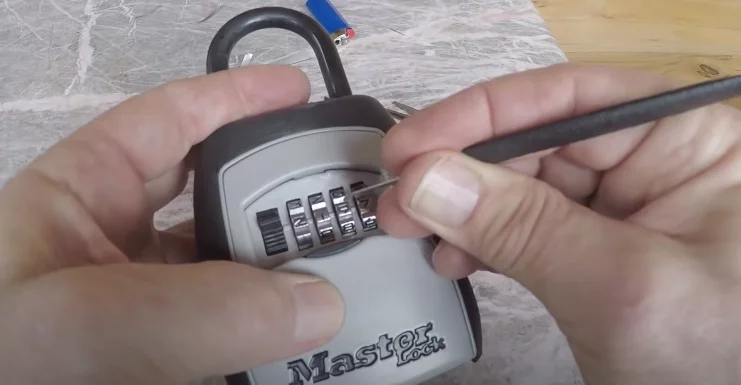
Step 2: When the dial reaches its binding position — the point where the internal disc (wheel) aligns with the latch notch — you will feel a distinct change in resistance. Note that digit. Release tension and move to the next dial.
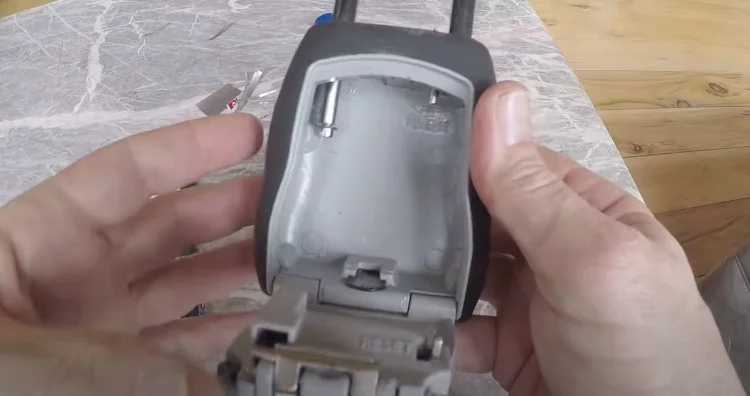
Step 3: Repeat the process on each remaining dial. Once all discs are aligned, pull the shackle firmly upward. It should release. Work in a quiet environment — background noise masks the subtle tactile feedback this method depends on.
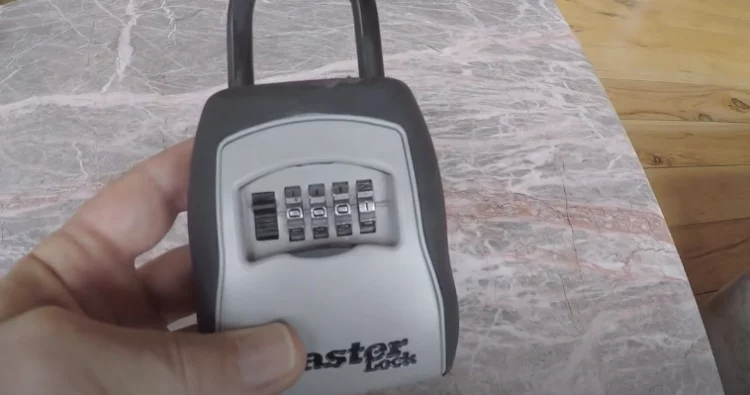
For four-dial lockboxes, the same principle applies across all four positions. Our guide on how to open a 4 number combination lock provides additional detail on applying the feel method to longer codes.
What to Do When Standard Methods Fail
If the manufacturer reset, shim method, and feel method have all failed, a specific underlying problem may be present. Work through the following checks before calling a professional.
Stuck or Corroded Dials
A dial that turns stiffly or not at all usually indicates internal corrosion. This is especially common in lockboxes stored outdoors or in humid environments.
- Apply a small amount of lubricant spray into the dial gap. Wait two minutes before turning.
- Rotate the dial gently back and forth to distribute the lubricant throughout the mechanism.
- Do not use oil-based lubricants on electronic lockboxes — use a dry graphite lubricant instead.
- If the dial spins freely with no resistance at all, the internal cam may be broken and requires professional service.
According to the Wikipedia entry on security locks, moisture and temperature fluctuation are among the leading causes of mechanical lock failure. Applying lubricant every six months prevents most corrosion-related lockouts before they occur.
When to Call a Locksmith
A licensed locksmith is the correct next step when all other methods have been exhausted. Do not resort to bolt cutters or drilling as an alternative — these destroy the device and leave no diagnostic information about what failed.
- A locksmith can open most consumer combination lockboxes without damage.
- Standard lockbox opening typically costs between $50 and $150.
- Verify the locksmith's license — most states require licensure for this service.
- Ask whether the locksmith can reset the combination on-site after opening.
A professional service preserves the device for continued use. It also provides a paper trail confirming legitimate access — relevant if your ownership is ever questioned.
Lockbox Security Myths You Should Stop Believing
Several widespread beliefs about lockbox security are inaccurate. Acting on these myths leads to poor purchasing choices — or unnecessary damage during a lockout.
Myth: A Longer Code Means Better Security
Many buyers choose a lockbox based solely on how many digits the combination contains. In practice, build quality determines security far more than code length. A poorly manufactured six-digit lockbox is often easier to decode via the feel method than a well-built three-digit model. Looser manufacturing tolerances make binding positions more detectable — regardless of how many dials are present.
- High-security lockboxes use ball-bearing shackles and tighter disc tolerances to resist decoding.
- Code length matters primarily against brute-force attempts — not feel-based manipulation.
- Look for lockboxes with independent security ratings, not just digit count claims.
Understanding what makes a lock mechanically sound helps you choose the right device from the start. Our article on characteristics of a high-quality mechanical deadbolt explains the engineering features that determine real-world resistance — many of which apply directly to combination lockbox mechanisms.
Myth: You Must Destroy the Lock to Get Back In
This is the most damaging myth in lockbox recovery. Many people reach immediately for bolt cutters or a drill, believing no other option exists. In the vast majority of consumer lockbox scenarios, non-destructive methods succeed.
- Manufacturer resets resolve most lockouts with no physical intervention required.
- The feel method opens most low-security combination lockboxes intact.
- A licensed locksmith can open virtually any consumer lockbox without destruction.
- Destructive entry may raise legal questions if ownership cannot be independently verified.
Some individuals also attempt heat-based methods on stubborn locks. Our article on how to open a lock with matches discusses this approach. It is rarely effective on combination lockboxes and carries a real risk of warping internal components. Treat it as a genuine last resort — and only when you have confirmed ownership beyond any doubt.
Mistakes That Damage Your Lockbox or Delay Access
Even well-intentioned effort can worsen a lockout. These are the most common errors people make when they cannot recall their combination — and how to avoid them.
Using Excessive Force
Pulling hard on the shackle, twisting the dial forcefully, or striking the lockbox body rarely opens a quality device. Force deforms internal components and can permanently jam the mechanism — leaving you with a lockbox that is simultaneously locked and broken.
- Apply only gentle, consistent upward pressure on the shackle during decoding attempts.
- Never use a hammer or mallet on the dial, body, or shackle of a lockbox.
- If resistance is abnormal, stop immediately and apply lubricant before continuing.
- Forcing a lockbox typically voids the manufacturer warranty and eliminates your reset options.
Skipping the Manufacturer Reset
The most common mistake is bypassing the manufacturer reset and going directly to manual techniques. The reset is free, carries no risk of damage, and resolves the majority of combination lockouts. Many people skip it because they do not have the serial number accessible or are reluctant to wait for customer support. This is a false economy.
- Register your lockbox with the manufacturer upon purchase — verified owners receive faster support.
- Photograph the serial number and store the image in a secure, encrypted location.
- Keep the original receipt — manufacturers require it for warranty and support verification.
- Only proceed to manual techniques after the reset option has been genuinely exhausted.
Patience in the early stages prevents the need for more invasive — and potentially costly — interventions later. Most lockouts that end in a damaged device could have been resolved with a single phone call to the manufacturer.
Frequently Asked Questions
Is it legal to open a lockbox without the code?
It is legal if you are the verified, rightful owner of the device. Attempting to open a lockbox without code authorization on another person's property is illegal in most jurisdictions and may constitute breaking and entering or theft. Always confirm ownership before taking any action.
What is the easiest way to open a lockbox without the code?
The easiest method is a manufacturer-assisted reset. Contact the brand's customer support line with your serial number and proof of purchase. This approach carries no risk of damage and resolves the majority of lockouts without any physical intervention on your part.
Can a locksmith open any combination lockbox?
A licensed locksmith can open the vast majority of consumer-grade combination lockboxes. High-security or commercial-grade devices may require specialized equipment or manufacturer authorization. In either case, a qualified locksmith can advise you on the most appropriate course of action for your specific device.
How long does the feel method take?
The feel method typically takes between 10 and 30 minutes on a low-security combination lockbox. The actual duration depends on the number of dials, the quality of the internal mechanism, and your level of experience with the technique. A quiet environment and a slow, deliberate approach consistently produce the best results.
Will the shim method work on all lockboxes?
The shim method works on single-locking shackle mechanisms, which are common in entry-level combination lockboxes. Double-locking shackles require two shims applied simultaneously. High-security lockboxes with ball-bearing shackles are generally resistant to shimming and require a different entry approach.
How can I prevent being locked out of my lockbox in the future?
Store your combination code in an encrypted password manager, photograph your serial number at the time of purchase, and register the device with the manufacturer. For shared lockboxes, keep a secondary code on record with a trusted individual or organization. Consider purchasing a lockbox model that includes a physical key override for emergency backup access.
Next Steps
- Locate your lockbox's serial number now — photograph it and save the image in an encrypted cloud folder so it is accessible from anywhere if a lockout occurs.
- Register your lockbox with the manufacturer today — registered owners receive faster emergency support and may qualify for administrative override access.
- Save your combination code in an encrypted password manager — do not rely on memory or an unencrypted written record stored near the device.
- Attempt a manufacturer reset before any physical method — call the support line with your serial number and proof of purchase as your first response to any lockout situation.
- If manual techniques become necessary, begin with the shim method, then the feel method — and contact a licensed locksmith before considering any approach that risks damaging the device.


About Robert Fox
Robert Fox spent ten years teaching self-defence in Miami before transitioning into home security consulting and writing — a background that gives him an unusually practical, threat-aware perspective on residential security. His experience spans physical security assessment, lock and alarm system evaluation, and the behavioral habits that make homes harder targets. At YourHomeSecurityWatch, he covers home security product reviews, background check and criminal records resources, and practical guides on protecting your property and family.
You can Get FREE Gifts. Furthermore, Free Items here. Disable Ad Blocker to receive them all.
Once done, hit anything below