Poolguard PGRM-2 In-Ground Pool Alarm: Setup, Features & Safety Guide
by Robert Fox
If you want the best in-ground pool alarm system without a complicated setup, the Poolguard PGRM-2 is the answer. It detects unauthorized water entry within seconds, triggers a piercing alarm indoors and outdoors, and requires no tools, no app, and no professional installer. Browse our full pool alarm comparison if you want to weigh more options — but for most homeowners, this is the unit to get.
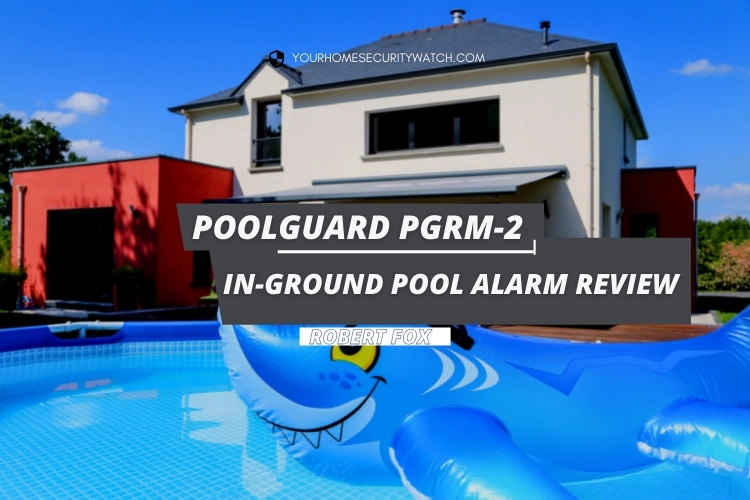
The PGRM-2 uses subsurface wave detection. A sensor arm extends just below the water surface and identifies the specific wave signature of a body entering the pool. Rain, wind, and normal splashing don't trigger it — the unit filters surface disturbances and focuses exclusively on the subsurface entry pattern. CDC drowning data shows most fatal incidents involving young children happen silently within two minutes. An immediate audible alert is the difference between a close call and a tragedy.
Smart pool safety doesn't stop at the waterline. Pair the PGRM-2 with a locked gate — a smart deadbolt like the Kwikset SmartCode 913 fits most pool gate hardware — and you add two independent barriers between an unsupervised child and the water.
Contents
How the PGRM-2 Stacks Up Against Other Pool Alarms
The pool alarm market has plenty of options. Understanding where the Poolguard PGRM-2 sits — and why it consistently ranks among the best in-ground pool alarm systems available — starts with a direct side-by-side comparison.
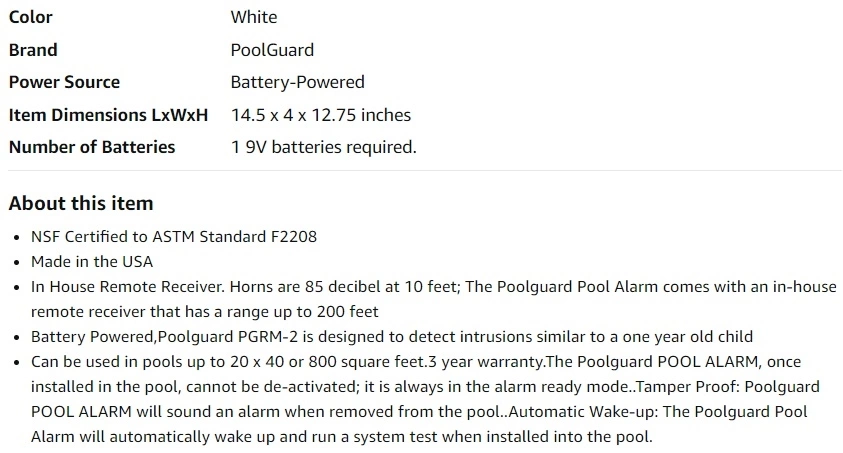
Key Specs at a Glance
| Feature | Poolguard PGRM-2 | PoolEye PE23 | Safety Turtle 2.0 |
|---|---|---|---|
| Detection Type | Subsurface wave | Subsurface wave | Wristband immersion |
| Poolside Alarm Volume | 85 dB | 85 dB | N/A (base station only) |
| Remote Receiver Included | Yes | No (sold separately) | Yes |
| False Alarm Filtering | Yes — subsurface only | Yes — subsurface only | N/A (contact trigger) |
| ASTM F2208 Certified | Yes | Yes | Yes |
| Typical Street Price | ~$130–$150 | ~$150–$175 | ~$150–$200 |
| Best Suited For | In-ground pools | In-ground pools | Children in swimwear |
What the Specs Mean in Practice
- Subsurface detection beats wristband alarms for passive coverage. You don't need to remember to put anything on a child — it's always watching.
- The remote receiver lets you hear the alarm from inside your house. PoolEye charges extra for that same feature.
- ASTM F2208 certification confirms the unit meets the national safety standard for pool alarms. Several states legally require it — it's not optional.
- At $130–$150 with the receiver included, the PGRM-2 undercuts competitors while offering the same core detection performance.
Who the Poolguard PGRM-2 Is Built For
This alarm isn't a one-size-fits-all product. Here's where it excels — and a few specific situations where it proves indispensable.
Families With Young Children
This is the core use case. The PGRM-2 is engineered around one scenario: a toddler or young child entering the pool unattended. It doesn't require the child to wear a device or trigger a sensor manually — the moment they hit the water, the alarm fires.
- Arm it every single time the pool is not in active use.
- Use service mode (hold the button for three seconds) while adults are swimming, then re-arm when done.
- Place the remote receiver in your bedroom for overnight monitoring coverage.
- Combine with a self-latching pool gate — the same layered approach explained in our child window safety guide applies directly to pool perimeters.
Pet Owners
Dogs, especially water-loving breeds, can fall into a pool and tire before you reach them. The PGRM-2 detects pet entry just as reliably as human entry — body mass and displacement are what trigger it.
- If your dog has outdoor access through a pet door — see our review of the PetSafe Freedom Aluminum Pet Door for a sense of how easily dogs roam unsupervised — a pool alarm fills the critical gap.
- Boundary training reduces the risk further. Our guide on dog training for home security scenarios covers how to keep dogs away from hazardous zones like pool edges.
Vacation and Rental Properties
If you rent a property with a pool, a pool alarm is increasingly required by local ordinance — and it's smart risk management regardless of whether it's mandated. The PGRM-2 has no Wi-Fi dependency, no app login, and no subscription fee, making it ideal for properties you can't monitor in person.
- It operates independently from your home network — no connectivity means no failure point.
- Add a privacy hedge around the pool perimeter to reduce uninvited entry from outside the property line.
- The unit's tamper-resistant housing holds up to weather and to guests who don't treat equipment carefully.
Pool Alarm Myths That Could Put Your Family at Risk
Plenty of pool owners skip alarms based on assumptions that sound reasonable but don't hold up. Here's the truth behind the most common ones.
A Fence Is Enough
A pool fence is essential. But fences have gates, gates get left open, and determined toddlers climb. A fence and a pool alarm are not interchangeable — they're partners. The alarm is your last line of defense when the physical barrier fails. No single layer is ever enough.
Pro tip: Use a self-closing, self-latching gate and a pool alarm together — not one or the other. Each independent layer you add multiplies your total reaction window.
My Kids Know How to Swim
Swimming ability doesn't prevent drowning. Children panic, tire, hit their heads on the pool edge, or get pulled under by suction near drains. Even confident swimmers drown every year. The alarm triggers on entry — regardless of the reason — giving you the seconds you need to respond.
It Goes Off Constantly in the Rain
This is the myth that stops more people from buying than any other. The Poolguard PGRM-2 is designed specifically to ignore surface disturbances. Rain creates shallow, high-frequency ripples at the surface. A body entering the water creates a deep, sudden pressure wave below the surface. The sensor reads subsurface displacement, not surface chop — and in properly installed real-world use, rain-triggered false alarms are rare.
Warning: False alarms are almost always caused by incorrect sensor arm depth — not rain. Follow the calibration steps in the manual precisely; arm depth is the single most critical part of the install.
Installation, Configuration & Troubleshooting
The PGRM-2 is one of the most straightforward pool alarms to install. You don't need an electrician or a plumber. Here's how to do it right the first time.
Step-by-Step Installation
- Mount the base unit on the pool coping (the concrete or stone lip surrounding the pool) using the included hardware. Choose a spot where the arm reaches the water cleanly.
- Lower the sensor arm into the water. The tip should sit 6–8 inches below the waterline — not at the surface, not deeper than 10 inches.
- Insert the 9V battery into the poolside unit and close the battery compartment firmly.
- Press the arm button to activate. The unit beeps once to confirm it's armed and monitoring.
- Plug in the remote receiver indoors. It pairs automatically via radio frequency (RF) with the poolside unit — no manual pairing needed out of the box.
- Place the remote receiver in your bedroom, kitchen, or living room — anywhere you spend time when the pool isn't in active use.
Common Issues and Fixes
- Alarm triggers without anyone entering: The sensor arm is set too shallow. Lower it to the correct 6–8 inch depth and re-test.
- Alarm fails to trigger on water entry: Replace the 9V battery. A weak battery is the single most common cause of missed detections.
- Remote receiver doesn't sound: Confirm it's within 200 feet of the poolside unit. Concrete walls and metal structures reduce RF range — try moving the receiver closer to an exterior wall.
- Unit won't arm: Make sure the pool surface is calm before attempting to arm. The PGRM-2 checks for baseline wave activity at arm-up and will not arm if it detects motion in the water.
Pairing the Remote Receiver
If the remote receiver loses sync after a battery replacement, hold the pair button on the receiver's back panel for five seconds while the poolside unit is armed. The receiver emits two beeps confirming the link is restored. The whole process takes under thirty seconds and doesn't require any tools.
Full Cost Breakdown: Is the Poolguard PGRM-2 Worth It?
Choosing the best in-ground pool alarm system means looking past the sticker price. Here's the complete picture of what you'll actually spend.
Purchase Price vs. Long-Term Value
- Unit price: $130–$150 at most retailers, with the remote receiver included
- Annual battery cost: One 9V for the poolside unit, one AA pack for the receiver — roughly $5–$8 per year total
- No subscription, no app, no cloud fee — ever
- A two-year manufacturer warranty comes standard, matching the industry norm for this category
Compare that to wristband-based systems costing $150–$200 that require a wristband per child, replacement bands, and the discipline to put one on every time a child is near the pool. Over three to four years, the PGRM-2 consistently costs less.
Hidden Costs to Plan For
- Pool fence (if required or absent): $1,500–$4,000 depending on pool size and fence material — legally required alongside alarms in several states
- Additional remote receivers: Around $30–$40 each if you want coverage in multiple rooms simultaneously
- Seasonal storage: If you remove the unit during winter, you'll want a weatherproof space — our roundup of outdoor storage sheds covers options for safely storing pool equipment between seasons
- Camera coverage: The alarm tells you someone entered the pool; a camera shows you who and what happened. Our review of the LaView PoE security camera system covers a full outdoor setup that pairs well with the PGRM-2
Frequently Asked Questions
Does the Poolguard PGRM-2 work for above-ground pools?
The PGRM-2 is specifically designed and rated for in-ground pools. Above-ground pool walls are thinner and shaped differently, making it difficult to mount the base unit and position the sensor arm correctly. Poolguard makes a separate model — the PGAR-2 — designed for above-ground pool installations. Stick with the right model for your pool type to ensure reliable detection.
How loud is the Poolguard PGRM-2 alarm?
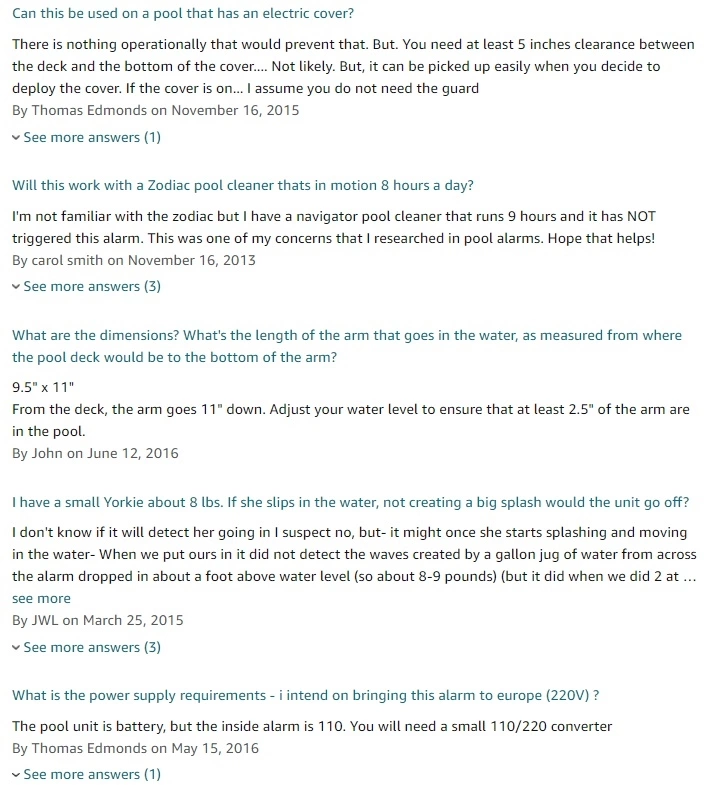
The poolside unit produces an 85-decibel alarm — roughly equivalent to a loud lawn mower heard at close range. The included remote receiver sounds a separate alarm inside your home. Both trigger simultaneously, so you'll hear it whether you're in the backyard or inside with the TV on. The alarm continues until you manually silence it using the keypad code.
What happens if the battery dies — does the unit alert you?
Yes. The PGRM-2 emits a low-battery chirp when the 9V battery drops below the safe operating threshold, similar to a smoke detector warning. You won't lose coverage without warning. That said, replace the battery at the start of every pool season regardless — don't wait for the chirp.
Is a pool alarm legally required?
It depends on your state and municipality. States including California, Florida, Texas, and New Jersey have pool safety laws that require one or more approved barriers — and in some jurisdictions a certified pool alarm satisfies or contributes to that requirement. Check your local building code before installation. The PGRM-2's ASTM F2208 certification is the standard most state laws reference when they specify "approved pool alarm."
Key Takeaways
- The Poolguard PGRM-2 is one of the best in-ground pool alarm systems under $150, with subsurface wave detection, an 85 dB poolside alarm, and a remote receiver included in the box.
- False alarms from rain are rare when the sensor arm is installed at the correct 6–8 inch depth — depth calibration is the most important step in the setup process.
- This alarm works best as one layer in a complete safety system that also includes a self-latching pool gate, a gate lock, adult supervision, and optionally a security camera covering the pool area.
- With no subscription fees and battery costs under $10 a year, the PGRM-2 delivers long-term value that wristband-based alternatives struggle to match over a full pool season.


About Robert Fox
Robert Fox spent ten years teaching self-defence in Miami before transitioning into home security consulting and writing — a background that gives him an unusually practical, threat-aware perspective on residential security. His experience spans physical security assessment, lock and alarm system evaluation, and the behavioral habits that make homes harder targets. At YourHomeSecurityWatch, he covers home security product reviews, background check and criminal records resources, and practical guides on protecting your property and family.
You can Get FREE Gifts. Furthermore, Free Items here. Disable Ad Blocker to receive them all.
Once done, hit anything below