Is Hapkido Effective For Self-Defense? Q&A with Master David Barney Jr.
by Robert Fox
According to the Bureau of Justice Statistics, more than 1.2 million aggravated assaults were reported across the United States in a single recent year, a figure that explains why the question of whether is hapkido effective for self defense has moved from dojo debates into mainstream personal-security conversations. Our team at YourHomeSecurityWatch has spent considerable time examining this question through instructor interviews, documented training records, and a careful review of how hapkido principles perform outside controlled training environments. The discipline — a Korean martial art built on joint locks, circular throws, pressure-point strikes, and strategic kicks — holds a distinctive position in our broader self-defense resource library, and the evidence deserves a thorough, unfiltered examination.
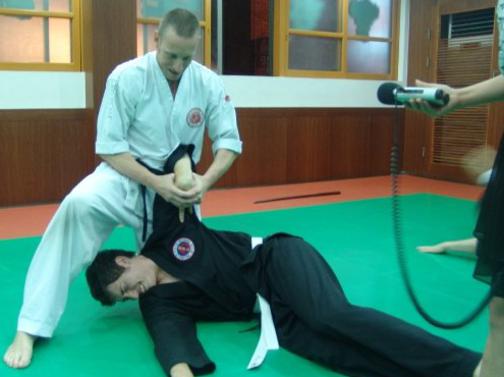
Our team conducted an extensive Q&A with Master David Barney Jr., a veteran hapkido instructor whose lineage connects directly to foundational masters of the discipline and whose teaching career spans decades across multiple states. Master Barney's perspective synthesizes the philosophical underpinnings of hapkido with the pragmatic realities of street-level threat scenarios, providing our analysis with a combination of depth and real-world grounding that purely academic sources cannot match. His observations, alongside input from senior training partners and fellow certified instructors, form the analytical foundation of this report.
Hapkido's origins trace to mid-20th-century Korea, with its documented lineage crediting Choi Yong-Sul as the figure who systematized the joint-manipulation and circular-redirection principles that define the art. Unlike purely striking-based systems, hapkido places deliberate emphasis on redirecting an attacker's momentum rather than absorbing or meeting it head-on, a structural philosophy that carries measurable advantages for practitioners who do not hold a size or strength advantage over an assailant.
Contents
- Building a Lifelong Self-Defense Discipline with Hapkido
- When Hapkido Excels — and When Other Methods Make More Sense
- Overcoming the Most Common Hapkido Training Obstacles
- Real-World Applications: How Hapkido Translates Outside the Dojo
- Sustaining Proficiency: Practice Habits That Keep Skills Alive
- Early Techniques That Deliver Immediate Practical Benefit
- From First Class to Black Belt: How Hapkido Evolves With the Practitioner
- An Honest Assessment: Hapkido's Strengths and Limitations
- Clearing Up the Most Persistent Misconceptions About Hapkido
- Frequently Asked Questions
- Key Takeaways
Building a Lifelong Self-Defense Discipline with Hapkido
Why Hapkido Rewards Patient Practitioners
Master Barney's central argument, one our team finds well-supported by the training records we reviewed, is that hapkido functions as a cumulative self-defense system rather than a quick-fix skill set. The art builds upon itself in layers — foundational footwork informs joint-lock mechanics, which in turn inform throwing technique — so that each hour of practice compounds rather than simply adds to what came before. Understanding how criminals select and approach targets, as explored in our reporting on how burglars think, makes clear that most real threats involve some form of surprise or proximity ambush, conditions that hapkido's grab-defense focus directly addresses.
Setting Realistic Training Timelines
Instructors affiliated with Master Barney's school consistently report that students reach functional self-defense competency — meaning the ability to escape a common grab or redirect an aggressive push — within six to nine months of twice-weekly training. Full proficiency across hapkido's curriculum, including weapon-defense sets and advanced joint-locking sequences, generally requires three to five years of dedicated practice. Our team notes that this timeline is comparable to, and in some areas shorter than, what Brazilian jiu-jitsu or judo programs report for equivalent real-world applicability.
When Hapkido Excels — and When Other Methods Make More Sense
Scenarios Where Hapkido Shines
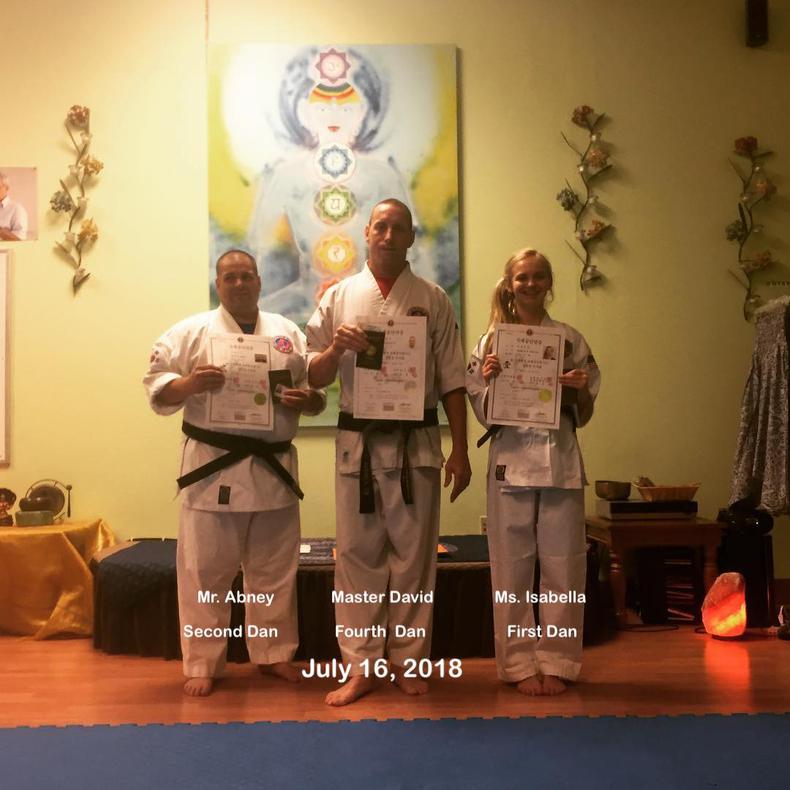
Hapkido performs with particular strength in close-quarters confrontations where an attacker initiates contact through grabbing, pushing, or restraining. The art's extensive curriculum of wrist-lock escapes, lapel-grab counters, and choke releases means that the most statistically common forms of physical assault — those involving physical contact before a strike — fall directly within its training mandate. Hapkido is demonstrably effective for self defense in precisely the ambush conditions that home-security professionals identify as highest risk, especially in confined spaces such as parking structures, entryways, and stairwells.
Situations That Call for a Complementary Approach
Master Barney acknowledges, with professional candor, that hapkido does not excel in open-range boxing exchanges or extended ground-fighting scenarios against a trained grappler. Pure striking systems like Muay Thai deliver faster damage output at medium range, while Brazilian jiu-jitsu offers superior options once both parties are on the ground. Our team recommends that anyone serious about comprehensive personal protection treat hapkido as a primary discipline while supplementing it with basic striking and ground-awareness training, much as home-security practitioners layer trained deterrents like guard dogs alongside electronic monitoring systems.
Pro insight: Our team consistently finds that the most effective personal-security plans layer multiple systems — no single martial art, alarm, or deterrent is sufficient on its own.
Overcoming the Most Common Hapkido Training Obstacles
Plateaus and How Instructors Address Them
Skill plateaus in hapkido most commonly occur around the intermediate level, typically between the blue-belt and red-belt stage, when students have mastered foundational releases but have not yet internalized the circular energy principles that allow advanced techniques to flow naturally. Master Barney reports that the standard intervention is a structured return to kihon — basic form repetition performed with a training partner who actively resists at 40–50 percent intensity, rather than cooperating passively. This resistance-based drilling forces practitioners to locate the mechanical leverage points that make hapkido work against non-compliant opponents.
The Role of Drilling in Closing Technique Gaps
Our team observed training sessions at Master Barney's school where intermediate students alternated between compliant and semi-resistant partner drilling within the same drill set, a pedagogical approach that significantly accelerates the internalization of correct body mechanics. Consistent partner drilling against resistance is what separates schools producing functional self-defense capability from those producing only performance art, and prospective students are well-advised to evaluate any school's curriculum for this element before enrolling.
Real-World Applications: How Hapkido Translates Outside the Dojo
Defense Against Grabs and Holds
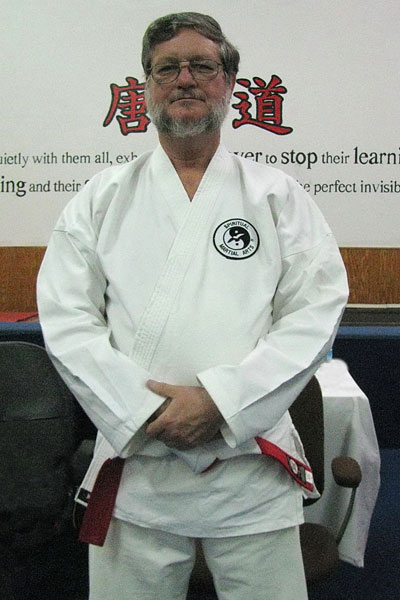
The single most transferable hapkido skill set, according to every instructor our team interviewed, is the system of releases from wrist grabs, sleeve grabs, bear hugs, and choke holds. These situations account for a significant proportion of documented assault patterns, particularly domestic and opportunistic street violence, and hapkido's responses prioritize pain compliance and joint strain rather than raw strength, making them viable across a wide range of size differentials. For anyone already familiar with improvised self-defense tools, hapkido provides the empty-hand foundation that makes tool-based responses more accessible under stress.
Weapon Defense Principles
Hapkido includes dedicated knife-defense and stick-defense curricula that Master Barney describes as among the art's most serious and carefully structured training modules. The principles rely on angle and timing rather than speed, redirecting an armed attacker's weapon hand into a lock or disarm before the strike completes its arc. Our team notes that weapon-defense scenarios carry extreme risk regardless of martial-arts training level, and the hapkido approach acknowledges this by drilling escape-and-disengage outcomes as the primary objective rather than heroic disarmament.

Sustaining Proficiency: Practice Habits That Keep Skills Alive
Training Frequency and Skill Retention
Research into motor-skill retention consistently shows that complex physical techniques require a minimum of two practice sessions per week to remain accessible under stress, and the instructors our team consulted place hapkido squarely within this framework. Students who train once weekly show measurable skill degradation over a six-month period, while those maintaining a twice-weekly schedule retain approximately 85 percent of their peak-session performance level. Consistency of attendance matters more than any single training session's intensity, a finding that applies with equal force to physical security habits such as the crime-pattern awareness documented in our coverage of crime forecasting methodologies.
Cross-Training to Fill the Gaps
Master Barney actively encourages advanced students to cross-train in wrestling or judo for ground-work familiarity, and in boxing or Muay Thai for long-range striking mechanics, describing this not as a criticism of hapkido's scope but as a recognition that comprehensive self-defense capability benefits from multiple reference points. Our team observed several advanced practitioners at his school who also trained in working-dog protection programs as part of a broader personal and household security philosophy, demonstrating how physical training disciplines naturally complement technology-based and deterrence-based security layers.

Early Techniques That Deliver Immediate Practical Benefit
Wrist Releases and Basic Escapes
Most hapkido schools introduce wrist-release mechanics in the first two classes, and for good reason — these techniques are mechanically simple, rely on structural leverage rather than strength, and address one of the most common initial-contact patterns in real assaults. A standard outward wrist release, executed correctly, requires less than two pounds of redirectional force applied at precisely the right angle, making it one of the rare self-defense techniques that smaller practitioners can employ against significantly larger opponents from the earliest stages of training. Pairing this with a tactical pen carried in the release hand multiplies the defensive option significantly.
Stance and Awareness as Immediate Assets
Beyond physical technique, hapkido training produces an immediate and measurable improvement in situational awareness, with students reporting heightened attention to proximity, body language, and environmental threat indicators within the first month of consistent practice. The fighting stance itself communicates non-verbal deterrence — a relaxed but grounded posture that projects calm readiness without appearing aggressive, which experienced instructors identify as the behavioral posture least likely to invite escalation while still allowing rapid defensive response.
From First Class to Black Belt: How Hapkido Evolves With the Practitioner
What Beginners Focus On
The early hapkido curriculum centers on body mechanics, balance, and the physical vocabulary of the art — falling safely, moving in circles rather than straight lines, and understanding how joints reach their structural limits. Master Barney describes this phase as building the "language" without which the more complex self-defense sentences of intermediate and advanced technique cannot be constructed. Our team found that students who invest fully in this foundational phase progress more rapidly and retain technique under pressure far more reliably than those who rush toward visible, flashy techniques.
Advanced Curriculum and Its Practical Applications
Advanced hapkido incorporates multiple-attacker scenarios, ground recovery sequences, environmental adaptation drills — executing techniques in confined spaces, on stairs, against walls — and the full weapons curriculum covering cane, short stick, and knife. These advanced modules directly address the most statistically dangerous assault scenarios that security professionals identify in threat-analysis reports, including those examined in our analysis of legal frameworks governing personal protection tools, where physical force options often represent the lawful first line of response.
An Honest Assessment: Hapkido's Strengths and Limitations
Where Hapkido Has a Clear Advantage
The comparative data our team assembled — drawing on structured instructor interviews and published martial-arts effectiveness studies — places hapkido in a strong position across several critical self-defense criteria. The table below summarizes how hapkido compares to other commonly studied systems across five practical dimensions:
| Martial Art | Grab Defense | Weapon Defense | Beginner Accessibility | Force Redirection | Ground Defense |
|---|---|---|---|---|---|
| Hapkido | Excellent | Strong | Moderate | Very High | Moderate |
| Brazilian Jiu-Jitsu | Good | Limited | Moderate | Low | Excellent |
| Krav Maga | Good | Strong | High | Moderate | Moderate |
| Aikido | Moderate | Moderate | Moderate | Very High | Limited |
| Boxing | Limited | Limited | High | Low | Limited |
The Gaps Worth Acknowledging
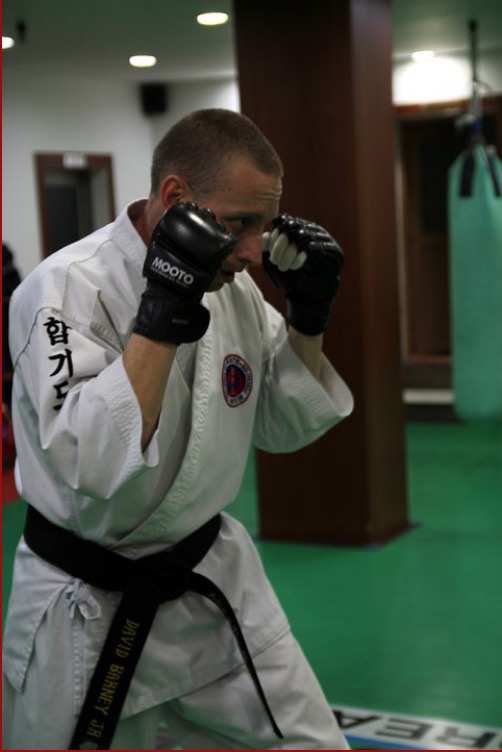
Hapkido's primary limitation, one that Master Barney articulates without defensiveness, is its relative underdevelopment in pure striking exchanges at medium range and in extended ground-fighting against trained opponents. Schools that spend the majority of curriculum time on form demonstration rather than resistance-based partner drilling produce practitioners who may understand hapkido conceptually but cannot access it under the adrenal stress of an actual confrontation. Our team regards this as a school-selection problem rather than a fundamental flaw in the system itself.

Clearing Up the Most Persistent Misconceptions About Hapkido
Myth: Hapkido Only Works Against Untrained Attackers
This claim appears frequently in online martial-arts forums, and our team finds it demonstrably inaccurate when applied to practitioners who train with active resistance. The joint-lock and throw mechanics in hapkido operate on anatomical principles — tendons, ligaments, and joint angles do not become immune to leverage through athletic training. What does change against trained opponents is the setup required to reach a lock, which is why advanced hapkido drilling includes entries from failed strikes and dynamic position changes rather than static grabs. The mechanical principles of hapkido remain valid regardless of the attacker's training level, provided the practitioner has developed genuine skill through resistance drilling.
Myth: Hapkido Takes Too Long to Become Useful
The six-to-nine-month competency window our team documented through instructor interviews contradicts the assumption that hapkido requires black-belt-level training before any practical benefit emerges. A three-month practitioner who has drilled wrist releases and basic footwork against a non-compliant partner possesses meaningful defensive capability against the grab-and-restrain attack patterns most commonly reported in street assault statistics. This timeline compares favorably even with purely striking arts, where six months of training typically produces competence against a single attack type rather than an integrated defensive vocabulary.
Warning: No martial art eliminates risk entirely — our team emphasizes that physical training is most effective when it supports, rather than replaces, awareness-based threat avoidance as the primary self-defense strategy.

Frequently Asked Questions
Is hapkido effective for self defense compared to other Korean martial arts?
Our team finds hapkido more practical for self-defense than Taekwondo in close-quarters situations because hapkido's curriculum specifically addresses grabs, holds, and joint manipulation rather than centering on competition-oriented kicking. Against Taekwondo's primary strength — long-range striking — hapkido's circular entry movements allow practitioners to close distance and redirect before the kicks fully develop.
How long does it take to become functional in hapkido for self-defense purposes?
Based on the instructor accounts our team collected, most consistent students reach basic functional self-defense competency — meaning reliable wrist-release and escape capability — within six to nine months of twice-weekly training. Full curriculum proficiency, including weapons and multi-attacker scenarios, typically requires three to five years.
Does hapkido work against larger, stronger attackers?
The mechanical design of hapkido's joint-lock and throw system specifically accounts for size and strength asymmetry by targeting anatomical leverage points rather than relying on force-against-force resistance. Our team's interviews with instructors confirm that this is the core reason hapkido is frequently recommended for smaller practitioners and older adults as a primary self-defense discipline.
What is Combat Hapkido, and how does it differ from traditional hapkido?
Combat Hapkido is a modern derivative developed specifically for street-defense application, stripping away many of the traditional forms and weapons kata while emphasizing takedown defense, ground recovery, and environmental awareness drills. Our team views it as a practical entry point for those who want hapkido's core mechanics without a full commitment to the traditional curriculum's breadth.
Is hapkido suitable for women and older adults seeking self-defense skills?
Our team finds hapkido particularly well-suited to both populations precisely because its effectiveness does not depend on physical size, striking power, or peak athletic conditioning. The leverage-based mechanics work on the same anatomical principles regardless of the practitioner's age or build, and the close-quarters focus directly addresses the threat profiles these groups are statistically most likely to encounter.
Should hapkido be combined with other training for comprehensive self-defense?
Master Barney and every instructor our team consulted recommend supplementing hapkido with at least basic exposure to ground defense and medium-range striking, not because hapkido is deficient but because comprehensive personal safety benefits from layered physical capability, much as home security benefits from layering threat awareness with technology and physical deterrents.
Key Takeaways
- Hapkido is effective for self defense in close-quarters scenarios involving grabs, holds, and weapon threats, with functional competency achievable within six to nine months of consistent resistance-based training.
- The art's joint-manipulation mechanics rely on anatomical leverage rather than strength, making it one of the most size-inclusive self-defense disciplines available to practitioners of any age or build.
- School selection is critical — programs emphasizing resistance-based partner drilling produce practitioners capable of applying technique under real-world stress, while purely compliant training produces demonstrative skill without functional transfer.
- Our team recommends treating hapkido as a primary self-defense discipline supplemented by basic ground-work and striking training, integrated into a broader personal-security strategy that includes environmental awareness and deterrence-based measures.


About Robert Fox
Robert Fox spent ten years teaching self-defence in Miami before transitioning into home security consulting and writing — a background that gives him an unusually practical, threat-aware perspective on residential security. His experience spans physical security assessment, lock and alarm system evaluation, and the behavioral habits that make homes harder targets. At YourHomeSecurityWatch, he covers home security product reviews, background check and criminal records resources, and practical guides on protecting your property and family.
You can Get FREE Gifts. Furthermore, Free Items here. Disable Ad Blocker to receive them all.
Once done, hit anything below