Phase Three — Controlled Protection Response (Weeks 17 and Beyond)
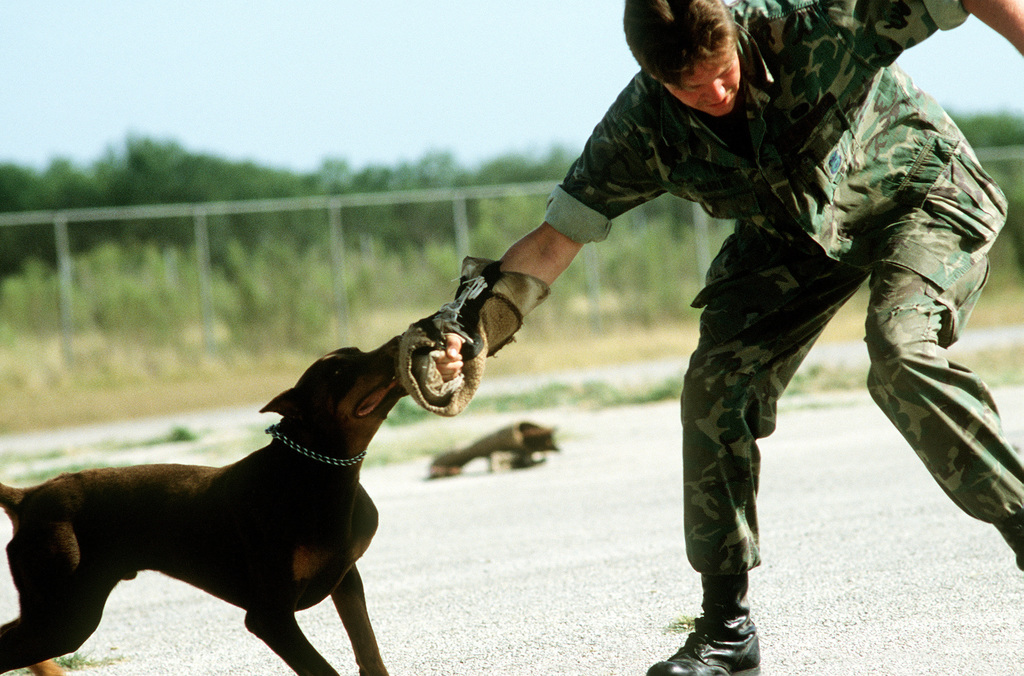
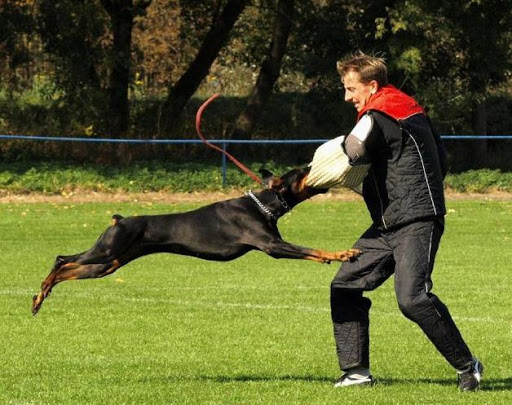
Phase Three is where most amateur trainers make irreversible mistakes. Bite work and protection training require a professional decoy — a trained helper wearing protective equipment who works under the handler's direction to elicit, shape, and condition the dog's defensive drive in controlled, structured scenarios. This is not territory for self-guided home training.
The goal is not a dog that bites anything that approaches. The goal is precise: a reliable engage command, a reliable release command, and a reliable return-to-neutral command that holds regardless of ongoing provocation. A release response that fails even once under real pressure is a liability that cannot coexist with a residential environment.
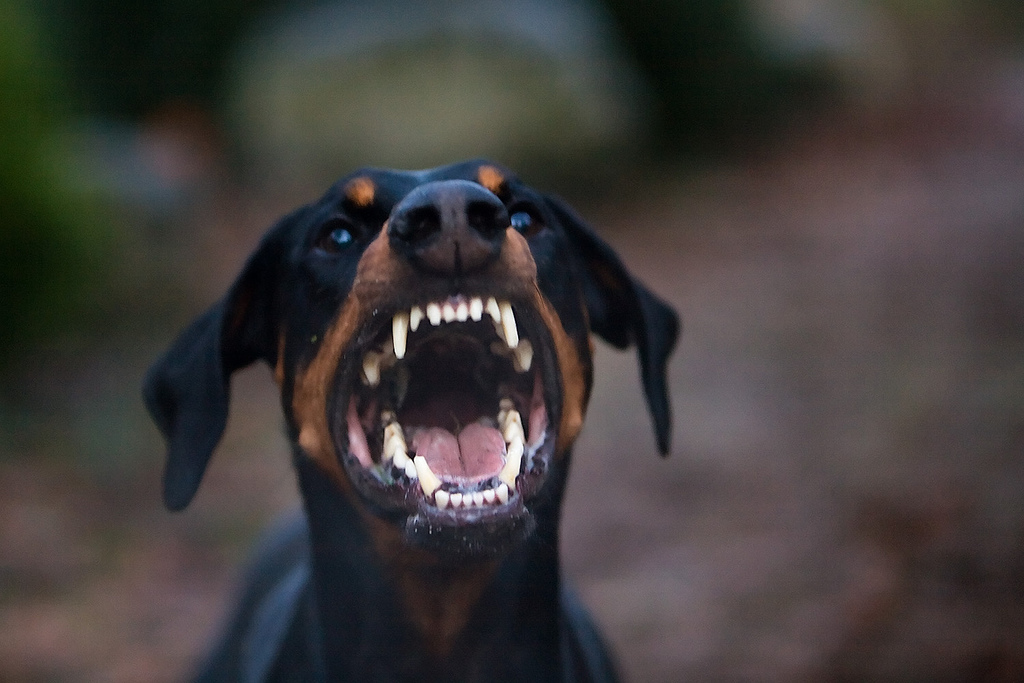
Our team consistently recommends that homeowners considering Phase Three partner with a Schutzhund or IPO-affiliated club in their area. These organizations train handlers and dogs together using structured, safety-tested protocols developed over decades. The investment in professional mentorship pays for itself in both animal reliability and legal protection. For homeowners who want the deterrence of a Doberman without full bite work, an intermediate option exists: on-command alarm barking. A dog trained to bark aggressively on cue and cease on cue provides a powerful deterrent — most intruders do not stop to assess whether the bark will be followed by a bite.
Equipment That Elevates Every Training Session
What Every Handler Needs
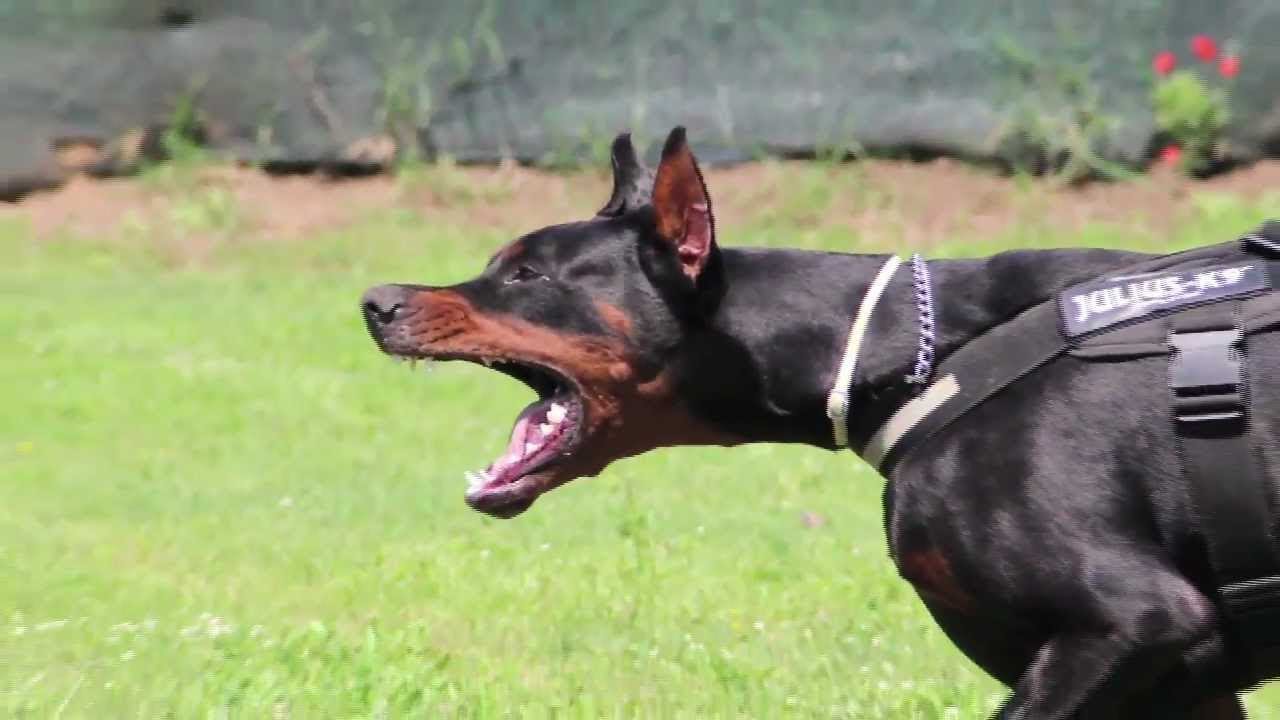
The right equipment removes friction from every session and gives the handler cleaner communication channels. Our team has used and evaluated the full range of training aids available for working dogs. The gear that consistently earns its place is purpose-specific — not expensive for its own sake, but precisely functional for the task at hand.
A 6-foot leather leash is foundational — it provides enough tactile feedback to communicate without overcorrecting, and the material gives the handler grip during high-arousal moments. Long lines in the 20 to 30-foot range are essential for recall conditioning at distance. For early-stage obedience, high-value food rewards remain the most efficient reinforcer: cooked chicken, cheese, and commercial training treats all perform well. What matters is that reward value consistently exceeds the competing value of whatever is distracting the dog at that moment.
The table below summarizes the primary training equipment our team recommends, along with the appropriate experience level for safe, effective use:
| Equipment | Primary Purpose | Skill Level | Estimated Cost |
|---|---|---|---|
| 6-ft leather leash | Foundational obedience, heel work, handler communication | Beginner | $20–$40 |
| Long line (20–30 ft) | Distance recall, off-leash transition conditioning | Beginner–Intermediate | $25–$50 |
| Clicker or marker whistle | Precise behavior marking for reward-based training | Beginner | $5–$15 |
| Treat pouch (belt-mount) | Rapid high-value reward delivery during sessions | Beginner | $10–$25 |
| Martingale collar | Slip-proof fit; gentle correction without pressure spike | Beginner–Intermediate | $15–$30 |
| Prong collar (fitted) | Directional pressure communication for strong pullers | Intermediate | $30–$60 |
| E-collar (remote trainer) | Distance obedience reinforcement, off-leash recall | Advanced | $120–$400 |
| Bite sleeve / hard tug | Drive conditioning and controlled bite work | Advanced — professional supervision required | $80–$250 |
Professional Grade vs. Home Use
E-collars occupy a contested middle ground. In experienced hands, they extend the handler's communication range to hundreds of yards — useful for off-leash recall conditioning on larger properties. In inexperienced hands, the same tool creates confusion, anxiety, and aversion that sets training back significantly. The skill level column above is a practical constraint, not a suggestion. Our team recommends that handlers work thoroughly through beginner and intermediate tools before acquiring advanced equipment. Rotating reward types regularly also prevents habituation — a dog that has received the same treat in every session for months will eventually reduce effort for that reward. Introducing novel high-value items reserved exclusively for training maintains motivational value over the long term.
Daily Habits That Build a Sharper Guard Dog
Consistency and Routine
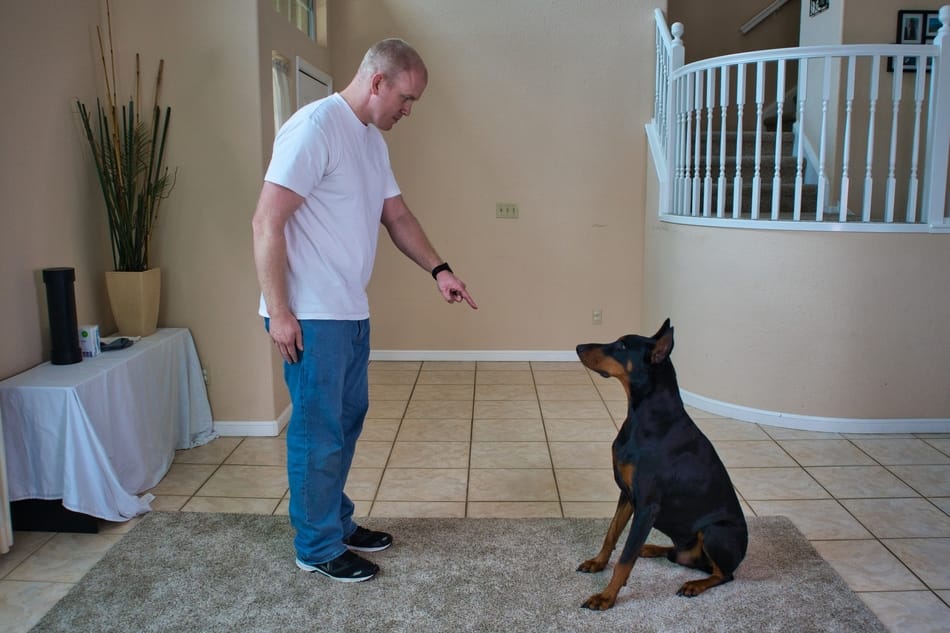
Guard dogs operate on pattern recognition. The more consistent the handler's schedule — feeding times, exercise sessions, training windows, sleep location — the more stable the dog's baseline behavior. A Doberman that knows exactly when it will be fed, exercised, and worked is calmer between sessions and sharper during them. Most handlers who struggle with behavioral inconsistency in their Dobermans can trace the problem directly to irregular routines that keep the animal in a low-level state of uncertainty.
Reinforcing perimeter awareness daily, even briefly, maintains the territorial clarity that formal boundary work established. A five-minute walk of the property line each morning, with the handler pausing to acknowledge the dog's natural alert behavior, sustains guard instincts without requiring full training session structure. Small investments in daily routine produce compounding returns in long-term reliability. Pairing formal training sessions with feeding times amplifies this effect — a moderately hungry dog engages with measurably more focus and faster response times than a fully satiated one.
Reward Timing and the Feedback Loop
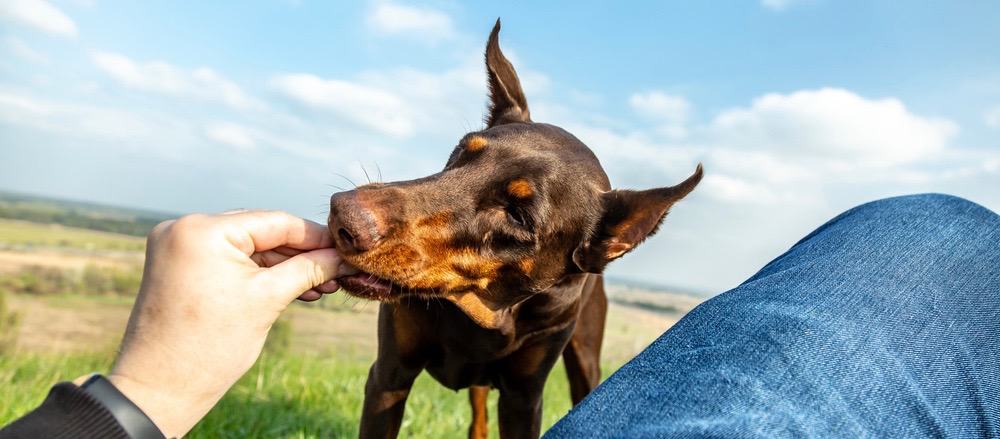
Timing is the variable that separates adequate training from excellent training. A reward delivered three seconds after the desired behavior teaches the dog something — but not what the handler intends. The marker bridges this gap, capturing the exact behavior at the moment it occurs so the delayed reward still carries precise meaning. This is not a nuance; it is the fundamental mechanism by which dogs build behavioral understanding.
For guard work specifically, jackpot rewards — a larger-than-usual burst of high-value treats delivered in rapid succession — reinforce the behaviors that matter most: holding a long down-stay under pressure, executing a clean release on bite work, maintaining a designated position while the handler moves out of sight. Our team considers the reward schedule as deliberately engineered as the command sequence itself. The dog that performs reliably under pressure is, without exception, the dog whose handler treated reinforcement as a precision instrument rather than an afterthought.

Frequently Asked Questions
At what age should Doberman guard training begin?
Basic obedience training should begin as early as eight weeks — the moment the puppy arrives home. Socialization runs in parallel throughout the first two years. Formal protection work should not begin until the dog has a near-perfect obedience foundation, typically no earlier than twelve to eighteen months of age.
How long does it take to fully train a Doberman as a guard dog?
A realistic timeline for a reliable, well-rounded guard dog runs twelve to twenty-four months of consistent, structured work. Basic obedience can be solid within three months. Boundary and alert training adds another three to four months. Advanced protection work extends the timeline further and requires indefinite ongoing maintenance — this is not a program with a finish line.
Can a Doberman serve as both a family companion and a guard dog?
A properly trained, well-socialized Doberman is one of the most loyal and gentle family dogs available — and simultaneously one of the most capable protection animals. The two roles are not in conflict. The critical factor is that the dog clearly understands the distinction between family members, known guests, and genuine threats, which proper socialization and structured command training establish definitively.
Is professional training necessary for Doberman protection work?
For Phase One and Phase Two — obedience and alert training — motivated home handlers achieve excellent results with proper education and consistent effort. For Phase Three protection and bite work, professional guidance from a certified decoy or Schutzhund-affiliated club is not optional. Amateur bite work produces unpredictably dangerous animals, and no shortcut around this reality exists.
What is the single most important command in guard dog training?
Without question: the release command. A Doberman that engages on command but will not disengage reliably is more dangerous than a dog with no protection training at all. Every handler's first and most relentless priority should be building a release response that holds at maximum arousal, with no exceptions and no hesitation regardless of circumstances.

A Doberman trained with discipline and purpose is not a weapon — it is a precision instrument, and the handler who forgets the difference produces the more dangerous outcome.


About Robert Fox
Robert Fox spent ten years teaching self-defence in Miami before transitioning into home security consulting and writing — a background that gives him an unusually practical, threat-aware perspective on residential security. His experience spans physical security assessment, lock and alarm system evaluation, and the behavioral habits that make homes harder targets. At YourHomeSecurityWatch, he covers home security product reviews, background check and criminal records resources, and practical guides on protecting your property and family.
You can Get FREE Gifts. Furthermore, Free Items here. Disable Ad Blocker to receive them all.
Once done, hit anything below