What separates a German Shepherd that barks at every squirrel from one that genuinely protects your home on command? The answer is structured, deliberate training. Guard dog training for German shepherds is one of the most powerful home security investments you can make — but only when it's executed correctly. These dogs have the intelligence, physical capability, and natural drive to become exceptional protection animals. Explore our full resource on guard dog training for German Shepherds for a complete overview of every phase. This guide covers the full journey: from debunking myths to building a long-term security strategy that works.
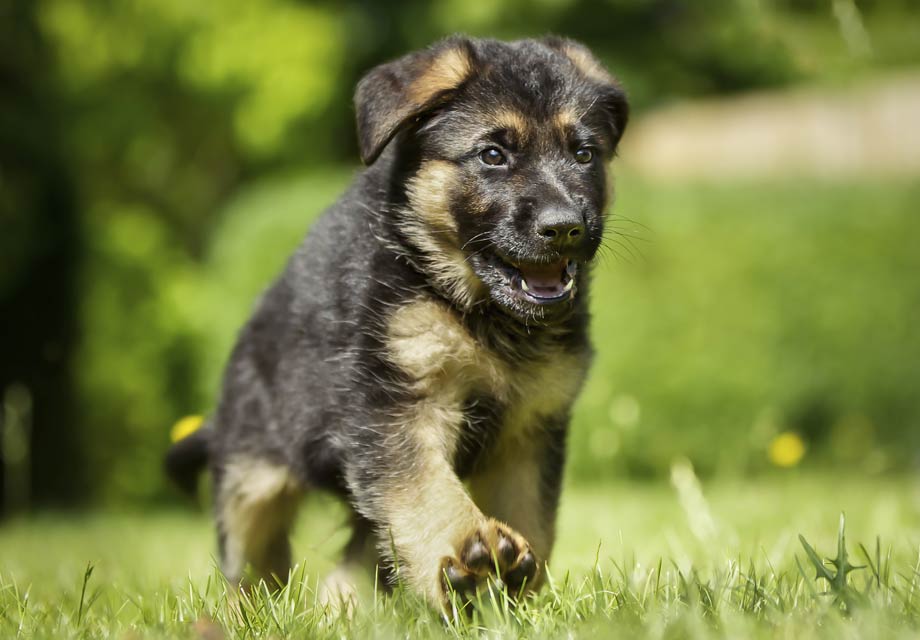
German Shepherds have been working alongside humans for well over a century. Their intelligence consistently ranks among the top dog breeds worldwide, and their loyalty to their handler is nearly unmatched. Police departments, military units, and search-and-rescue teams rely on them for good reason. But here's what most owners miss: a great guard dog isn't just aggressive — it's controlled, obedient, and calm under pressure.
Whether you're starting with a new puppy or working with an adult dog, understanding the training process from the ground up will save you time, prevent dangerous mistakes, and give you an animal you can genuinely trust. This isn't about making your dog mean. It's about making your dog reliable.
Contents
What Most People Get Wrong About Guard Dogs
The Aggression Myth
The most widespread misconception about guard dog training is that you want a dog that's aggressive by default. This is wrong — and it's genuinely dangerous. A true guard dog is calm, controlled, and responds only when commanded or when a real threat presents itself. Unpredictable aggression isn't a security feature. It's a liability.
Many people confuse "intimidating appearance" with "effective protection." A dog that lunges at every stranger near your fence isn't performing guard work — it's displaying poor impulse control. Real protection dogs are often described as "switched off" during normal daily life: relaxed around family, social with known guests, and fully engaged only when the situation demands it.
Pro Insight: The most effective guard dogs spend most of their time behaving like normal, well-adjusted family pets — the protection response activates on command or in response to a genuine threat, not at random stimuli.
Born, Not Made?
German Shepherds do carry natural protective instincts, but genetics alone don't produce a reliable guard dog. Training is the variable that determines whether those instincts are channeled productively or expressed unpredictably. Breed tendencies give you raw material — training determines what you build with it.
- Natural drives include prey drive, territorial instinct, and pack loyalty
- Without structure, these drives can produce fear biting, resource guarding, or chronic hypervigilance
- Structured training transforms raw instinct into predictable, controllable behavior
If you're weighing different breeds for protection work, Doberman guard dog training follows a similar philosophy — drive matters, but discipline determines everything.
Where You Start Determines How Far You Go
Your training approach changes significantly depending on whether you're starting with a puppy or working with an adult dog. Both paths are valid. Each has specific trade-offs you need to understand before you invest time and energy.
Training a German Shepherd Puppy
Starting with a puppy gives you a clean slate. You shape behaviors from scratch, build a strong handler bond early, and avoid the work of undoing habits someone else created. Socialization is your absolute first priority — positive, controlled exposure to different people, environments, sounds, and situations.
- Begin basic obedience (sit, stay, come, heel) at 8 to 12 weeks
- Introduce leash training and crate training in the same early window
- Socialization should be continuous through the first 16 months
- Formal protection work typically begins between 12 and 18 months, once obedience is fully solid
Marker-based training consistently accelerates early learning. Understanding how to clicker train your dog gives you a precise communication tool that German Shepherds respond to exceptionally well — the immediate feedback matches their high intelligence.
Working With an Adult German Shepherd
Adult dogs can absolutely be trained for protection work. The timeline looks different, and you'll need to assess any existing behavioral patterns before adding guard work on top of them. If your dog shows fear responses or resource guarding, address those issues first — protection training amplifies whatever baseline temperament already exists.
The advantage of working with an adult is that you know what you're dealing with. Temperament evaluation is straightforward, and you can make faster decisions about whether formal protection training is appropriate for that individual dog. Dogs with deep-rooted fear aggression or serious bite history are generally not candidates for protection training, regardless of how capable they look physically.
The Foundations of Guard Dog Training for German Shepherds
Obedience Is Non-Negotiable
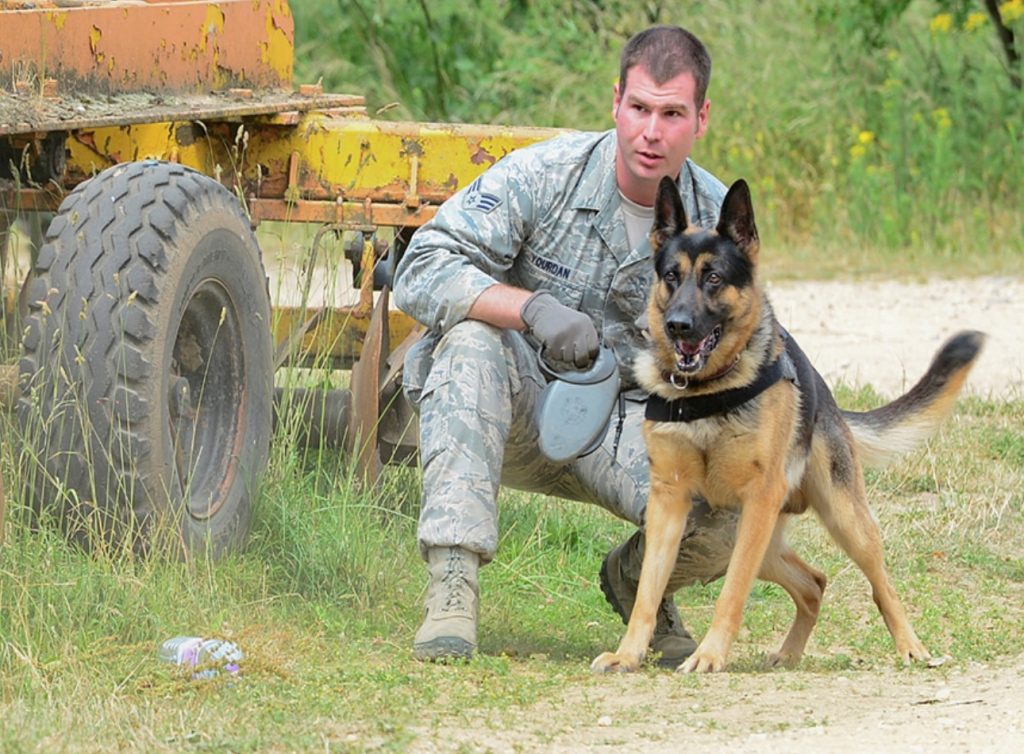
Every guard dog training program starts with obedience — without exception. If your German Shepherd doesn't respond reliably to basic commands across different environments, you have no business adding protection behaviors on top of that. Obedience isn't just a prerequisite. It's the framework that makes everything else safe and functional.
The commands your dog must master before any protection training begins:
- Sit, Stay, Come, Heel — foundational responses with zero failure rate allowed in live situations
- Leave it / Off — essential for controlling reactive impulses toward people and objects
- Down — critical for de-escalation and holding a position under distraction
- Place / Go to your spot — practical for managing your dog during deliveries, visitors, or entry points
Alert Training vs. Attack Training
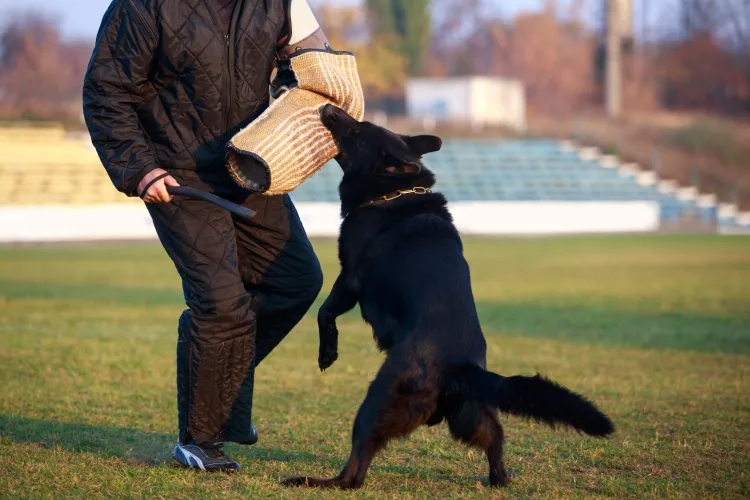
Most homeowners benefit from alert training, not attack training. Alert training conditions your German Shepherd to bark and signal when they detect an intruder, then stop on your command. Attack training — also called bite work or Schutzhund — is a separate, specialized discipline that requires professional oversight and significant ongoing commitment.
Alert training is legal in virtually every jurisdiction, straightforward to maintain, and highly effective as a deterrent. According to the Wikipedia overview of guard dogs, the presence of a barking dog consistently ranks among the top residential burglary deterrents. And when you understand how burglars actually think, it becomes obvious why — most intruders avoid any situation involving confrontation or noise.
| Training Type | Best For | Legal Complexity | Professional Trainer Needed | Maintenance Level |
|---|---|---|---|---|
| Basic Obedience | All owners, all dogs | None | Recommended but optional | Low — weekly refreshers |
| Alert Training | Homeowners, families | Minimal | Helpful, not required | Low to moderate |
| Perimeter Training | Property owners with defined boundaries | Low | Recommended | Moderate |
| Schutzhund / Bite Work | Advanced handlers, sport competitors | Variable by jurisdiction | Required | High — structured weekly sessions |
| Personal Protection (IPO) | Executive protection, professional handlers | High — liability considerations | Required | Very high |
Training Errors That Quietly Undermine Your Results
Skipping or Rushing Socialization
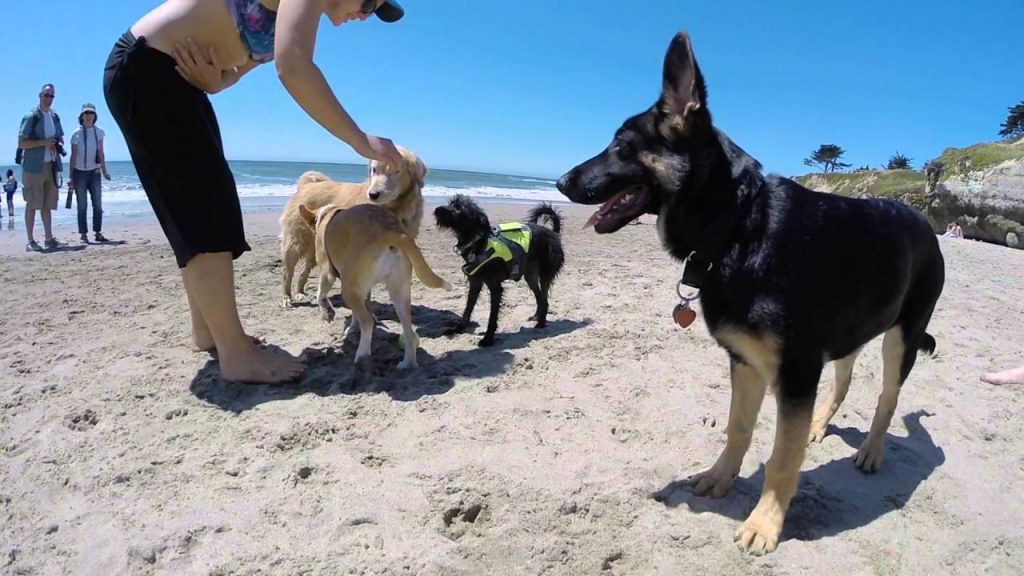
Socialization is not optional, and it doesn't happen on a fast timeline. A German Shepherd that hasn't been thoroughly socialized will interpret normal, everyday stimuli as threats. That produces false alerts, erratic reactions, and a dog that's genuinely difficult to live with — the exact opposite of what you're building toward.
Proper socialization means controlled, positive exposure to a wide range of situations:
- Strangers of different ages, genders, and appearances
- Children, other dogs, and unfamiliar animals
- Busy public environments: parks, shopping areas, urban streets
- Loud, unexpected sounds and fast-moving vehicles
- Different floor surfaces, stairs, and physical environments
A well-socialized dog reads context accurately. It knows the difference between a threat and a mail carrier. That discrimination is what makes the dog trustworthy when a real security situation arises.
Inconsistent Commands and Mixed Signals
Inconsistency destroys training progress faster than almost any other factor. If different family members use different commands, reward at inconsistent moments, or allow behaviors that are sometimes acceptable and other times not — your German Shepherd's training will degrade. These dogs are smart enough to detect inconsistency and will exploit it.
Establish household rules and enforce them uniformly across every person your dog interacts with:
- Every household member uses the same verbal commands and hand signals
- No exceptions to rules on "off days" — a rule is a rule every single day
- Rewards come immediately after the correct behavior, not minutes later
- Never reinforce a behavior you don't want repeated, even when it seems harmless in the moment
Poor training habits are also why a guard dog should be part of a layered approach. Review proven ways to burglar-proof your home to understand how physical security and your dog's capabilities work together — each layer compensates for the other's gaps.
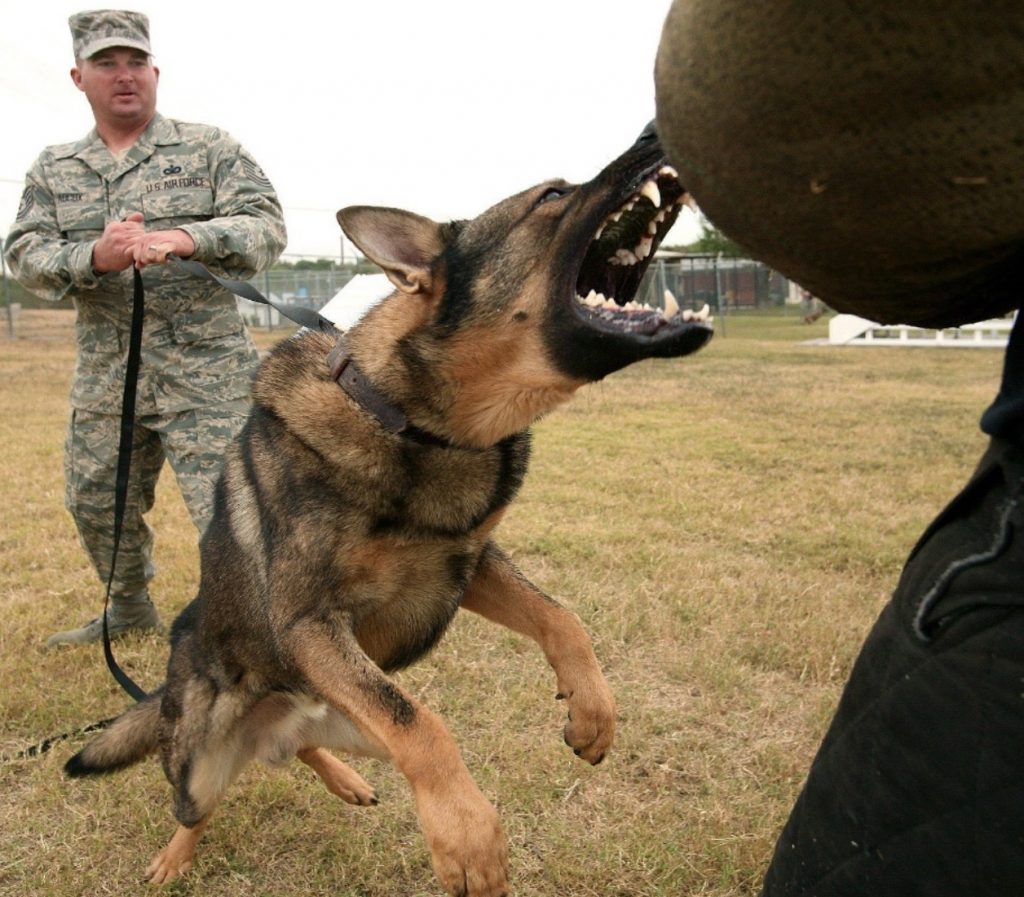
Keeping Your German Shepherd at Peak Performance
Exercise and Proper Nutrition
Guard dog work is physically and mentally demanding. Your German Shepherd needs consistent, structured physical activity to stay in the condition that makes protection work effective. An under-exercised dog becomes restless, anxious, and significantly harder to train — energy that should power focused work gets redirected into destructive outlets instead.
Daily exercise guidelines for working-level German Shepherds:
- Minimum 60 to 90 minutes of vigorous activity per day
- A mix of aerobic exercise (running, fetch, swimming) and structured obedience drills
- Avoid repetitive high-impact exercise on hard surfaces until the dog reaches 18 months — joint plates are still developing
- Mental exercise through training sessions counts — combine it with physical sessions for maximum efficiency
Nutrition directly affects energy output, coat condition, and cognitive sharpness. Controlling your dog's feeding schedule is a training tool in itself — structured meal times reinforce your position as the handler and create a daily rhythm that keeps your dog focused and regulated.
Mental Stimulation and Skill Upkeep
German Shepherds need mental exercise as much as physical conditioning. Boredom produces destructive behaviors that quietly erode everything you've built. Rotate your training drills, introduce new environments regularly, and run obedience refreshers on a consistent schedule.
Skill maintenance keeps your dog sharp and your training current. Schedule weekly obedience reviews, monthly environmental exposure sessions in unfamiliar locations, and quarterly assessments of alert behaviors. If any command response has degraded since your last session, go back to basics and rebuild it before the lapse becomes a habit. Skills that aren't practiced regularly will fade — this is a predictable pattern, not a failure.
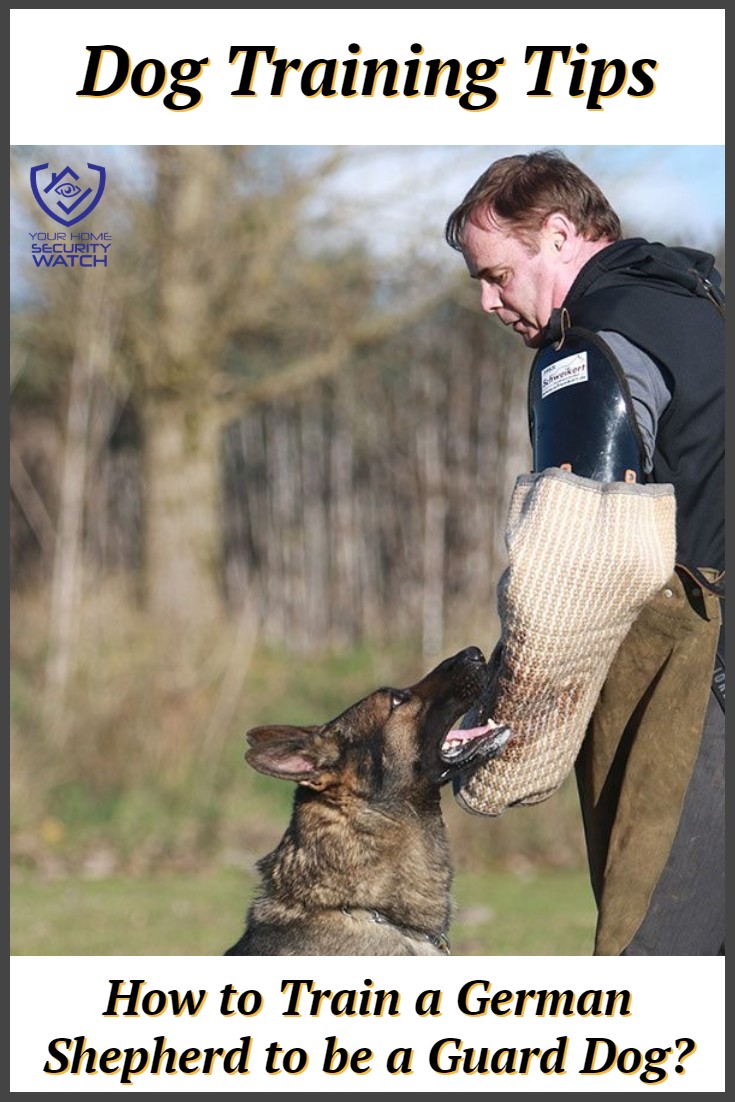
Planning for the Long Game
Ongoing Training Throughout Your Dog's Life
Guard dog training isn't a certification you earn once and file away. It's a continuous practice that evolves with your dog. German Shepherds reach peak working capability between ages two and five, but they require ongoing, structured training to sustain those skills as they age. Adapt the physical intensity as your dog gets older — reduce high-impact work, but keep mental training consistent and demanding.
If you're curious how this long-term approach compares across protection breeds, reviewing guard dog training for German Rottweilers or guard dog training for Labradors gives you useful perspective on what's specific to German Shepherds and what's universal to protection training across all working breeds.
Integrating Your Dog Into a Broader Security Strategy
Your German Shepherd is one component of a complete security plan, not a replacement for the rest of it. The most effective home security approaches layer multiple strategies: a trained guard dog, strong physical barriers, smart technology, and consistent situational awareness. Each layer backs up the others when one is compromised.
Your dog handles close-range intrusion deterrence and alerts you to threats you might not detect through cameras or sensors alone. Physical security — reinforced doors, quality locks, window barriers — handles structural vulnerabilities. Perimeter lighting and cameras extend your detection range before a threat even reaches your dog. Stack these layers deliberately, and the weak points in any single system become irrelevant.
Final Thoughts
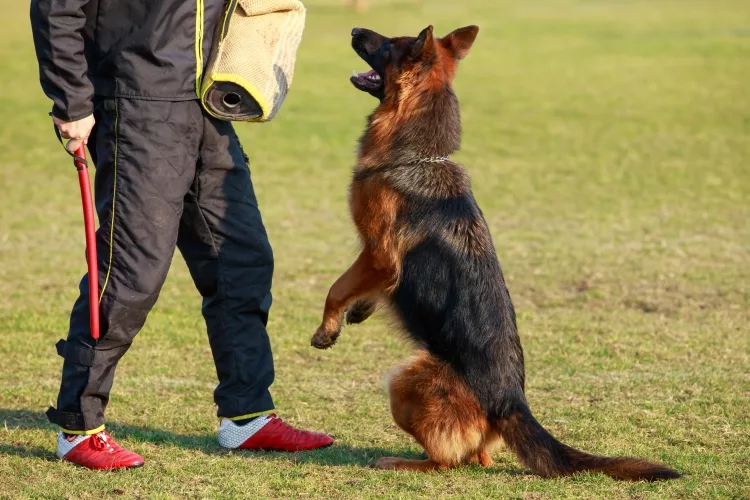
Guard dog training for German shepherds rewards patience, consistency, and a genuine commitment to the process. Your German Shepherd has everything it takes to become a reliable, effective protection animal — what you bring to the training relationship determines whether that potential gets realized. Start with obedience, invest in proper socialization, and build your security approach in layers that reinforce each other. If you're ready to take the next step, bookmark our complete guard dog training guide for German Shepherds, work through it section by section, and commit to the long-term schedule — the results are worth it.


About Robert Fox
Robert Fox spent ten years teaching self-defence in Miami before transitioning into home security consulting and writing — a background that gives him an unusually practical, threat-aware perspective on residential security. His experience spans physical security assessment, lock and alarm system evaluation, and the behavioral habits that make homes harder targets. At YourHomeSecurityWatch, he covers home security product reviews, background check and criminal records resources, and practical guides on protecting your property and family.
You can Get FREE Gifts. Furthermore, Free Items here. Disable Ad Blocker to receive them all.
Once done, hit anything below