Can a martial art developed centuries ago still offer practical self-defense value today? When our team first set out to understand what is Wing Chun kung fu, we discovered a system far more strategic than most people expect. Wing Chun — also romanized as Ving Tsun — is a close-range Chinese martial art built on efficiency, centerline theory, and the principle that skill and structure should overcome raw size and strength. For anyone exploring the broader world of personal protection and martial arts, Wing Chun stands out as one of the most scientifically examined self-defense systems available to practitioners today.

Our team has spent considerable time studying Wing Chun's principles alongside other security-minded disciplines, and the system's practicality keeps surfacing as its defining trait. Unlike styles built around high kicks or acrobatics, Wing Chun stays low, compact, and direct. It's no coincidence that Wing Chun became one of the most globally widespread kung fu styles — its underlying logic holds up under real pressure in ways that consistently impress both beginners and seasoned practitioners.
In this guide, our team breaks down the origins, core principles, training structure, and real-world applications of Wing Chun. We also address the persistent myths that lead many people to misunderstand this art before ever stepping foot inside a school.
Contents
- What Is Wing Chun Kung Fu — Origins and Core Philosophy
- From First Class to Advanced Practitioner: The Wing Chun Learning Curve
- Wing Chun Myths Debunked: Separating Fact From Fiction
- Wing Chun in Real-World Self-Defense Situations
- Training Tips That Make a Measurable Difference
- How to Start Training Wing Chun Kung Fu: A Step-by-Step Guide
- Who Wing Chun Is Best Suited For
- Mistakes That Hold Back Most Wing Chun Students
- Frequently Asked Questions
- Key Takeaways
What Is Wing Chun Kung Fu — Origins and Core Philosophy
The name "Wing Chun" translates roughly to "beautiful springtime" in Cantonese, but the art itself is anything but ornamental. Wing Chun kung fu is built on economy of motion — a design philosophy that strips away unnecessary movement and focuses every technique on the shortest, most efficient path to neutralizing a threat. It belongs to the Southern Chinese kung fu family, emphasizing close-range striking, structural stability, and tactile sensitivity over raw athleticism.
Origins and the Founding Legend
The most widely accepted origin story traces Wing Chun to the 17th-century Shaolin temples of southern China. According to tradition, a Buddhist nun named Ng Mui developed the style after observing a fight between a snake and a crane — two animals whose conflict illustrated the value of yielding, redirection, and precision over force. She refined those observations into a system designed to be learned quickly and applied effectively by practitioners who lacked overwhelming physical power.
Her student — a young woman named Yim Wing Chun — gave the art its name after using it to defend herself. Whether the founding legend is strictly historical or partly mythological matters less than the design intent it conveys: this system was built from the start for people who could not rely on brute force. That intent has remained central to every lineage our team has studied.
The Centerline Theory
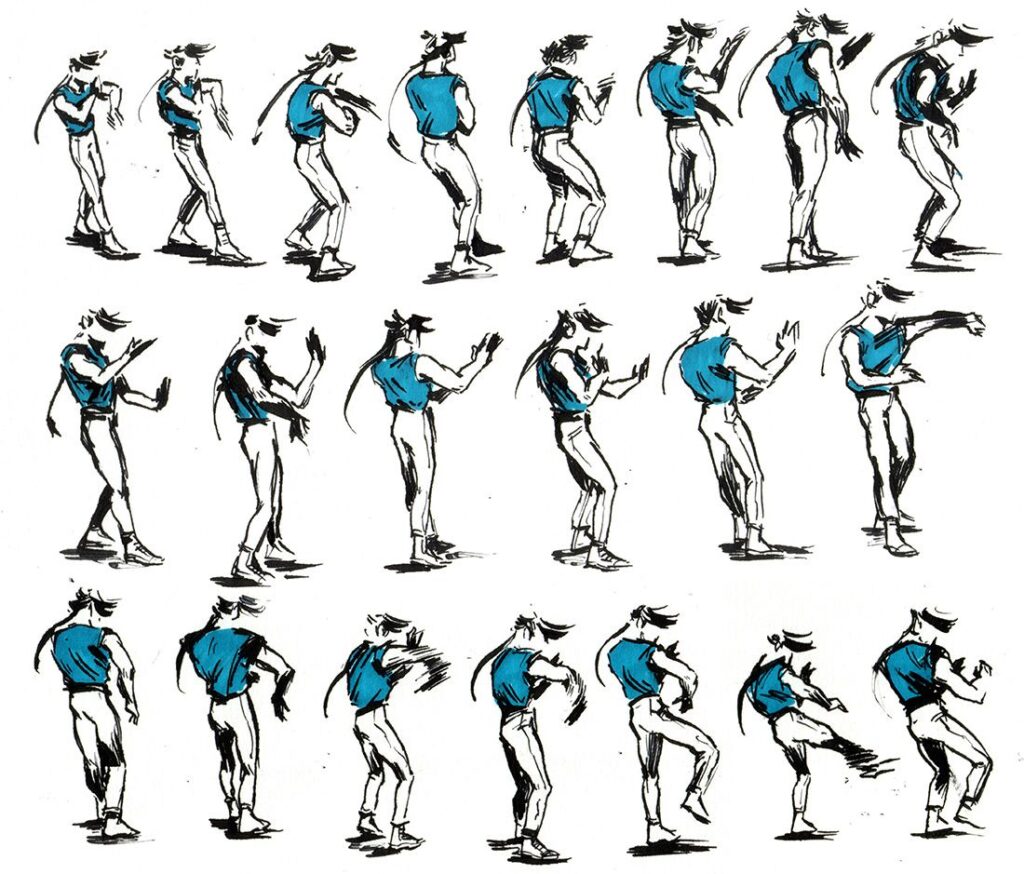
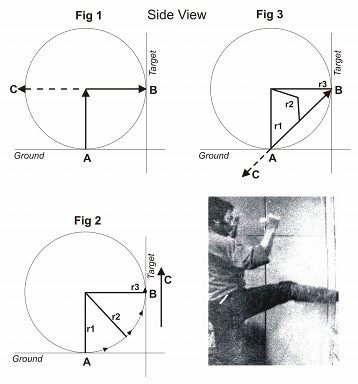
Every technique in Wing Chun connects back to one organizing principle: the centerline. This is an imaginary vertical axis running through the center of the body from crown to groin. Wing Chun practitioners attack along this line — targeting the opponent's centerline — while simultaneously defending their own. Strikes travel the shortest distance to vital targets. Defense and offense occur in the same motion rather than sequentially.
This concept of simultaneous attack and defense — called "Lin Sil Die Dar" — is one of the first ideas any Wing Chun student encounters, and it remains central to every advanced technique. Most people default to sequential thinking: block first, then strike. Wing Chun rewires that instinct from the ground up, and that rewiring is what makes the system feel counterintuitive to beginners but devastatingly efficient for practitioners who have internalized it.
From First Class to Advanced Practitioner: The Wing Chun Learning Curve
Wing Chun's progression is more methodical than most martial arts. There are no colored belts in the traditional sense — advancement is measured by proficiency in forms, sensitivity in partner drills, and structural understanding. That clarity of progression can be either motivating or frustrating, depending entirely on the student's expectations going in.
The First Six Months
Most new Wing Chun students spend their early months working on Siu Nim Tao — the first of three empty-hand forms. This form doesn't move the feet at all. The goal is to build correct arm structure, develop wrist and forearm sensitivity, and internalize the centerline concept at a foundational level. Many students find it slow and unrewarding, particularly those expecting sparring from day one.
Our team found that the most common dropout point arrives around the 90-day mark — when the novelty of starting has worn off but practical application still feels distant. Instructors who introduce Chi Sao (sticky hands) drills early tend to retain more students, because tactile partner feedback makes abstract principles feel concrete and immediately useful.
Advanced Training and Forms
Advanced Wing Chun students work through two additional empty-hand forms, wooden dummy training, and eventually weapons forms. Each stage builds directly on what preceded it — nothing is decorative or supplementary.
| Form / Tool | Stage | Primary Focus | Key Concepts Introduced |
|---|---|---|---|
| Siu Nim Tao | Beginner | Arm structure, centerline, basic hand shapes | Lin Sil Die Dar; Tan, Bong, and Fook Sao |
| Chum Kiu | Intermediate | Footwork, pivoting, bridging | Shifting stance, kicking, seeking the bridge |
| Biu Gee | Advanced | Emergency recovery, thrusting techniques | Regaining centerline when structure is compromised |
| Mook Jong (Wooden Dummy) | Intermediate–Advanced | Combining techniques against resistance | Precision, timing, structural pressure |
| Butterfly Swords (Baat Jaam Do) | Advanced | Weapons extension of empty-hand principles | Range extension, cutting angles |
| Long Pole (Luk Dim Boon Gwun) | Advanced | Whole-body power generation | Force transfer through the full kinetic chain |
Chum Kiu introduces footwork and pivoting — movement concepts that Siu Nim Tao deliberately omits to force focus on hand structure. Biu Gee addresses emergency recovery: what to do when position has already been compromised and the centerline has been lost. These aren't flashy additions. They fill specific tactical gaps in a logical, deliberate sequence that rewards patience.
Wing Chun Myths Debunked: Separating Fact From Fiction
Wing Chun has attracted more controversy than almost any other martial art. Much of that controversy stems from high-profile failures in mixed martial arts competitions and a handful of viral videos. Our team looked at these criticisms carefully, and what emerged is a more nuanced picture than either defenders or critics typically present.

Myth: Wing Chun Only Works in Controlled Environments
This criticism typically comes from observing Wing Chun practitioners perform poorly in competitive MMA. What those competitions actually reveal is that under-trained Wing Chun fails under pressure — which is equally true of any martial art. Well-trained Wing Chun, built around tactile sensitivity and close-range structural control, performs differently in the chaos of a genuine confrontation than in a rule-bound ring.
- Many traditional schools lack full-contact sparring — a real gap, but a training methodology flaw, not a fundamental flaw in the art
- The absence of ground fighting in most Wing Chun curricula is a legitimate criticism that honest instructors acknowledge
- Practitioners who cross-train in grappling alongside Wing Chun consistently report the stand-up principles hold up well under realistic pressure
Myth: Wing Chun Is Only Effective for Smaller Practitioners
Wing Chun was designed with smaller practitioners in mind, but that design logic makes it useful for anyone. The structural advantages of a low, controlled stance, centerline management, and simultaneous offense-defense don't disappear for larger practitioners — they simply supplement an already physically capable base. Many experienced Wing Chun fighters train specifically against larger, stronger partners to stress-test the principles, and the results frequently surprise observers who assumed the art couldn't compete physically.
Wing Chun in Real-World Self-Defense Situations
Understanding what is Wing Chun kung fu as a concept is one thing; seeing how it applies outside the training hall is another. Our team reviewed practitioner accounts and instructor commentary across multiple lineages to assess how well the art's core principles translate under realistic conditions.
Confrontations in Enclosed Spaces
Wing Chun's short-range emphasis is a genuine tactical advantage in environments with limited room to maneuver. Hallways, stairwells, vehicle interiors, and doorways all restrict the full extensions that longer striking arts depend on. Wing Chun's compact punches, low-line kicks, and constant forward structural pressure translate naturally to these environments in ways that high-kick styles do not.
For anyone thinking about personal safety in and around the home, Wing Chun complements physical security layers well. Reinforcing entry points — like the strategies in our post on making doors more burglar-proof — and installing reliable deadbolt hardware creates a first line of resistance that reduces the likelihood of a confrontation occurring at all. Physical skill is one layer; structural security is another. Our team consistently recommends treating both as complementary rather than competing approaches.
Awareness as the First Line of Defense
Experienced Wing Chun practitioners consistently emphasize that situational awareness and de-escalation come before any physical technique. Our team reviewed case studies shared across multiple Wing Chun communities, and a consistent pattern emerged: practitioners who use Wing Chun effectively in real situations had already developed the ability to recognize threat patterns early. Understanding behavioral cues and pre-attack indicators — including the patterns covered in our guide on recognizing self-defense warning signs — is a prerequisite that no amount of technical skill can replace.
Wing Chun schools that take self-defense seriously spend meaningful class time on scenario-based awareness training alongside technical drilling. Our team views this emphasis as one of the clearest markers of a quality school over one that prioritizes choreography and form aesthetics above practical outcomes.
Training Tips That Make a Measurable Difference
Our team's most consistent observation across Wing Chun schools: students who approach Chi Sao with relaxed arms and genuine curiosity progress measurably faster than those who try to overpower their training partners — often within the first few months.
Prioritize Sensitivity Over Strength
The most experienced Wing Chun instructors our team has consulted return to the same point: students who try to muscle through Chi Sao drills are actively working against themselves. Wing Chun is about reading and redirecting force. Training with a lighter, more receptive touch paradoxically produces better results than training hard. The technical term for this tactile quality is "nim lik" — the ability to sense an opponent's intention through the point of contact. It cannot be developed through strength; only through relaxed, attentive repetition.
- Keep elbows down and inward during all partner drills
- Maintain contact pressure — not grip, not resistance
- Focus on structural correctness before speed
- Let sensitivity develop naturally through volume of contact work, not through forcing outcomes
Use Video Review in Practice
Video review is significantly underused in Wing Chun schools. Most students rely entirely on instructor feedback and their own proprioception — both of which are unreliable guides during early training. Filming Chi Sao sessions and form practice allows practitioners to identify dropped elbows, collapsing centerlines, and structural flaws that feel correct in the moment but look wrong from an outside perspective. Our team recommends reviewing footage immediately after training, while the physical memory is still fresh.
For practitioners exploring self-defense options alongside Wing Chun training, our team has also reviewed physical self-defense tools that complement martial arts training. Skill and purpose-designed tools work best as layered options rather than either-or choices.
How to Start Training Wing Chun Kung Fu: A Step-by-Step Guide
Wing Chun training is more accessible than most people assume. Schools exist in most mid-sized and large cities, and the style's lack of physical prerequisites makes it genuinely open to most adults. The challenge isn't access — it's identifying a quality school and building the patient habits the art demands from the very first class.
Step 1: Research Lineages Before Choosing a School
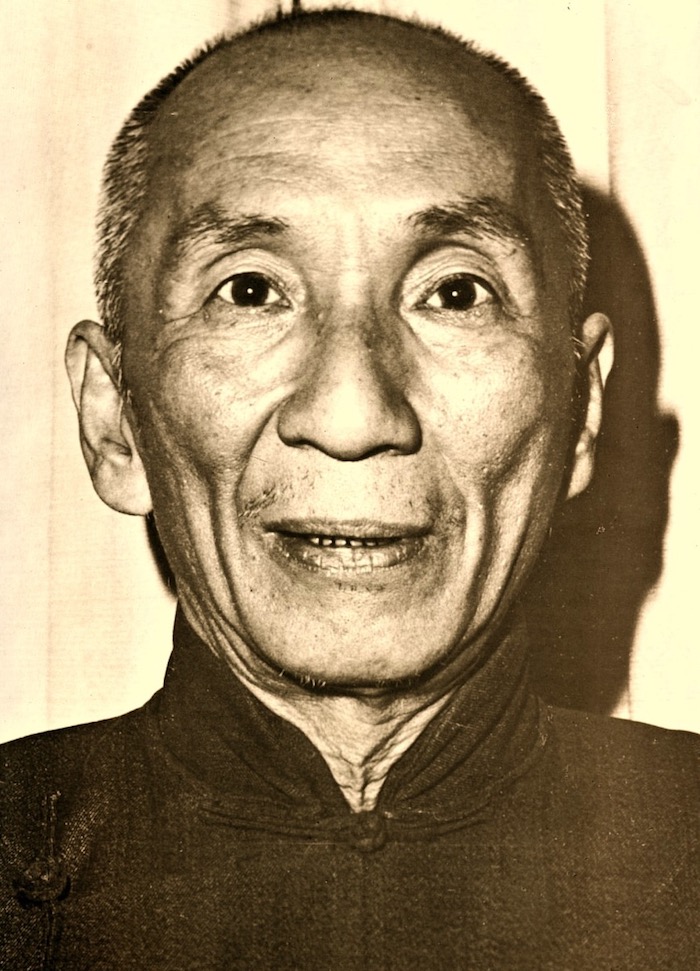
Wing Chun has several major lineages, each with distinct emphases and training methodologies. The most widely known in the West comes through Ip Man (also written Yip Man), the Grandmaster whose students — including Bruce Lee — spread the art internationally. His story became widely known through a celebrated biographical film series. Other significant lineages include those tracing through Lo Man Kam, Pan Nam, and Yuen Kay San.
Our team recommends researching a school's lineage before committing, not because one is definitively superior, but because training philosophy varies considerably. A school with a strong sparring culture and stress-inoculation exercises produces different results — and demands different things — than one focused purely on traditional forms. Neither approach is inherently wrong; it depends entirely on the practitioner's goals.
Step 2: Commit Fully to the Foundation Form
The most common regret our team hears from long-term Wing Chun practitioners is that they rushed through Siu Nim Tao. This form has no footwork, no jumping, and no dramatic techniques — yet the structural habits built in Siu Nim Tao either support or undermine everything that follows. Most experienced instructors recommend spending significant dedicated time with this form before advancing. Rushing past it creates subtle alignment problems that compound over years and become harder to correct as new layers are added.
Step 3: Find a Consistent Training Partner
Wing Chun cannot be fully developed in isolation. The tactile intelligence built through Chi Sao doesn't transfer from solo form practice alone — it requires real contact, real pressure, and real human unpredictability. Finding a training partner at a similar level and committing to regular drilling with that person is the single most effective accelerator our team has observed in Wing Chun development. Consistency of partnership matters almost as much as frequency of training.
Who Wing Chun Is Best Suited For
Wing Chun's design philosophy makes it more inclusive than most martial arts. The combination of close-range efficiency, structure-over-power principles, and methodical skill development attracts practitioners across a wide range of ages, backgrounds, and physical profiles.
People With Physical Disadvantages
Wing Chun's entire philosophical foundation centers on neutralizing physical disadvantage. Shorter reach, lower body weight, and reduced upper-body strength matter far less here than in arts that reward physical attributes directly. The structural efficiency Wing Chun teaches functions, in practical terms, as an equalizer between mismatched opponents.
Women represent a significant and growing segment of Wing Chun students globally — precisely because the art doesn't demand practitioners outperform opponents physically. For those also considering tool-based options, our team's comparison of stun guns versus tasers is worth reviewing alongside physical training decisions. Both have legitimate places in a layered personal protection approach, and neither substitutes for the other.
Security and Law Enforcement Professionals
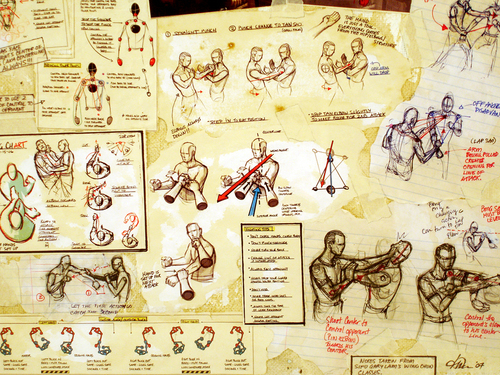
Wing Chun's close-range emphasis and its focus on controlling rather than necessarily injuring an opponent has drawn genuine interest from security and law enforcement communities. The style's trapping techniques — designed to temporarily immobilize a limb and neutralize an attacker's ability to strike — translate usefully to situations where force must be controlled, proportional, and applied in tight quarters.
For anyone building a comprehensive personal security strategy, combining Wing Chun training with broader home security practices creates a more complete picture than any single approach. The general home hardening guidance in our post on making a home more secure, paired with layered deterrence strategies like those discussed in our guide to training a guard dog, reflects the same multi-layer logic that makes Wing Chun so effective as one part of a larger system.
Mistakes That Hold Back Most Wing Chun Students
Wing Chun rewards patience and punishes impatience in equal measure. The mistakes that hold students back most consistently aren't dramatic errors — they're subtle habits that develop early and compound quietly over months and years of training.
Treating Chi Sao as Sparring
Chi Sao (sticky hands) is a sensitivity drill, not a fighting method. Students who approach it competitively — trying to win each exchange — miss the point entirely and develop counterproductive habits. The goal is to build reflexive, contact-based awareness: the ability to sense force and direction through touch without consciously thinking about it. When ego enters the drill, the learning stops. Experienced students often say that the moment a Chi Sao session starts to feel like a competition, both partners have already lost the training benefit.
Neglecting Footwork
Wing Chun beginners typically focus almost entirely on hand techniques because that's where most of the visible action lives. But footwork — introduced formally in Chum Kiu — determines whether hand techniques land with structural backing or collapse under counter-pressure. Practitioners who neglect footwork tend to plateau at an intermediate level and find their techniques fail against mobile partners even when arm structure is technically sound. Our team recommends treating footwork drills as fundamental from the earliest stages rather than something to return to later.
Skipping Physical Conditioning
Wing Chun doesn't require exceptional strength, but it does require functional fitness, joint mobility, and genuine body awareness. Students who interpret the art's efficiency philosophy as permission to neglect conditioning find their techniques lack the structural stability needed to hold up under pressure. Low-intensity work — flexibility training, core stability exercises, and a basic cardiovascular base — supports Wing Chun development without contradicting its principles. The art's emphasis on efficiency doesn't eliminate the body's fundamental need to function well.
Frequently Asked Questions
Is Wing Chun effective in real street confrontations?
Wing Chun can be highly effective in real confrontations when properly trained — particularly in close-range or enclosed environments. Its emphasis on structural control and simultaneous offense-defense provides genuine tactical advantages over untrained opponents. Effectiveness depends heavily on training quality, regular exposure to resisting partners, and the practitioner's situational awareness before physical contact ever occurs.
How long does it take to become proficient in Wing Chun kung fu?
Most practitioners develop a working proficiency in Wing Chun's fundamental principles within two to three years of consistent training. Genuine combat competency — the ability to apply techniques against resisting opponents under pressure — typically requires four to six years. Progress depends heavily on training frequency, partner quality, and the standard of instruction available.
What is the difference between Wing Chun and Ving Tsun?
Wing Chun and Ving Tsun refer to the same martial art. The difference is purely romanization — "Wing Chun" follows standard Cantonese romanization, while "Ving Tsun" is the spelling adopted by specific lineages, particularly those descending through Ip Man's son Ip Ching. The underlying art, forms, and principles are identical across both spellings.
Was Bruce Lee a genuine Wing Chun practitioner?
Yes. Bruce Lee trained directly under Ip Man in Hong Kong during his teenage years and considered Wing Chun a core influence throughout his martial arts development. He later incorporated Wing Chun principles — particularly centerline theory and simultaneous attack-defense — into Jeet Kune Do, the personal fighting philosophy he developed in adulthood. Lee credited Wing Chun as the primary foundation of his fighting approach.
Can older adults or people with physical limitations train Wing Chun?
Wing Chun is widely considered one of the more accessible martial arts for older adults and practitioners with physical limitations. Its low kicks reduce joint stress compared to high-kick styles, its efficiency-first philosophy reduces reliance on physical attributes, and its methodical progression allows practitioners to develop at a sustainable pace. Many schools actively welcome older students precisely because the art's design doesn't discriminate based on age or size.
How does Wing Chun compare to Krav Maga or BJJ for self-defense?
Each system addresses different scenarios. Krav Maga prioritizes rapid, aggressive responses designed for fast situational resolution — strong for scenario-based stress training. Brazilian Jiu-Jitsu (BJJ) excels at ground fighting and positional control once a confrontation goes to the floor. Wing Chun focuses on close-range stand-up control and simultaneous offense-defense. Many self-defense instructors recommend cross-training across striking, grappling, and ground-fighting disciplines rather than relying exclusively on any single system.
Key Takeaways
- Wing Chun kung fu is a close-range, efficiency-first Chinese martial art built around the principle that structural skill and centerline control should allow smaller practitioners to neutralize larger opponents.
- The art's centerline theory — attacking and defending along the same axis simultaneously — is its defining tactical innovation, and it runs through every stage of training from the first beginner form to advanced weapons work.
- Common training mistakes — treating Chi Sao as competitive sparring, neglecting footwork, and rushing past foundation forms — account for most of the skill plateaus our team has observed across Wing Chun practitioners of all experience levels.
- Wing Chun works best as one layer of a broader personal security approach, combining physical skill with situational awareness, structural home security measures, and early threat recognition rather than as a standalone solution.


About Robert Fox
Robert Fox spent ten years teaching self-defence in Miami before transitioning into home security consulting and writing — a background that gives him an unusually practical, threat-aware perspective on residential security. His experience spans physical security assessment, lock and alarm system evaluation, and the behavioral habits that make homes harder targets. At YourHomeSecurityWatch, he covers home security product reviews, background check and criminal records resources, and practical guides on protecting your property and family.
You can Get FREE Gifts. Furthermore, Free Items here. Disable Ad Blocker to receive them all.
Once done, hit anything below