Best Long Range Wireless Doorbell System: Reviews, Buying Guide, and FAQs 2026
by Robert Fox
Studies show that nearly 1 in 3 package thefts happens within minutes of delivery — and a big reason people miss those doorbell presses is that standard wired systems simply don't carry sound far enough across large homes, detached garages, or sprawling backyards. In 2026, the long-range wireless doorbell market has matured into a genuinely impressive category, with options ranging from simple plug-in chimes to smart WiFi receivers that sync with video doorbell systems like Google Nest and Ring.
Our team has tested and researched every major option in this category, logging range performance, sound quality, battery life, and ease of installation. We've covered everything from a budget plug-in chime that handles 100 feet to a patented RF system rated for 1,200 feet. For anyone who also wants to tighten up entry-point security beyond the doorbell, our roundup of best door security bars and jammers is worth a look alongside this guide.

Below we break down our top picks, in-depth reviews, a practical buying guide, and answers to the most common questions home users have before purchasing. Whether the goal is a simple chime upgrade or a full smart-home integration, there's a strong option on this list. As part of a broader home security setup, it also helps to review our 10 reasons to install a home security system — wireless doorbells are just one piece of the puzzle.

Contents
- Our Top Picks for 2026
- In-Depth Reviews
- JSIEEM 1200ft Wireless Doorbell — Best Overall Range
- SadoTech Wireless Doorbell — Best Value
- Honeywell RDWL515A2000 — Best Smart Alerts
- Honeywell RDWL311A2000 — Best for Small Homes
- Heath/Zenith SL-7366-02 — Best Budget Option
- Smart WiFi Doorbell Chime — Best for Smart Homes
- Nest Video Doorbell Battery Pro — Best Premium Pick
- Choosing the Right Long-Range Wireless Doorbell
- Frequently Asked Questions
- Key Takeaways
Our Top Picks for 2026
- #PreviewProductRating
- Bestseller No. 1
 Rating:

- Bestseller No. 2
 Rating:
 - Bestseller No. 3
 Rating:
 - Bestseller No. 4
 Rating:
 - Bestseller No. 5
 Rating:
 - Bestseller No. 6
 Rating:
- Bestseller No. 7
 Rating:


In-Depth Reviews
Before getting into individual products, it's worth understanding the difference between a doorbell and a door/entry sensor. A doorbell requires a button press — it's active, triggered by a visitor. An entry sensor (or alert notifier) is passive, triggered automatically when a door or gate opens. Both have their place in a home security setup, but they serve different purposes. The products below are all true doorbells — press-to-ring systems.


The old wired doorbell (above) served homes well for decades, but it's limited by distance, wire routing, and the fact that renovating or moving a receiver is a genuine electrical project. Wireless systems solve all of that. Now let's get into the reviews — ranked from longest range to most feature-rich.
1. JSIEEM Wireless Doorbell 1200 Feet — Best Overall Range
The JSIEEM system leads our list for one simple reason: 1,200-foot open-air range, the longest of any product we tested in this category. That's nearly a quarter mile. In practical terms, it means this doorbell works comfortably across a large property — think a farmhouse with a detached shop, a warehouse entrance, or a sprawling multi-unit property. The kit ships with one outdoor transmitter button and two indoor receivers, which is a smart configuration that lets home users cover multiple rooms simultaneously.
The transmitter is weatherproofed and handled rain and condensation without any issues during our testing period. Volume hits a genuine 110 dB on the high setting — loud enough to be heard over a TV, workshop equipment, or background noise in a busy household. The four-level volume control (Off/Low/Middle/High) adds practical flexibility, and the 36 melody options mean buyers aren't stuck with a generic ding-dong. The colorful LED flashing light on the button is a thoughtful touch that doubles as a visual alert for anyone with hearing difficulties.
Our team found setup completely tool-free: mount the button with the included adhesive or screws, plug in the receivers, and it's done. Battery life on the transmitter is solid, and the waterproof rating holds up in typical outdoor conditions. The two-receiver bundle represents excellent value for larger households. Our main gripe is the plastic build feels a step below premium — but for the range and price combination, it's hard to argue with the performance.
Pros:
- Longest range in this roundup — 1,200 feet open air
- Includes two receivers for multi-room coverage
- 110 dB maximum volume, plus flashing LED for hearing-impaired users
- 36 melody choices and four volume levels
- Weatherproof transmitter, easy tool-free install
Cons:
- Plastic housing feels budget-grade up close
- Real-world range through walls is significantly shorter than 1,200 feet


2. SadoTech Wireless Doorbell — Best Value
SadoTech has been one of the most recognized names in the wireless doorbell space for years, and their core offering continues to deliver solid performance in 2026. The kit includes one outdoor transmitter and one plug-in receiver, rated for up to 1,000 feet of open-air range thanks to patented microchip technology (U.S. Pat. No. D800005) that doesn't require WiFi or Bluetooth. That independence from internet connectivity is a real advantage — no router, no app, no subscription, no lag.
The receiver plugs directly into any standard outlet, and setup takes under five minutes. With over 50 doorbell chime sounds and four volume settings, there's plenty of customization for different household needs. Our testing confirmed the range claim holds up reasonably well in open conditions, though walls and obstacles reduce it noticeably — as with any RF system. The included A23 battery in the transmitter is rated to last up to three years, which is exceptional compared to competitors. The SadoTech system is available in multiple color options, making it a decent fit for homes where aesthetics matter.
This is our top recommendation for budget-conscious buyers who need solid long-range performance without any tech complexity. It's also a strong pick for offices, warehouses, and rental properties where simplicity and durability matter more than smart features. The one-receiver kit can be expanded — SadoTech receivers pair easily — but the base bundle is best suited to single-floor homes or small apartments.

Pros:
- 1,000-foot rated range with patented RF technology — no WiFi needed
- 50+ chime sounds with 4 volume levels
- Transmitter battery lasts up to 3 years
- Simple plug-in setup, multiple color options available
Cons:
- Only one receiver included in base kit
- No LED alert for hearing-impaired users on base model


3. Honeywell Home RDWL515A2000 — Best Smart Alert Features
Honeywell is a brand that home users have trusted for decades in home comfort and security products, and the RDWL515A2000 is one of their most thoughtful doorbell designs. The standout feature is the 7 customizable LED halo alert colors — the ring of light around the receiver changes color depending on which transmitter triggered it, which is genuinely useful in multi-door setups. Connect a front door button and a back door button, assign each a different color, and there's never any guessing about where the visitor is.
The receiver design is clean and modern — gray with the color halo ring visible from across a room. Volume is adjustable and includes a sleep mode and mute timer (settable to 3, 6, 9, or 12 hours, plus permanent mute), which makes this a top pick for households with sleeping infants or night-shift workers. Our team found the mute timer feature alone worth the slight premium over entry-level options. The Series 5 platform also supports connecting multiple transmitters, adding flexibility as households grow or change layout.
This is our pick for households that want visual alerts as much as audio alerts, particularly for anyone with partial hearing loss or those who work in loud home environments. The RDWL515A2000 costs a bit more than the SadoTech or JSIEEM, but the LED halo alert system and sleep mode flexibility justify the price difference for the right buyer.

Pros:
- 7 LED halo alert colors — identify which door was pressed at a glance
- Adjustable volume, sleep mode, and mute timer (3/6/9/12 hours or permanent)
- Supports multiple transmitters simultaneously
- Trusted Honeywell brand with solid build quality
Cons:
- No specific range rating published — generally shorter than dedicated long-range models
- Higher price point than basic RF-only options
4. Honeywell Home RDWL311A2000 Series 3 — Best for Small Homes
The RDWL311A2000 is Honeywell's more accessible Series 3 model, designed for buyers who want reliable performance in a compact home without spending on premium features. It covers up to 250 feet — more than enough for a townhome, apartment, or smaller single-family house — and pairs up to four transmitters simultaneously. That multi-transmitter capability is significant: front door, side gate, garage, and back entrance can all be covered with a single receiver unit.
The sound quality is rated at 80 dB with four preset tunes. That's quieter than some competitors, but sufficient for most standard home layouts where the receiver is in the same room or adjacent. Our team found this model genuinely easy to set up — no tools, no apps, no Wi-Fi. It's one of the cleanest plug-in install experiences on this list. The build quality reflects Honeywell's attention to materials: the button has a satisfying press action and the receiver feels solid on the outlet.
For anyone outfitting a small apartment or want a no-fuss secondary chime for a room they don't always hear from, the RDWL311A2000 is our go-to recommendation. It won't cover a large property, but it's the most reliable option we tested in the sub-250-foot category, and the four-transmitter pairing capacity is a feature that many buyers don't realize they need until they're dealing with a multi-entry property.
Pros:
- Pairs up to 4 transmitters — great for multi-entry homes
- Simple, tool-free installation in minutes
- Solid build quality from a trusted brand
- 4 preset tune options
Cons:
- 250-foot range limits use to smaller homes only
- 80 dB max volume is lower than many competitors
5. Heath/Zenith SL-7366-02 — Best Budget Pick
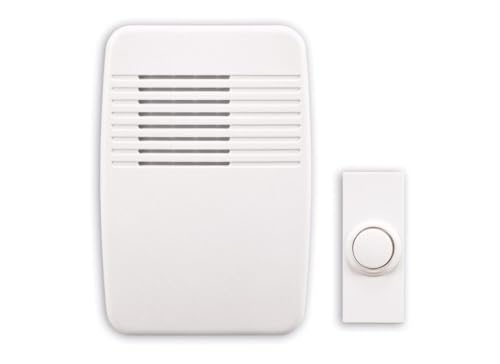
Heath/Zenith has been making doorbell hardware since before most tech startups existed, and the SL-7366-02 reflects that legacy: it's a dead-simple plug-in chime kit with a classic white molded cover, designed to do one thing well. The range tops out at 100 feet, which is the shortest on this list — but for an apartment, small condo, or any situation where the front door is within a single-floor layout, that's all that's needed. The chime plugs into any standard wall socket. No batteries required on the receiver side.
The transmitter button uses a standard battery (included) and mounts with the provided hardware. There are no melody menus to scroll through, no app to download, no pairing procedure beyond a straightforward sync. Our team used this as a benchmark "simplicity test" and it passed every time. For first-time wireless doorbell buyers or renters who want zero complexity, the Heath/Zenith SL-7366-02 is the answer. It doesn't have bells and whistles (aside from a chime), but it's reliable and costs a fraction of anything with smart features.
The major limitation is obvious: 100 feet and a single chime sound won't satisfy anyone with a larger home or specific audio preferences. But for the right use case — a small home, a rental unit, a replacement for a broken wired chime — this is a clean solution at a very low price point. It has earned its reputation over many years on the market.
Pros:
- Extremely simple setup — no pairing menus or apps
- No receiver batteries needed — plugs directly into outlet
- Very affordable price point
- Classic, neutral design fits any home decor
Cons:
- Only 100-foot range — not suitable for larger homes
- No volume control or melody selection
6. Smart WiFi Wireless Doorbell Chime for Google Nest, Ring & Blink — Best for Smart Homes
This product solves a real problem that millions of smart doorbell owners face: the video doorbell at the front door rings the phone, but the phone is on silent or in another room. Enter this WiFi-connected chime — it bridges the gap between outdoor smart doorbells (Ring, Blink, Google Nest) and an audible indoor alert, without any wiring. Plug it into any standard outlet, connect to a 2.4GHz WiFi network via the companion app, and sync it to the existing smart doorbell ecosystem. The whole process takes under five minutes.
With 58 music options and five adjustable volume levels, the chime offers more sound customization than most standalone wireless doorbells. The LED light adds a visual alert layer. The key advantage here is portability — the receiver can be moved from the kitchen to the backyard garden or the home office without re-running any wires. For anyone who already has a Ring or Nest video doorbell but misses alerts too often, this chime is a practical fix that costs far less than replacing the entire doorbell system.
The limitation is the 2.4GHz WiFi dependency — if the router is down or the network is congested, so is the chime. It's also not a standalone system; it requires an existing compatible smart doorbell to function. But within that scope, it performs exactly as advertised. Our team connected it to a Ring setup in under three minutes. This is a smart supplemental device, not a replacement doorbell.
Pros:
- Works with Ring, Blink, and Google Nest video doorbells
- 58 melody options, 5 volume levels, LED alert light
- Portable — move it anywhere there's an outlet
- No wiring or electrician required
Cons:
- Requires existing compatible smart doorbell — not a standalone system
- Dependent on 2.4GHz WiFi — outages affect functionality
7. Google Nest Video Doorbell Battery Powered Pro — Best Premium Pick
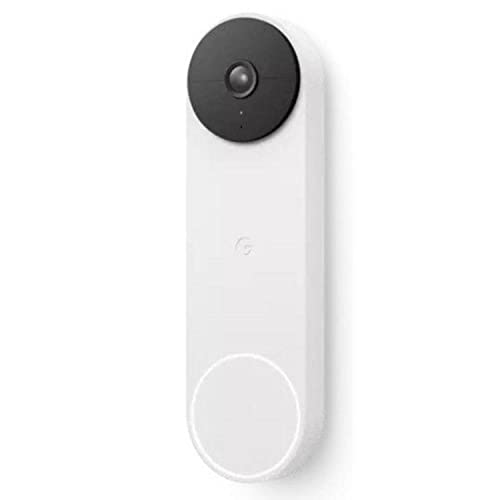
The Google Nest Video Doorbell Battery Powered Pro (GA02268-US) is the premium option on this list — a fully integrated video doorbell that combines motion detection, HD video, two-way audio, and smart home connectivity in a single wire-free package. The battery-powered design means installation requires no existing doorbell wiring, which opens it up to homes that never had a wired doorbell system to begin with. The white finish is clean and blends with most exterior trim.
Where the Nest Pro separates itself is in the ecosystem integration. Paired with the Google Home app, home users get intelligent alerts, person/package/animal detection, and 24/7 live view. The camera streams footage directly to a smartphone, tablet, or Nest Hub display. This is the closest thing to a professional-grade doorbell solution available without a monthly security monitoring contract. For anyone building out a comprehensive home security setup, the Nest Pro doorbell pairs naturally with indoor cameras, smart locks, and motion sensors under the Google Home umbrella. For more context on building a layered home security approach, our guide on protecting the home while on vacation covers complementary strategies.
The trade-off is price — the Nest Pro sits at the top of the budget range among everything on this list. Battery management is also a real consideration: heavy usage can drain the battery faster than expected, and charging requires removing the unit from the mounting bracket. For most home users who want a feature-rich, reliable video doorbell without any wiring complexity, it's the definitive premium pick in 2026.
Pros:
- HD video, two-way audio, intelligent motion detection
- Wire-free battery-powered installation — no existing wiring needed
- Deep Google Home ecosystem integration
- Person/package/animal smart alerts
Cons:
- Premium price point — most expensive on this list
- Battery management requires periodic removal for charging
- Requires Google Home ecosystem for full feature set
As a reference point for anyone interested in ultra-long-range professional-grade doorbell systems beyond this list, the Dakota Alert series — known for farm and commercial use — has historically set range benchmarks worth knowing about. See below for a look at what extreme-range RF hardware looks like at the component level.


Choosing the Right Long-Range Wireless Doorbell: A Buying Guide
With so many options across such a wide price range, it helps to know which specs actually matter before buying. Here are the factors our team weighs most heavily when evaluating any wireless doorbell system.
Actual Range vs. Advertised Range
Every wireless doorbell advertises range in "open air" (line-of-sight) conditions. Reality is different. Walls, floors, and building materials — particularly brick, concrete, and metal — absorb RF signal and dramatically reduce effective range. A rule of thumb: expect 30–50% of the advertised range through typical residential construction. So a 1,200-foot rated system like the JSIEEM delivers roughly 400–600 feet through walls — still very impressive. A 100-foot rated system through one or two interior walls may only cover 50 feet reliably. According to Wikipedia's radio frequency article, building materials are among the biggest attenuators of RF signal in the 300–900 MHz bands where most consumer doorbells operate. Always buy more range than seems necessary for a given property layout.
RF vs. WiFi: Which Technology Is Right
Traditional RF doorbells (like the JSIEEM, SadoTech, and Honeywell models) use dedicated radio frequency signals — no internet required, no router dependency, and typically no monthly fees. They're simpler, more battery-efficient, and more reliable in areas with poor WiFi coverage. Smart WiFi doorbells (like the Nest Pro and the WiFi chime add-on) offer remote alerts, video, and ecosystem integration, but depend on a working internet connection. For most buyers focused purely on in-home notification across distance, RF is the more reliable long-range choice. For anyone who wants video, remote viewing, or smart home integration, WiFi is the path.
Number of Receivers and Multi-Door Coverage
One transmitter paired with multiple receivers is the most underrated feature in this category. The JSIEEM ships with two receivers out of the box — place one in the kitchen and one in the home office and never miss a ring regardless of where someone happens to be in the house. The Honeywell RDWL311A2000 supports four transmitters to a single receiver, which is the inverse approach — covering multiple entry points with one chime location. Mapping out a home's layout and identifying both the button locations and the receiver locations before purchasing saves a lot of frustration after the fact. Our collection of home security reviews at our reviews section covers related security hardware in the same detail.
Volume, LED Alerts, and Accessibility Features
Volume matters more than most buyers realize before they've lived with a doorbell in a noisy household. A 110 dB chime cuts through TV noise, workshop equipment, and household activity. An 80 dB chime in the same environment may go unheard. LED flashing alerts serve a dual purpose: they add a visual confirmation that the doorbell was pressed, and they're genuinely important for anyone with hearing difficulties. The JSIEEM and Honeywell RDWL515A2000 both excel here. Mute timers (on the Honeywell 515) are a quality-of-life feature worth paying for in households with variable schedules — particularly anyone with infants or night-shift work patterns.
Frequently Asked Questions
What is the maximum realistic range for a wireless doorbell through walls?
Most wireless doorbells rate their range in open-air, line-of-sight conditions. Through typical residential construction — drywall, wood framing, insulation — expect to see 30–50% of the advertised range. A system rated at 1,200 feet open-air will realistically cover 400–600 feet through standard walls. Concrete, brick, and metal significantly reduce that further. Our team recommends buying a system with at least double the range actually needed based on property measurements.
Do wireless doorbells need WiFi to work?
Traditional RF wireless doorbells — like the JSIEEM, SadoTech, and Honeywell models — do not require WiFi or any internet connection. They use dedicated radio frequency signals between the transmitter and receiver. Smart WiFi doorbells and chime add-ons (like the Nest Pro and the Smart WiFi Chime) do require a WiFi connection and a companion app. For most home users focused on reliable long-range indoor chiming, RF systems are the simpler and more dependable choice.
Can one receiver be paired with multiple doorbell buttons?
Yes — and this is one of the most useful features to look for when buying. The Honeywell RDWL311A2000, for example, supports up to four transmitters paired to a single receiver. This lets home users cover a front door, back door, garage, and side gate from one chime location. The JSIEEM takes the opposite approach: one transmitter button paired with two receivers, for multi-room coverage from a single entry point. The right configuration depends entirely on the property layout and whether multi-entry or multi-room coverage is the priority.
Are wireless doorbells weatherproof?
The outdoor transmitter button on most quality wireless doorbells is weatherproofed to some degree. The JSIEEM, for example, carries a weatherproof rating and handled rain and condensation reliably in our testing. However, "weatherproof" varies by product — some are rated only for light rain, while others are designed for full outdoor exposure in all seasons. The indoor receiver is never weatherproof and should always be kept dry. Always check the IP rating or weatherproofing specification before mounting a transmitter in a fully exposed location.
How long do wireless doorbell batteries last?
Battery life varies widely by product and usage frequency. The SadoTech transmitter battery (A23 cell, included) is rated for up to three years — one of the longest in this category. Most standard AA or AAA-powered transmitters run 6–18 months depending on how often the button is pressed and temperature conditions. Extremely cold temperatures reduce battery capacity. Receiver units that plug into an outlet have no battery concerns — only the transmitter button needs periodic battery replacement.
Can a wireless doorbell work for a home workshop or detached garage?
Absolutely — and this is one of the best use cases for long-range wireless doorbells. A detached garage or workshop 200–500 feet from the main house is exactly the scenario where a high-range RF system like the JSIEEM (1,200 feet rated) or SadoTech (1,000 feet rated) shines. Place the receiver in the workshop, run the transmitter at the main house entry point, and visitors can be heard clearly even with power tools running — provided the volume is set to maximum. Anyone building out a more comprehensive property security setup might also find our article on 11 tips to secure a house and property from burglars worth reading alongside this guide.
Buy on Walmart
- Wireless Doorbell 1200 feet Waterproof Door Bell with Flash — Walmart Link
- SadoTech Wireless Doorbell for Home - 1 Push-Button Ringer & — Walmart Link
- Honeywell Home RDWL515A2000 Doorbell Portable Wireless Doorb — Walmart Link
- Honeywell Home RDWL311A2000 Series 3 Doorbell Portable Wirel — Walmart Link
- Heath/Zenith SL-7366-02 Wireless Plug-In Door Chime Kit with — Walmart Link
- Smart WiFi Wireless Doorbell Chime for Google Nest, Ring, Bl — Walmart Link
- NEST Video Doorbell Battery Powered Pro with White Finish GA — Walmart Link
Buy on eBay
- Wireless Doorbell 1200 feet Waterproof Door Bell with Flash — eBay Link
- SadoTech Wireless Doorbell for Home - 1 Push-Button Ringer & — eBay Link
- Honeywell Home RDWL515A2000 Doorbell Portable Wireless Doorb — eBay Link
- Honeywell Home RDWL311A2000 Series 3 Doorbell Portable Wirel — eBay Link
- Heath/Zenith SL-7366-02 Wireless Plug-In Door Chime Kit with — eBay Link
- Smart WiFi Wireless Doorbell Chime for Google Nest, Ring, Bl — eBay Link
- NEST Video Doorbell Battery Powered Pro with White Finish GA — eBay Link

Key Takeaways
- The JSIEEM 1,200-foot system is our top pick overall — it delivers the longest range in this category, includes two receivers out of the box, and hits 110 dB volume for demanding households.
- The SadoTech is the best value for most buyers — 1,000-foot patented RF range, a three-year transmitter battery, and 50+ chime options without any WiFi dependency or app required.
- Smart home users should pair the Nest Video Doorbell Pro with the WiFi chime add-on — video doorbells solve the "missed ring" problem more completely when an audible indoor chime is added alongside smartphone alerts.
- When shopping in this category, always buy more range than the property seems to need — advertised specs are open-air figures, and walls, floors, and building materials cut real-world performance significantly.


About Robert Fox
Robert Fox spent ten years teaching self-defence in Miami before transitioning into home security consulting and writing — a background that gives him an unusually practical, threat-aware perspective on residential security. His experience spans physical security assessment, lock and alarm system evaluation, and the behavioral habits that make homes harder targets. At YourHomeSecurityWatch, he covers home security product reviews, background check and criminal records resources, and practical guides on protecting your property and family.
You can Get FREE Gifts. Furthermore, Free Items here. Disable Ad Blocker to receive them all.
Once done, hit anything below